Monday, November 21, 2005

"A Time to Speak the Truth in Love" - Dr. Salico Speaks to the ABCUSA General Board


A Time to Speak the Truth in Love

Dr. Dale V. Salico

Address to the General Board, ABCUSA, November 17, 2005

For months the ABCPSW Board had struggled with the contrasting injunctions found in Scripture to:· stand for the truth of God resisting error within the Church to the point of separation if necessary; and· maintain and strengthen unity within the Church, which is the body of Christ.·

Consider the following Scriptures:

Make every effort to keep the unity of the Spirit through the bond of peace. There is one body and one Spirit--just as you were called to one hope when you were called--one Lord, one faith, one baptism; one God and Father of all, who is over all and through all and in all. Ephesians 4:3-6

Anyone who breaks one of the least of these commandments and teaches others to do the same will be called least in the kingdom of heaven, but whoever practices and teaches these commands will be called great in the kingdom of heaven. Mathew 5:19

Despite first appearance, these are not competing imperatives. The Church is not to choose between unity and truth. The Church is to be unified in and by the truth. And the truth that is embraced by the Church includes its unity. It is through “speaking the truth in love” that the church “grows up into Him who is its head, even Christ.” (Ephesians 4:15)

For twenty years American Baptists have discussed, with greater and lesser levels of contentiousness, the issue of homosexuality. The General Board Resolution on Homosexuality, far from ending the conflict, merely changed the level of discussion because it lacked statements of implementation. Today, with a growing percentage of Americans questioning or openly rejecting the 2000 year-old understanding of the Christian Church that homosexual behavior is sinful, the need for the Church to speak clearly has become inescapable.

Yet American Baptists have been unable to speak with clarity. Despite good faith efforts by American Baptists of all persuasions to reach consensus, the best the ABC has been able to do is write a deliberately ambiguous one-sentence Resolution that set precedent in the denomination by its lack of implementation points. That Resolution states, The practice of homosexuality is incompatible with Christian teaching.

It is the conviction of the American Baptist Churches of the Pacific Southwest that this Resolution represents the clear and unambiguous teaching of the Bible, and that it should govern in a visible way our life together as a denomination of covenanting partners. For the past eight years I, as well as delegates from the ABCPSW have said stated this conviction in the General Board as well as other ABC arenas. While we have worked for unity in our body, we have also made it clear that our churches were increasingly dissatisfied with what they see as a contradiction between this American Baptist Resolution and the American Baptist reality.

What action did the ABCPSW Board of Directors take?

It is important to understand the sequence of events that pertained to Board decisions. On May 12, 2005 the Board of Directors of the ABCPSW approved the following resolution.

Be it resolved that if the issues regarding homosexuality are not biblically dealt with by the end of the Biennial Meetings of the ABCUSA July 1-4, 2005, we as a Region will move forward with [following] process. . .with the understanding that we are remaining a covenanting partner in the ABCUSA.

1. Remain a full covenanting partner, but reduce participation in ABCUSA-generated meetings. .

2. Remain a full covenanting partner in the ABCUSA but establish parallel relationships with other bodies that will help us advance our vision and mission priorities. .

3. Withdraw from the ABCUSA Budget Covenant, but continue as a Covenanting Partner in the ABCUSA.

Four times in this resolution the Board affirmed its desire to remain within the Covenant of Relationships. In specifying its intent to withdraw from the Budget Covenant, the Board was attempting to call attention to the fact that it was in very serious conflict with directions set by the ABCUSA and that much work was needed to prevent a possible separation.

In response, Dr. Medley expressed regret that the Board felt such measures were necessary. Then he stated that it was not possible with withdraw from the Budget Covenant and remain a member of the Covenant of Relationships. “To break the budget Covenant will be to break the whole Covenant of Relationships and be out of Covenant as a Region.”

Our Region Board was now faced with a situation in which all its previous attempts to communicate serious dissatisfaction with the treatment the ABCUSA was giving to its Resolution on homosexuality had been disregarded. All recommendations for implementation by this Region and other Regions in recent years, most recently at the very important General Executive Council meetings in April, 2005, had been rejected. The Regional Executive Ministers had gone to the April meeting in San Antonio, Texas committed to approve recommendations to the General Board to implement the Resolution on Homosexuality. At the end of those meetings, despite the clear communication from several Executive Ministers including myself that there would be very negative repercussions in our Regions if we reported to our Boards that the GEC would not recommend any implementation of this important policy to the General Board last June.

At the meeting in San Antonio I stated that I was not certain I could hold the ABCPSW in Covenant if I took home such a report, and recommended we appoint a task force of GEC members to study possible minimal implementation steps and report back to the GEC in six months. This recommendation was also rejected.

On September 8, 2005, following months of discussion and prayer, the following resolution was approved:

Because the deep differences of theological convictions and values between the American Baptist Churches of the Pacific Southwest (ABCPSW) and the American Baptist Churches in the USA (ABCUSA) are understood by the Board of Directors of the ABCPSW as irreconcilable, the Board of Directors of the ABCPSW takes the following action effective September 9, 2005:

1. Initiate the process to withdraw from the Covenant of Relationships of the ABCUSA. The Executive Committee of the ABCPSW will report to the ABCPSW Board of Directors regarding issues related to this action by December 8, 2005. Upon approval by the Board of Directors of the ABCPSW recommendations will be sent to the churches for a vote at a specially called meeting of the Region.

2. Authorize the Executive Committee of the ABCPSW to consult with necessary professionals regarding issues related to this action.

3. Withdraw from the Budget Covenant of the ABCUSA effective 12/31/05.

Recognizing that part three of the Resolution, withdrawing from the Budget Covenant, had led to confusion regarding the date of the Region’s withdrawal from the Covenant of Relationships, on October 13, 2005, the ABCPSW Board of Directors changed part three of the resolution to read, The ABCPSW will remain in the Budget Covenant until such time as the churches vote the Region out of the Covenant of Relationships.

The following is the sequence of actions projected over the next six months for the ABCPSW:

1) The Executive Committee of the ABCPSW is studying the implications of withdrawing from the Covenant of Relationships;

2) On December 8, the Executive Committee will report to the Board of Directors. The Board will have the following options for action:i. Recommend further study.ii. Approve the study and recommend that the churches endorse the proposed withdrawal from the Covenant of Relationships, calling for a special meeting of the ABCPSW, providing the churches with not less than 90 days notice of this meeting and its agenda.iii. Approve the study and rescind its recommendation to withdraw from the Covenant of Relationships.

3) If the Board of Director approves of the study and recommends that the churches endorse the proposal to withdraw from the Covenant of Relationships, complete information will be sent to the churches regarding the meeting and the number of delegates assigned to each church according to the Bylaws of the ABCPSW. The Region’s Bylaws do not require a vote by the churches to approve the action by the Board. The Board of Directors feels that in such a weighty matter, an expression of the will of the delegates will provide the Board with the input it needs to make a responsible and informed decision.

The ABCPSW remains at the present time and will remain at least through the first quarter of 2006 a full covenanting partner with the ABCUSA. We therefore view the action of the General Board Executive Committee in September 2005 to ask ABCPSW delegate Manuel Luquin to leave the meeting of the GBEC when it discussed the actions of the ABCPSW as both inappropriate and unwise. It was inappropriate because the action had no basis in the ABCUSA Bylaws, Standing Rules, the Covenant of Relationships or in law. It was unwise because the only person in the room who could give insight regarding the reasoning and heart of the ABCPSW Board was asked to leave after sharing in five minutes the state of the Region.

It was likewise inappropriate and unwise for the GBEC to ask our delegates not to come to the November meeting in Green Lake. This request was withdrawn by President Johnson in her letter of October 2005. However, the President continued to request ABCPSW delegates to recuse themselves during discussion of our region’s action. This repeated insistence that ABCPSW delegates not participate in discussion left us with the impression that our covenant partners do not desire to hear what has caused the Region Board to take the action it did nor for us to hear discussion that concerns this Region directly.

What feelings accompanied the action of the Region Board?

Brian Scivens, President of the ABCPSW Board of Directors, in his letter to the churches stated:The Board of Directors of the ABCPSW is deeply grieved over this decision. We continue to recognize our brothers and sisters in Christ in the ABCUSA as beloved friends and co-workers in the Body of Christ. Because of our long history and many common concerns in gospel ministry, we will have opportunities for continued fellowship and partnership. Our decision to withdraw from the Covenant of Relationship is made without animosity or malice. We will continue to pray for God’s blessing on the ABCUSA, its leadership, agencies and congregations.

If the ABCPSW withdraws from the Covenant of Relationships, in what ways would it desire to continue to partner together for mission?

In voting to begin a process to withdraw from the Covenant of Relationships the Board stated that it desired to create distance between the ABCPSW and the ABCUSA so that both may move ahead in the mission God has given them without continual conflict. The creation of distance does not mean the ending of all partnership. American Baptists partnered together in mission for over 60 years before the Covenant of Relationships. It stands to reason that we can partner together in mission where there is agreement to do so after a party withdraws from the Covenant of Relationships. Think of the desire of the ABCPSW as “three d’s”-- distance and distinctiveness with the least amount of damage possible.

I have presented to the General Board Executive Committee a list of twelve talking points concerning areas for possible future cooperation if the ABCPSW does pull out of the Covenant of Relationships. These are ways the ABCPSW can continue to partner with our brothers and sisters in Christ in the ABCUSA in areas of agreement, despite our serious disagreement.

It is not, as some have suggested, the intent of this Region to retain the benefits of being American Baptist while avoiding the responsibilities of being American Baptists. Our desire is to work together for the advancement of God’s kingdom where there is agreement and where it is to the benefit of the ABCPSW, the ABCUSA and our other mission partners to do so.

The issues we have raised are not directed equally toward all covenanting partners. We are in agreement in conviction and core values with many Regions as well as other American Baptist agencies. It is our intention to work together with these partners wherever possible. It is also our intention to avoid speaking disparagingly of any American Baptists. We will continue to value American Baptists, including those with whom we have serious differences as brothers and sisters in Christ’s kingdom.

What would it take on the part of the ABCUSA to cause the ABCPSW Board of Directors to reconsider its action?

We have discussed in our Executive Committee and Board what it would take on the part of the ABCUSA to cause the ABCPSW Board of Directors to reconsider its recommendation to withdraw from the Covenant of relationships. The following three points summarize the Board’s discernment at this time.

1. The ABCUSA must treat seriously its Resolution on Homosexuality dated 1992. The General Secretary should demonstrate that this resolution expresses the clear teaching of the Bible and encourage congregations to be welcoming and transforming agents for persons struggling with this sinful behavior. We urge the ABCUSA to reestablish accountability for accepting the authority of the Bible as the Word of God. The ABCPSW is deeply troubled about being part of a denomination whose commitment to theological inclusiveness has displaced its commitment to Biblical discipline.

2. At the Common Table (the General Board with its commissions and committees, the Office of the General Secretary, the program Boards related to the ABCUSA) policies should be implemented to ensure that membership of Boards, Committees and Commissions, as well as platform leadership are consistent with the ABCUSA Resolution on Homosexuality.

3. We urge the General Board to appoint a commission authorized to implement what is needed to achieve the above items. This is not a study commission or discussion commission. We have been grieved by 20 years of inaction. The most recent ABCUSA consultant has told us that in addition to dealing with issues of structure and communication, action needs to be taken to get the ABCUSA off the fence regarding the issue of homosexuality, which is immobilizing us in pursuit of God’s mission. We have heard and we agree with the consultant that it is time for change.

As American Baptists we have been at the forefront in discerning God’s message for His people. Through all the struggles of cultures and societies, historically American Baptists have looked not to the opinions of people but to the authority of God and His Word. We believe God is calling us as a denomination back to His supreme authority. We call on American Baptists not to be swayed by our wayward society, but to look to God’s profound, unequivocal Word and stand steadfastly on that Word.

Regardless of what the future holds, we commit to you before our Lord to continue to hold you in high esteem and in love as brothers and sisters in Christ and to refuse to speak disparagingly of the ABCUSA. If we cannot work together in covenant, we can still be workers in the same field of the Lord in spite of their deep differences. And we will leave the final judgment of all our actions, convictions and attitudes to the Lord, to whom judgment rightly belongs.

[No disclaimer needed for this one. The #2 guy in the PSW -- second only to the Lord that is--has a right to state PSW regional policy]

Prayer for the General Secretary's Quick Recovery

In the midst of principled criticism of the policies of Dr. A. Roy Medley, General Secretary of the ABCUSA, His Barking Dog would like to pause to wish him a quick recovery from his current illness. Reportedly suffering from painful kidney stones, Dr. Medley was unable to be present at the recent meetings of the General Board assembling at Green Lake this past weekend. Dr. Medley and I disagree on many fundamental issues of polity. However, at a profoundly spiritual level, we are brothers in Christ. Join with me in fervent prayers for his recovery and the grace to face even this season of life.

Sunday, November 20, 2005

ABC General Board Raises Record Relief Funds on Final Day of Meetings

OFFERING BRINGS IN $11,600 FOR QUAKE, HOUSING AID

GREEN LAKE, WI (ABNS)—

General Board members of the American Baptist Churches USA raised more than $11,600 in their Sunday morning offering here to aid quake victims in Pakistan and help build homes for the poor in Brazil.

The board, which ended its four-day November meeting here on Sunday, customarily raises an aid offering of some sort at its final session. The amount usually is around $3,000 from the 100-plus board members.

This time they were challenged by their executive committee to contribute $5,000 for Pakistan aid and another $5,000 to build one of a number of houses that Habitat for Humanity will construct during next summer’s World Council of Churches meeting in Brazil.

The exact amount raised by the end of the board’s final session was $11,633.

Robert Roberts, the denomination’s interim associate general secretary for world mission support, said: “Through the One Great Hour of Sharing offering, American Baptists have shown their great generosity in raising nearly $5.5 million this year in disaster relief aid. That generosity is reflected in this gift by the General Board.

“We have an awesome God, and an awesome General Board, and an awesome denomination.”

Saturday, November 19, 2005

ABC Vote a Decision Machiavelli Would Love? Dealing with AWAB by Definition and the "Common Criteria" for Cooperating Churches

Amid the first-take analyses of the Friday vote by the General Board of the ABCUSA to affirm a change in the "We Are American Baptists" document can be found arguments from both the left and right wings of the denomination. A previous His Barking Dog blog quoted from the writings of analysts on each side in the ABC.

Another possibility emerges, however, which bears consideration. Mike Edwards, a layperson from the ABC of the Northwest, provides a fascinating explanation as to why conservatives may have begun with the seemingly symbolic change in the identity piece. Several evangelicals immediately concluded that the decision to proceed with the symbolic change alone represented a "caving in" to the left or to Valley Forge external counsel.

But, what if the decision to push for the alteration of the identity statement was part of larger strategy. What if the architects of the motion were executing a rather shrewd tactical move worthy of Machieavelli?

We will quote Mr. Edwards at length:

"The rationale for starting with the "We Are American Baptists" statement goes as follows:

1. The statement is placed prominently before the public and is referred to by many in the denomination as to what constitutes an American Baptist, as well as a "Cooperating Church" associated with the denomination.

2. The statement is referenced in the ABC-USA Standing Rules under Rule 5, "Cooperating Churches", Rule 5.1 "Qualification", 5.1.1 Common Criteria :
5.1.1.1. "AFFIRM the Statement 'We Are American Baptists'..."

3. An AWAB church could not "affirm" the statement because it is in TOTAL contradiction to what they stand for, to say nothing of the fact that some have ordained glbt pastors. Therefore they would be in direct violation of the "Criteria for Cooperating Churches".

4. Any church that is in open defiance of the "Criteria..." can be dismissed from its region for cause, IF (and that's a big IF) the region chose to pursue it. I would imagine that the region itself could be held accountable to national for refusal to dismiss those churches, via its "Covenant..." with the ABC-USA.

5. This raises some important questions concerning the Evergreen Association and Rochester-Genessee. What impact would this have on their legal status?

6. Thusly, you can see that there exists the potential for enforcement, IF there was a concerted effort to pursue it by concerned parties."

Against this as a viable rationale must be noted the argument by some parliamentarians that "The Common Criteria for Cooperating Churches (the rules for ABC membership) require that churches acknowledge that the 'We are American Baptists' statement represent the general views of the ABC. But, the criteria only requires that acknowledgment of the statement as it was adopted at the time the common criteria was last updated."

Interesting. Imagine using the "We Are American Baptists" wording as a back door means to "enforce" the 1992 denominational statement that homosexuality is incompatible with biblical teaching. While it is difficult to imagine a scenario in which such a cynical tactic would "work," particularly in light of the critque of it by our parliamentary scholars, it does have a certain Machiavellian elegance to it.

[The opinions in this blog do not represent any official person or position within the PSW region]

How Will the Left Interpret the Affirmation of the IN/KY Motion by the General Board?


We did not need to wait too long to hear from the left regarding the vote yesterday by the ABCUSA General Board affirming the IN/KY motion 59-45.

Passage of the petition, from the denomination’s Indiana-Kentucky region, changes a descriptive document titled “We Are American Baptists” by adding to the document a phrase reading “who submit to the teaching of Scripture that God’s design for sexual intimacy places it within the context of marriage between one man and one woman, and acknowledge that the practice of homosexuality is incompatible with Biblical teaching.”

At least one frequent contributor to the conservative oriented ABE message board interpreted the action with suspicion. Putting forward only the least controversial and most unenforceably symbolic point from the original initiative coupled with Dr. Salico's hint of conditions for reconsideration looked to him like a "caving" by the conservatives.

Blogger Rev. Roy Donkin, quickly reached the opposite conclusion to that of the ABE writer in his piece: "General board caves." Roy, a good friend despite the fact that we seldom agree on much regarding politics or polity, currently serves a PSW congregation. Formerly he was pastor of an AWAB church in New York. Here is Rev. Donkin's analysis of why he opposes yesterday's vote.

Well... the general board of ABC was meeting this past week and continues to struggle with questions about polity and homosexuality. This time they caved.

It is official policy of ABC going all the way back to 1907 that any statements or stands taken by the general board are not binding on local churches. Still, statements that come from the gb are important as they shape the perception of what we are and what we believe.

A few years ago a document was produced called We Are American Baptists in large degree as a response to those who were complaining that we didn't have a clear faith statement (well duh... we are/were real baptists and creedal statements are anathema). Well, an amendment was made to that document...The amendment adds the following statement to the section A Biblical People: "Who submit to the teaching of Scripture that God's design for sexual intimacy places it within the context of marriage between one man and one woman, and acknowledge that the practice of homosexuality is incompatible with Biblical teaching."

Evidently the executive minister of the PSW region had made a presentation stating 3 things that had to be done to keep PSW in ABC... I don't know whether this was one but I'm sure that the vote was, at least in part, a reaction to his presentation.

I am deeply saddened by this move. My guess is that it won't be enough to placate the conservatives/revisionists. The conservatives will want to go the next step and remove congregational autonomy to choose who the churches believe God has called as their leaders, to interpret scripture as they hear it, and in the end the conservatives will want to stamp out any dissent that remains. And it will serve to be used as a club that will hurt GLBT folk and drive them further from the experience of the love of God... one more body has condemned them.

It was a UCC church (for those of you who don't know such things, read "liberal") that coined the phrase - What Would Jesus Do? Well... this wasn't the answer." WWJD? This isn't it. Of course, we would disagree with what he would do."

Friday, November 18, 2005

In Defense of the Blogs


Today Dr. Bob Roberts defended Dr. Medley as one who has been vilified by "mean spirited words," specifically citing the "blogs" dealing with the ABC crisis. As one of the few bloggers posting on a somewhat regular basis from the right, it would be difficult not to take Dr. Roberts' comments as including His Barking Dog. At the risk of sounding defensive for being singled out at the General Board meeting, a few comments might be in order.

First, Dr. Roberts is correct that we must all be aware of our need to speak of those with whom we disagree in the most respectful tones possible. That is why I have so often used this forum as well as the American Baptist Evangelical's Message Board to comment on Dr. Medley as a good, decent, kind, and gentle man. Dr. Roberts has similarly served the Kingdom as well as the denomination in a host of venues. I have always found him to be cordial, committed, and one of our best communicators.

On several occasions, this blog has been used to reprint at length, often in full, the commentaries by those center-left and decidedly progressive. We strengthen our own position when we listen carefully to the wise words being spoken by those who differ from us.

Second, the ethics points made by Rev. Jerrod Hugenot in his "Ethics of Blogging Piece" for the Roger Williams Fellowship were well spoken and quoted at length by His Barking Dog. He warned of the danger of undigested commentary (aka "pastoral blather"), succumbing to the temptations of ego, and forgetting the pastoral responsibility to be collegial towards one another, particularly the "other" in a conflict.

Third, because of the occasional nature of blogs, the normal rules of journalism are typically overlooked. This includes the problem of representing as fact what has only been a rumor. Blogs also suffer from the problems of attribution of quotes, accuracy of information, and the danger of overstatement.

In the midst of the ABC crisis, those of us offering critical commentary bear a special responsibility to be Christian even as we critique that which we genuinely believe to be a danger to our Christian family. So, while I disagree with Dr. Roberts' interpretation of the impact of the ABC blogs, we should always be open to constructive critique.

ABCUSA General Board Approves Stronger Statement "Against Homosexuality and Same-Sex Marriage"

In what is the most detailed press release from the ABCUSA in my memory, VF has given a fullsome description of the vote taken today to affirm the IN/KY resolution dealing with a change in a Baptist identity piece.

AMERICAN BAPTISTS ADOPT INDIANA-KENTUCKY RESOLUTION
GREEN LAKE, WI (ABNS)—


The General Board of the American Baptist Churches USA on Friday voted in favor of a region-sponsored petition from cooperating churches asking the denomination to take a stronger stand against homosexuality and same-sex marriage.

The vote was 59-45, with five abstentions.

Passage of the petition, from the denomination’s Indiana-Kentucky region, changes a descriptive document titled “We Are American Baptists” by adding to the document a phrase reading “who submit to the teaching of Scripture that God’s design for sexual intimacy places it within the context of marriage between one man and one woman, and acknowledge that the practice of homosexuality is incompatible with Biblical teaching.”

Larry Mason, executive minister of the Indiana-Kentucky region, said after the meeting that “we don’t see it as a victory so much as a statement by our constituency that the Bible is our authority.”

The vote on the petition was preceded by spirited discussion on both sides of the issue, and a motion to table was defeated, 66-30.

A resolution from the Mid-America region (Iowa and Minnesota), “of concern for the family and our American Baptist family of churches,” was defeated by a vote of 58-49 with three abstentions. The resolution had been criticized from the floor as saying “too much about too many subjects.”

Since 1992, the denomination has had a national resolution that “the practice of homosexuality is incompatible with Christian teaching.” However, under American Baptist polity this resolution contained no implementing provisions and has not been binding on local churches or on area or regional associations. Supporters of the Indiana-Kentucky resolution had criticized the national denomination for not taking further steps to implement the 1992 resolution. In recent months, the debate has been especially sharp, and one of the church’s 35 regions, the Pacific Southwest, has begun the process of separating from the ABCUSA.

Pacific Southwest Regional Minister Dale Salico addressed the General Board Friday morning and laid out three actions the ABC-USA could take to persuade PSW to halt its move to leave the denomination. These have been received by the General Board’s executive committee.

The Indiana-Kentucky Resolution originally called for allowing regions to consider affiliation requests only from churches within their own or contiguous regions, and stating that a church dismissed by a region could gain re-entry into the ABCUSA only through the region from which it was dismissed. These provisions were dropped from the final resolution after questions were raised about whether their wording was specific enough to satisfy denominational bylaws or allow informed debate.

The debate on homosexuality and same-sex marriage has proceeded in several forums within the denomination. In August, 2005, the Senate of the denomination’s Ministers Council voted 32-30 to reject a requirement that would have barred practicing homosexuals from Senate membership. In a November, 2004, meeting, the Regional Executive Ministers Council voted by 20 to 3 with three abstentions to refrain from recommending practicing homosexuals for positions and ministries at the regional and national levels, and not to participate in same-sex marriage ceremonies.

In June, 2005, a national “consultation statement on mission and ministry” reviewed the history of the debate, noting the original 1992 national resolution and one by the General Board in 1993, calling for continuing dialogue on issues of human sexuality and recognizing “that there is an ongoing difference of opinion among American Baptists on the issue of homosexuality.”

The 2005 statement added, “Today we have deep divisions around our understanding of Biblical interpretation, human sinfulness, and the potential of ministering together. We further acknowledge that not all churches consider this issue to be central to mission and ministry.”

For presentation to the General Board, the Indiana-Kentucky Resolution had obtained the required support of at least 200 churches in five regions.

Medley Continues as General Secretary - 2006-2009


Dr. A. Roy Medley wins second term as General Secretary of the ABCUSA in a 76-33 vote Friday during the meeting of the General Board of the ABCUSA.


His Barking Dog is pleased to have accurately predicted the outcome prior to the meetings. Our "Carnac the Magnificent" piece yesterday declared the certainty of the vote. No special credit attaches to the prognostication, however, since the system virtually guarantees re-election.

Thursday, November 17, 2005

"Carnac the Magnificent" Prediction: Medley Wins Second Term


Do you remember the old Johnny Carson routine, "Carnac the Magnificent"?

The gag always opened with the following setup by sidekick Ed McMahon:

"Welcome once again, O Great Sage... I hold in my hand these envelopes. As a child of four can plainly see, these envelopes have been hermetically sealed. They've been kept in a #2 mayonnaise jar since noon today on Funk and Wagnall's porch. No one knows the contents of these envelopes, but you, in your divine and mystical way, will ascertain the answers to these questions having never seen them before."

In the sketch, Carson would give the answer before opening the envelop and revealing the question. Some of the lines were classics, others were just dumb, but they almost always brought a chuckle.

A: Until he gets caught.
Q: How long does a United States Congressman serve?

A: Praise the Lord and pass the ammunition.
Q: What's the best thing to do if you swallow a hand grenade?

His Barking Dog decided to get into the spirit of the piece with our own predictions about this week's General Board meeting of the ABCUSA.

A: A snowball's chance in hell.
Q: What are the chances of Dr. Medley being turned down for a second four year term?

(The ABC Bylaws (Article XI, Section 2) provide that the Executive Committee of the General Board "shall select and recommend to the General Board a person to serve as General Secretary of the ABCUSA and shall evaluate the work of the General Secretary at least every four (4) years and report thereon to the General Board."

The ABC Bylaws (Article XV, Section 1) also state: "Upon nomination by The Executive Committee, the General Secretary shall be elected by the General Board for a term of four (4) years (or such shorter term as the General Board may specify) and may thereafter be reelected to such office by the General Board for any number of additional terms.")

Since the General Board will move into "executive session" to hear the confidential report of their own executive committee's evaluation of Dr. Medley's performance, readers of His Barking Dog will need to depend upon Carnac the Magnificent's prediction of what will be said in the closed door meeting.

A: A. Roy Medley has served as our General Secretary with great distinction during a difficult period since his election in 2001. At this time we will celebrate together the General Secretary’s ministry in the 2001-2005 term and then affirm his reelection for a 2006-2009 term of office.
Q: What will the PSW's GB representatives NOT be saying at the meeting this week.

A: A beverage break
Q: With all of the high level issues on the table at the GB meeting this week, some of them threatening to unravel the very fabric of the denomination, what will the board members be doing Friday morning immediately prior to the consideration of the IN/KY petition and the PSW board decision to initiate withdrawal from the ABCUSA?

A: Somewhere over the rainbow
Q: What does the famous movie classic, "The Wizzard of Oz," have in common with where the ABCUSA expects to find the $40.56 million budgeted for 2006?

[Carnac's predictions are solely those of the blogger so please do not divine any connection to anyone in any official capacity whatsoever]

One More Reason Why We Need a Strategic Separation in the ABCUSA

The various versions of the recent Regional Meeting of the Mid-America Baptist Churches disagree on numerous points of interpretation. For instance, those on the left (e.g., Donley and Bonney) speak of the abusive environment, elimination of diverse voices, and the successful power-grab by the right. Those in the conservative camp speak of an insensitive regional leadership, unresponsive to the voices of the majority of the churches.

One thing both left and right should be able to agree on, however, relates to the utter impossibility, not to mention impracticality and poor stewardship, of trying to continue doing ministry as one administrative unit. Advocates for "peace at any price" lift up our theological diversity as an enriching part of our Baptist life. With all positions present at the table we are able to engage in greater coordinated efforts with more kingdom impact. Which arm would you like to give up: your left or your right?

The difficulty with such analogies is that they greatly misstate the issue and the proposed solution. Clearly we have reached a point of such gridlock that continued organizational unity will come only at the price of continual conflict and mission-enervating strife. The AWAB segment of the ABCUSA would do far better on their own or in league with like-minded persons (e.g., The Alliance of Baptists). How many more "difficult and painful" experiences do we need such as the recent Mid-American Baptist's Regional Meeting before we recognize the need for strategic separation?

The following report appeared in the AWAB site associational news (http://www.wabaptists.org/associational.htm)


Difficult and Painful Experience at Mid-American Baptist Churches Regional Meeting

Reported by Doug Donley, Pastor – University Baptist Church (AWAB), Minneapolis, MN

The Annual Gathering of the Mid-American Baptist Churches in Harlan, Iowa was a difficult and painful experience. The events of the weekend did not live up to the title of the program "Building up the Body of Christ".

There were fine workshops led by our own Don Dresser on the situation in Nicaragua. I attended a workshop on the concerted efforts we do on behalf of those displaced and traumatized by Hurricane Katrina. But by far, the focal point was the votes on who would lead our region in the future and how we would deal with gay men and lesbians in our midst (bisexual and transgender folk aren't even on the radar screen). The Board of Region Ministries proposed a resolution to continue dialogue on issues of human sexuality in general and homosexuality in particular. Included in this resolution was a recommendation to not recognize the ordinations of openly gay and lesbian people at this time.

At most Regional meetings there are maybe 100 voting delegates. This time, there were over 200, most of whom had never attended any regional function. The resolution was amended to add the sentence, "We affirm the 1992 American Baptist Resolution which states, "The practice of homosexuality is incompatible with Christian teaching." They also amended the resolution to take out the words "at this time" regarding the denial of recognition of gay and lesbian pastors. This amendment was passed by a vote of 151-51-2. Another amendment was offered to recognize Lynn Welton’s and Ross Aalgaard’s ordinations, since they had followed all of the rules in place at the time. This amendment was defeated 37-159-7. The final resolution was passed by a vote of 143-53-2 (the text is reprinted below).

Jean Lubke, Jim Moravek, Don Dresser and others made articulate, impassioned pleas. Jean Lubke's powerful statement equating gay and lesbian folk to previous discrimination against African Americans and women was shouted down repeatedly before the President of the Region intervened. The exclusionist group also presented their own slate of officers who were easily voted into office, above those selected by the Nominating Committee who worked heard to get a balance of gender, experience, location, clergy/lay, rural/urban, even theological perspective. The urban folk were voted out in favor of rural folk. All of the women were voted out of office except one, including Nadean Bishop. The moderates to progressives were voted out in favor of largely white male pastors. It was a sad day. As I left the church, one person said to me, "Shame on you for bringing this in to my church."

It felt abusive. I feel angry, sad, frustrated and ashamed of the ways my sisters and brothers acted on Saturday. I felt shunned and I felt that our church's ministry was marginalized in the minds of many. I had the opportunity to speak with one of the pastors who led the rally against the GLBT community after the vote. I told him that he now has a responsibility to set the tone as one of inclusion and respect going forward. I told him the ball is in his court to make this organization truly Christian and just. More than one of us wondered what would happen if we got this many delegates to address issues of poverty.

We now need to decide what we will do in the aftermath of these decisions. We need to never forsake our GLBT sisters and brothers. We need to always look to Jesus for inspiration for our ministry. We need to continue the long-term hard work of reconciliation. We need to make sure that all of this does not become our only focus. There is so much ministry to do. Please pray for our region and for all of those bruised and bleeding as a result of the actions by the majority of the delegates at the meeting in Harlan.

Here's the text of the amended resolution passed by the Region in Harlan, Iowa, on October 22:

Whereas the 1992 resolution on homosexuality is held in tension with the 1993 American Baptist Resolution Calling for Dialogue on Human Sexuality.

Whereas we as Mid-American Baptist Church's recognize that we are not of one mind in matters pertaining to human sexuality.

Whereas there is a wide spectrum of Biblical and theological views represented within our region and within our churches.

Whereas many churches may want the opportunity to continue to dialogue as called for in the 1993 American Baptist Resolution calling for Dialogue on Human Sexuality.

Therefore we as Mid-American Baptist Churches affirm the 1992 Resolution on homosexuality, "Homosexuality is incompatible with Christian teaching" call upon individuals and churches to stay open to dialogue and to continue to implement the 1993 American Baptist Resolution Calling for Dialogue on Human Sexuality. Therefore we will not recognize the ordinations of openly gay and lesbian persons.

Tuesday, November 15, 2005

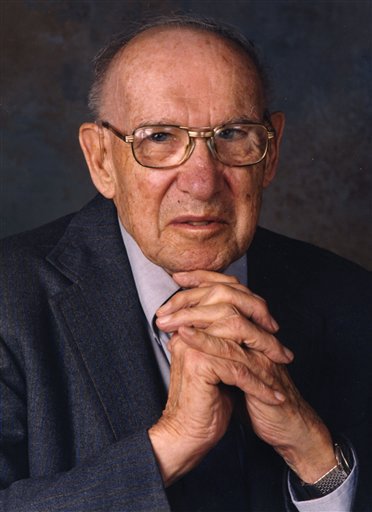
God Bless You Peter Drucker, Good and Faithful Servant - 1909-2005


It is difficult to overestimate the significance of Peter Drucker. He was the pre-eminent management guru of the last century. Along with countless thousands of others, my first assignment in a secular business school involved reading one of Peter Drucker's many tomes. But, less noticed by some of his business associates was the fact that he was also a faithful Christian servant with a commitment to Christ's church.

A list of his most notable proteges includes titans of ministry as well as management such as: Rick Warren, Bob Buford, Ken Blanchard, Bill Hybels, and Peter Senge. During his later years he became quite interested in the non-profit sector and devoted much of his time to Christian organizations, including churches.

Peter Drucker said the pastoral church is essential to society because it offers three ingredients necessary for our new century
1. BELONGING, for people need community.
2. MEANING, to interpret our knowledge.
3. PASTORAL CARE, for many people hurt.

Peter Ferdinand Drucker (
November 19, 1909November 11, 2005) was a management theorist who created many phrases common in business today.

Drucker, born in
Vienna, Austria, fled from the Nazis to the United States in 1937. In 1943, he became a naturalized citizen of the United States. He taught at New York University as Professor of Management from 1950 to 1971. From 1971 to his death he was the Clarke

Professor of Social Science and Management at
Claremont Graduate University.
He wrote thirty nine books, the first in
1939, and from 1975 to 1995 was an editorial columnist for The Wall Street Journal, and was a frequent contributor to Harvard Business Review. He continued to act as a consultant to businesses and non-profit organizations when he was in his nineties.

Several ideas run through most of Drucker's writings:
* profound skepticism about
macroeconomic theory. Drucker contended that economists of all schools fail to explain significant aspects of modern economies.
* A desire to make everything as simple as possible. According to Drucker, corporations tend to produce too many products, to hire employees they don't need (the better solution is
contracting out), and to expand into economic sectors that they should stay out of.
* A belief in what he called "the sickness of government." Drucker made ostensibly non-ideological claims that government is unable or unwilling to provide new services that people need or want - though he seemed to believe that this condition is not inherent to democracy. Even successful programs, such as
US Social Security, long ago ceased to be interesting to an increasingly alienated citizenry.
* The need for "planned abandonment." Corporations as well as governments have a natural human tendency to cling to "yesterday's successes" rather than seeing when they are no longer useful.
* The lasting contribution of the "father of
scientific management", Frederick Winslow Taylor. Although Drucker had little experience with the analysis of blue-collar work (he spent his career analyzing managerial work), he credited Taylor with originating the seminally important idea that work can be broken down, analyzed, and improved.
* The need for community. Early in his career, Drucker predicted the "end of economic man" and advocated the creation of a "plant community" where individuals' social needs could be met. He later admitted that the plant community never materialized, and by the 1980s, suggested that volunteering in the non-profit sector might be the key to community.

Drucker was awarded the
Presidential Medal of Freedom by U.S. President George W. Bush on July 9, 2002. He was the Honorary Chairman of the Peter F. Drucker Foundation for Nonprofit Management, now the Leader to Leader Institute, from 1990 through 2002. His most controversial work was on compensation schemes, in which he said that senior management should not be compensated more than twenty times the lowest paid employees. This made him an enemy of some of the same people who had previously praised him.

Drucker died
November 11, 2005 in California of natural causes. He was 95.

Today's blog was completed with the assistance of beaconchurches.net (http://beaconchurches.net) and the good work of the people at Wikipedia (http://en.wikipedia.org/wiki/)

Vision Architects Gather at Northern Seminary


Vision Architects Gather at Northern Seminary
Santa Ana, Calif. – Nov. 14, 2005 –

With the purpose of framing a new structure for the organization or network that will replace American Baptist Evangelicals, pastors and professional lay persons from across the country gathered at Northern Seminary on November 11. Bill Hoyt, NexStep Consulting and Coaching, facilitated the meeting.

Hoyt recounted an incident in which he was being recruited to return to New England, where he had grown up. He stated that he had no desire to return to New England, but didn’t know why. As he and his host, a local pastor, were driving past the charred remains of an old burned-down strip mall, his host remarked that the mall was being torn down and one “exactly like the original was being built in its place.” Suddenly it dawned on Hoyt: He didn’t want to return to New England because the culture there is to keep things exactly the same. When Hoyt looked at that empty lot, he saw all the potential for something new and different.

He then delivered that challenge to the vision architects: We have a “blank slate” and it’s time to create something entirely new. Rather than replicating the past, we can develop a new cutting-edge organization that will serve as a model for others to follow. Rather than maintaining an institution, we can spring forward with a network or a movement that’s lean and effective.

Hoyt also discussed organizations that are future-minded – organizations that value churches planting churches, and where missions is now referred to as “globalocal.” That means the missions focus on a particular people group encompasses not only that group in a foreign country, but also right here at home. In other words, it’s about people, not geography.

The current pathway to effective cross-cultural mission is:
• 2-5 years to raise support
• 1-2 years to learn the language
• 2-5 years to learn the culture

The common annual cost of a missionary today is $120,000. Factoring in one-term missionaries (those who last only for one term), the cost for one thirty-year missionary is $3.6 million. Hoyt’s point is that investing in foreign nationals is not only a less expensive, but also faster, way of leading people to Jesus Christ. He warned that denominations will either embrace the coming missiology and allocate resources for the new day, or their missionary force will shrivel to a handful until they have no effective missions program

Breakout groups discussed four areas:
• Church health
• Church planting
• Missions
• Care of pastors and leaders

The group then agreed upon the following two sets of core values to be applied to the new network or movement. The following values emerged and are shown here in draft form:

Missional Core Values
We will be a movement of churches that values:
• Spirit-infused Biblical Orthodoxy
• Obedience to the Great Commandment and Great Commission
• Congregational health and growth

Operational Core Values
• We will serve churches.
- We will be additive to and distinctive from churches.
• We will partner with ministries, ministers, missionaries, individuals, business people, and seminaries.
• We will leverage wisdom and experience for greater effectiveness.
- Networking- Brokering
• We will empower leaders for success.
- Coaching and mentoring
• We will maintain an effective structure.
- Flat

- Lean
- Primacy of practitioner leadership
- Virtual
- Maximize technology
• We will measure success in terms of practical, real-world effectiveness-outcomes.
- Forward thinking, innovative, proactive partnerships

At the end of the day, participants realized that while much was accomplished, much work remains. Bill Hoyt and Bill Nicoson, Executive Director of ABE, will schedule two to three additional meetings to complete the vision architecting. In the meantime, Bill Nicoson will also assemble a team to develop new a new identity, including a new name for the organization or movement.

As a resource for future work, Hoyt recommended that participants read Shaped by God’s Heart: The Passion and Practices of Missional Churches, by Milfred Minatrea.


The first reports from the gathering of "vision architects" excite my interest. This enterprise holds forth the promise of an organization crafted along modern lines of flatter and less bureaucratic structures, with a firm commitment to biblical authority, and the kind of Kingdom values that should gladden the hearts of all Baptists on the right.

We must continue to bathe this nascent effort in our prayers. With several critical follow-up meetings yet ahead of them, pray that the planners continue their focus as they avoid the pitfalls and temptations of any new thing seeking to replace an old thing.

The ABCUSA has become manifestly incapable of continuing to bear a faithful Gospel witness in this new century. Tinkering with the endemic problems using the clumsy tools of standing rules and parliamentary procedures may extend the duration of the dying, but it will not restore health to the body. The time has come for us to join this new thing that we believe is a gift of God to us for "such a time as this."

Monday, November 14, 2005

First Reports on IN/KY Board Meeting

First reports from the Nov 12, 2005 meeting of the IN/KY Board have been published. The following, while official, came with the following disclaimer: "A report on actions and information from Board meeting—not official minutes."

Of immediate note was the recommendation to continue in covenant with the ABCUSA. Yet, a careful read of the document also shows that there are words directed at the Ministers Council of the ABCUSA as well as advice for congregations to re-direct their giving in order to express their own missional priorities. In the words of the official release: "Each congregation is encouraged to review and appropriate its American Baptist mission dollars in a way that reflects the church’s theological perspective and mission goals, utilizing the inherent flexibility of the American Baptist Mission Support system."

It will be interesting to see how the constituency responds when the General Board takes action this week on their petition.


Presidential Task Force Recommendation
The Task force, comprised of Roxie Hobbs, Kyle Whitmer, Bernie Jackson, Connie Tingle (pres.), Becky Pohle, Jon Carlstrom, and Mike Barnes made the following recommendation to the Board concerning our relationship with the ABC/USA and it was adopted by the Region Board:

Presidential Task Force Report
Relationship with American Baptist USA & American Baptist Churches of Indiana and Kentucky

The American Baptist Churches of Indiana and Kentucky
* Is a covenant of local congregations
* Who adopted the resolution “The Homosexual Lifestyle” in 1980
* Serves as a coordinating mission unit of covenanting congregations, and that the ABCUSA is a collection of covenanting regions.

Recognizing the importance of our heritage as American Baptists, and with due diligence, having prayerfully considered the task before us, we recommend the following to the ABCIN-KY Region Board.

Continue to be a covenanting Region within the ABCUSA.
As a covenanting Region, defend or challenge issues to hold accountable the integrity of our witness to the scriptures and our denominational witness in mission and ministry.
Cooperate and network with other regions with similar concerns regarding the issues of human sexuality.

Work within the national/regional structure to continue to effect change within the denomination:
* Call for the conclusion to the 1998 resolution calling for dialogue on Issues on Human Sexuality. (1998 Resolution Calling for Dialogue on Issues of Human Sexuality.)
* Affirm the resolutions affirming the role of family and the practice of homosexuality as inconsistent with Christian teaching. (Specifically 1984 General Board Policy Statement on Family Life; 1991 Statement of Concern at the West Virginia Biennial, Resolution on Homosexuality; the 1992 General Board Policy Statement, Homosexuality and the Church)

Each congregation is encouraged to review and appropriate its American Baptist mission dollars in a way that reflects the church’s theological perspective and mission goals, utilizing the inherent flexibility of the American Baptist Mission Support system

Seek change in the representative process to the General Board.
* Seek to restore the historical responsibility of the General Board to represent the churches.
* Maintaining a goal of 90% Regionally Elected Representatives.

Educate and resource congregations in ministries regarding issues of human sexuality.
* Help pastors and local congregations face the issues of human sexuality in a positive, helpful, biblical and Christ-like way.
* Assist local churches in finding appropriate and helpful resources.
* Encourage congregations to be a “means of grace” and provide ministries of reconciliation

We further recommend that the ABC/IN-KY-GI Ministers Council review/evaluate their relationship with the Ministers Council of ABCUSA

Definitions:

Covenanting Region – Regions who, through action of their governing boards, have agreed to cooperate with other American Baptist regions, national mission boards and auxiliary organizations in areas of common mission and ministry.

General Board Representatives – Persons elected to serve as the governing board of the American Baptist Churches USA.

Regionally Elected – General Board Representatives elected to serve as representatives to the national governing board by a specific region. Indiana and Kentucky have five (5) regionally elected general board members, one from each of the five areas of our region.

Nationally Elected -- Nationally elected representatives are nominated by the ABCUSA’s nominating committee and elected by the delegates at a national biennial meeting. As national representatives, these representatives do not directly represent the region in which they live and serve.

Issues of Human Sexuality – These go beyond the one issue of homosexuality. Issues of human sexuality speak to marriage, some family life issues, celibacy, and much more.

Concluding statement:
These recommendations are action steps to be acted upon immediately. Therefore, we recommend that progress be reported at each Region Board meeting and our relationship with ABCUSA be reviewed again at the November 2007 meeting of the ABC/IN-KY Region Board.

Sunday, November 13, 2005

Proof It's NOT About the Polity!


A Commonsense Argument That It’s NOT About the Polity
By Dennis E. McFadden


As recently as Dr. Medley’s visit to the PSW last week (and for nearly three hours in his infamous Sept 7 meeting with PSW leaders), we heard about the “unique unenforceables” (to use the inelegant language of the Regional Executive Minister Council) of ABC life. It is all about our polity, or so we are instructed. Patiently, with sighs and longsuffering shrugs of the shoulders, Dr. Medley declares that we are not a connectional denomination. The issue of human sexuality is one that slips between the cracks of our governance and our resolute adherence to congregational autonomy.

Conservatives maintain that THE issue is not about human sexuality or about polity. We continue insisting that the crisis is one of worldviews and what is at stake is nothing less than “sola scriptura,” biblical authority. Ultimately, the battle being waged concerns a conflict for the very Gospel itself, a battle which transcends polity and denominational differences.

The ABCUSA is not the first or only denomination facing a crisis over biblical authority. In yesterday’s blog, I quoted Archbishop Peter Akinola of Nigeria. He contrasts former missionary zeal in American Christianity with what he characterizes as a suicidal embrace of the spirit of the age. The Nigerian Primate makes it crystal clear that the issue today IS about biblical authority.

If the problem were really one of polity, you would think that it would be limited to one or two forms of church government. Yet, all three major polity persuasions are contending over the very same issues. The highly hierarchical episcopal ECUSA and United Methodist Church, the Presbyterian Church in the USA with its connectional governance, AND the congregational American Baptist Churches, USA, are all struggling with the same conflict. Dismissing it with a shrugged shoulder trivializes the seriousness and depth of the concerns animating the debate across denominational lines. In the past two weeks, pastors from both the PCUSA and ELCA have written me affirming that the arguments in our various denominations are all the same: the issue is biblical authority and worldview differences.

Rather than seeking shelter under the structurally unsound shack of radical autonomy, Dr. Medley would be advised to build on the firm foundation of the Word of God. Sisters and brothers eccumenically distributed in many other church bodies are fussing with each other using identical arguments.


When VF leaders say that it is "about the polity," what they mean is that in our particular form of organization, we have no centralized means for dealing with doctrinal conflicts of any kind. This begs the question. The fact of Baptist polity may make joint action more difficult. It does not, however, absolve Valley Forge leaders from facing the issue.

[Not representing anyone's opinion but that of the blogger, this is a totally unofficial blog]

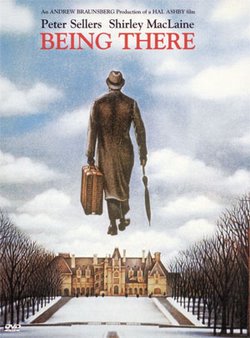
What's Worse Than Merely "Being There"? Being There and Saying Nothing


More than twenty-five years ago Peter Sellers finished his career with what critics called his finest performance. "Being There" recounted the tale of mistaken identity wherein "Chance," a simple gardener, never left the Washington D.C. estate of his elderly employer until the old man died. Throughout the film his simple TV-informed utterances are mistaken for profundity. For a quarter of a century "Being There" has been iconic of vapid presence, of empty officiousness.

Last week Dr. A. Roy Medley and his management team came to California to shore up support among the congregations intending to remain American Baptist following the impending PSW withdrawal from the Covenant of Relationships. Previous blogs in His Barking Dog reported on the event ("Redlands Meeting with PSW Leaders - Encourages Loyalists; Disappoints Dissenters") and offered analysis of the three gatherings ("Medley Mission to PSW to Proclaim Vision and Show Churches How to Remain ABC - Dubbed 'Fiddling While Rome Burns' by Dissidents'").

What went unreported were additional visits to meet with pastors in the ABC of LA and lay people at the historic First Baptist Church of Los Angeles. Accounts received by this blogger suggest that the pastoral gathering added nothing to the information already provided in previous blogs. However, the evening meeting at FBC was most interesting for what it did not contain. Studiously avoiding "the" subject, eye witnesses recount a meeting virtually bereft of mention of the conflict in the region surrounding it! Dr. Medley soldiered on presenting his "mission and vision" for the ABCUSA. Under other circumstances this might have been an appropriate message. However, in the midst of the crisis facing VF planners, leaving the topic untouched only reinforces the image of a disconnected leadership able to practice "Being There" without saying anything.

At least one leader in the room came away feeling disappointed and insulted by the presentation. It was as if the pastors received one level of disclosure and the lay people a more superficial treatment. Based upon reports from the three PSW meetings, my guess is that there was no reason for such a conclusion. In all of the appearances--pastors and lay persons--the otherworldly quality of "Being There" predominated.

The question might be asked: Does anybody in Valley Forge care that the PSW is planning to withdraw from the ABCUSA? Coming to the region to communicate "presence" (i.e., "being there") represents only the barest of first steps. If Dr. Medley hopes to win back the PSW congregations, let alone forestall the spread of the defections to other regions, another strategy should be adopted immediately!

[Comments in this blog represent the opinions of the blogger alone. They do not come from, represent, or speak for the official position or persons in the PSW]