Thursday, October 13, 2005

First Report from the PSW Annual Meeting in Bakersfield (CA) Plus Comment


ABCPSW Annual Meeting


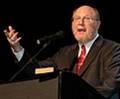
Dr. Dale Salico – Executive Minister, ABCPSW
“God’s Call to Change Our Worlds for Christ”
Rms 12:2; 2 Cor 3:18; 1 Jn 3:2

* For many people, life is a disappointment
· Some people are disappointed with God
· Young Americans are disappointed with the Church
· The problem is not that they were expecting too much
· The problem is that they expected too little


* God’s goal is not only our Salvation for the next world, but our Transformation in this one

* Metamorphosis is God’s portrait in nature for Spiritual transformation

* The problem: Your spiritual DNA has become disabled by sin

* We convince ourselves that this world is all there is and that it is good enough
* Satan blinds individuals
* Satan blinds churches

* Unlike caterpillars, we are responsible before God and before each other for how we conform to the world.

* Through Christ our spiritual nature can be energized by God’s Spirit

Gene Appel – lead pastor, Willowcreek Church –
“How to Change Your Church Without Killing It”

Why Change?
Why we have changed . . .
We were dying
We weren’t reaching many lost people
We weren’t communicating the gospel in an understandable language
We were producing too many church go-ers and not enough fully devoted followers of Christ
To whom much is given, much is required
The Gospel is about change

Why are we so resistant to change?
We glamorize the past
Fear of the unknown
Unsure of the skills needed to lead through change
We’ve heard too many “crash and burn” stories

How do we change?
1. Prepare the soil –
a. the need for raising urgency
b. form your “dream team” – need the right people on the bus
c. develop and cast a compelling vision
i. what is your target?
ii. what are your unique strengths that you bring to the task?
iii. is our vision simple enough to be understood?
d. gain some credibility
e. communicate, communicate, and communicate (otherwise people will connect the dots in the most pathological way of possible)


2. Plant the seed –
a. affirm whatever is affirmable from the church’s past
b. magic words: “trial basis”

3. Cultivate/Fertilize -

4. Harvest –

Annual Business Meeting
Brian Scrivens, President of the Region

Main thing is to keep the main thing the main thing
The main thing for PSW is our new vision

Dale Salico – ABCUSA Relationships

For 20 years the issue of homosexuality has divided the ABCUSA
Homosexuals in society have advocated for change in society’s perception of their orientation and behavior
AWAB has advocated for moral acceptability of monogamous homosexual relationships
The legal and moral edge of the debate is now same-sex marriage
Two groups in the church
Conservatives – God blesses monogamous heterosexual marriages
Revisionists – calling for openness to legitimacy of same sex intimacy and relationships

The issue before the ABCUSA
1992 Resolution – “The practice of homosexuality is incompatible with Christian teaching”
Should “out of the closet” homosexuals be permitted in leadership positions and on boards and commissions of the ABCUSA?

What should be the standing of revisionists that advocate for legitimacy of homosexuality for roles of leadership and teaching in ABCUSA events?

November 2004 – 3rd consultant in 12 years recommends against church planting campaign due to deep divisions in the ABC resulting in the deep division over homosexuality.

Consultant urges EM to take painful action or see the ABCUSA continue to bleed assets

Several regions reported churches, associations, or even the entire Region upset by inability of ABCUSA to implement Resolution on Homosexuality.

REMC wrote a pastoral letter with voluntary actions for restraint, promising recommendations to GB by June 2005

April 2005 – San Antonio

REMC and GEC fail to agree on any steps to implement the Resolution on Homosexuality

GEC recommended the education of American Baptists regarding denominational structure and the “unique unenforceables” of ABCUSA life

ABCUSA – Separate corporation for International Ministries, Separate corporation for National Ministries, Separate corporations for regions, Separate corporation for MMBB, Separate corporations for 5,700 churches

Affirmed the right and responsibility of every Agency, Region, and Board to exercise its best wisdom and judgment in determining the most faithful way to honor the resolutions in their contexts.

ABCPSW Response

Deep dismay over San Antonio

If no action by Biennial

Remain a full covenanting partner, but reduce participation in ABCUSA meetings

Establish parallel relationships with other bodies to help us advance our vision and mission priorities

Withdraw from the ABCUSA Budget Covenant, but continue as a Covenanting Partner in the ABCUSA [Dr. Medley said the Covenant is a seamless whole; to withdraw from one is to withdraw from all]

Biennial Meeting, Denver, June 2005-10-13

GB received IN/KY report

No action until Nov 2005

GB called for unity while rejecting enforcement of Resolution in the name of soul liberty

Speakers and a Statement of Concern blamed conservatives

Regional Listening Conferences

14 conferences with over 300 persons

Overwhelming support for board’s position (95% expressed support)

Sept 7 – President Peggy Johnson and Dr. Roy Medley met with pastors and church leaders of ABCPSW (250+ present)

Because of respect for local church autonomy and soul liberty the ABCUSA does not implement policies related to Biblical, theological or moral issues

ABCUSA DOES implement policies related to finance and the Budget Covenant
Differences in Core Values revealed in meeting of Board and Dr. Medley/President Johnson

ABCUSA – local church autonomy and soul liberty
ABCPSW – biblical authority and local church integrity

Board passed resolution the next day

Irreconcilable differences

Will initiate process to withdraw from the Covenant of Relationships (39 partners to covenant may withdraw at any time)

Executive Committee to study the implications and report to Board on Dec 8, 2005

Upon approval, Board will call for special regional meeting in 2006 to vote on the resolution.

Our board has the authority to withdraw but felt that the churches should be entrusted with this decision on their own. (soonest this could happen is March of 2006, 90 day notice)

Churches must remain members of both the ABCPSW and ABCUSA to be able to vote on this issue.

The board also said that we continue to recognize our brothers and sisters in Christ in the ABCUSA as beloved friends and co-workers in the body of Christ. Because of our long history and many common concerns in gospel ministry, we will have opportunities for continued fellowship and partnership

What’s the issue?
Homosexuality is the issue above the water line (tip of the iceberg)
Below the water line: biblical authority and accountability

Three mental models
Denominational split
– anger, accusation, hostility.
Corporate spin-off – creating distance and distinct identities with the possibility of future mutually beneficial relationship
Networking – forming and developing mutually beneficial partnerships to advance a cause embraced by all partners

For the record
I have advocated for a balanced biblical policy regarding human sexuality and unity in the ABCUSA for over two decades

NM Grow by Caring Task force and writer

ABCUSA Commission on Denominational Unity

Common Ground Conference Leader

Many calls to pastors to urge them to stay in the ABCUSA

On GB and International Ministries Board

Called to PSW to cast vision, uphold theological convictions, and maintain unity with the ABCUSA

On writing committee for the new ABCUSA Budget Covenant

Advocated for implementation of Resolution on Homosexuality while maintaining unity.

Written letters, position papers regarding this issue + hours of phone calls

Parchment Valley Agreement member

11 ABC EMs

Covenant to work together

Three hour meeting with Dr. Medley on Sept 27; one hour meeting with Charles Jones same day

ABCUSA’s Response

Expressed sorrow over the decision by PSW

ABCPSW members of GB EC asked to leave meeting when PSW situation was discussed

ABCPSW delegates asked not to attend November meetings of the GB

National Ministries immediately canceled the contract with PSW for cooperation in ministry with Native American Churches without notifying PSW EM

National Ministries told Native American pastors they will lose their salary support if they remain with ABCPSW

NM and OGS have organized meetings in the region without notifying EM

MMBB will continue in partnership with the ABCPSW
Augie Bau invited to share MMBB’s commitment
Core benefits will remain the same
Non contractual benefits may be jeopardized (Center for Ministry subsidies, emergency fund, thank you check)
Benefits for retirees do not change regardless of the actions by PSW

International Ministries' partnership PSW churches will still be able to have their members appointed as missionaries in the future

PSW Board Action 10-13-05

Call for prayer and fasting for God’s guidance for ABC relationship on last Friday of every month until decision is made

Accepted into its record a statement by the Black Caucus calling attention to the historical relationship of ABCUSA and African American and other minority persons

ABCPSW will remain in the Budget Covenant until the churches vote the region out of the Covenant of Relationships (otherwise VF will interpret the end of the year as the end of our ABC relationship which the Board does not want to appropriate for itself)

With all the needs and issues we face in our nation and world today, why has the issue of homosexuality so important today?

To answer the question, Dr. Salico's responds with the quotation often attributed to Magisterial Reformer Martin Luther:

“If I profess with the loudest voice and clearest exposition every portion of the truth of God except precisely that little point which the world and the Devil are at that moment attacking, I am not confessing Christ, however boldly I may be professing Christ. Where the battle rages, there the loyalty of the soldier is proved, and to be steady on all the battle front besides, is merely flight and disgrace if he flinches at that point.”

An additional hardball tactic surfaced during the Question and Answer time. One man stood to report that the Native American churches have not only been threatened with a loss of salary support, but also with enforcement of reversionary clauses. With emotion choking his voice, this pastor explained how vulnerable the Native Americans feel as they are being pressured not to affiliate with PSW on pain of loss of all financial support and their church properties! His report included a prospective timeline that may take effect as soon as the end of the year. Since the PSW board has elected to submit the matter of withdrawal to the congregations of the PSW, the earliest time the vote could take place (as mandated by the By Laws) would be March of 2006.

Interestingly, Dr. Medley insisted in writing to the PSW churches that no matter what PSW does, local congregations are still affiliated with ABCUSA UNLESS they take individual congregational votes to withdraw. Do different rules apply if you are a poor Native American congregation? IFF this report is true (and we heard the same story from multiple sources in our Arizona Native American community), isn't it fascinating that the upholders of justice for all minorities are willing to bully and threaten the least and the last among us in order to strike back at PSW?

Additionally, we were asked by Brian Scrivens, a layman who serves as PSW President, to pray for communications between the region and Valley Forge. He indicated from the platform that his letters to Valley Forge have not been responded to, nor have the letters, e-mails, and telephone calls from Dr. Salico to Valley Forge.

About the only bright spot in all of this relates to the reactions by MMBB and BIM. MMBB assures Salico that PSW pastors will continue to receive their contractual benefits and that they are still considering what to do about the non-contractual benefits. Charles Jones, interim ED of BIM, also indicated his desire to continue in mission partnership with PSW. Of course, readers should know that PSW leads the denomination in money sent to BIM. Salico, somewhat puckishly, informed the assembly yesterday that with regard to our givnig to BIM, "We're number one!"

Dennis E. McFadden

[This report is offered for the information of the readers of His Barking Dog and not to be confused with an official report of the proceedings. I claim no official authorization or permission to offer my opinions and observations which do not represent any official or entity within the PSW]

Wednesday, October 12, 2005

Parsing Dr. Medley's "Clarifying" Remarks

Several writers have taken up pen to comment on the pastoral letter from Dr. Roy Medley, dated October 3, 2005. In it he reviews several policy statements which he feels accountable for as our denomination's chief spokesperson.

1. The Family Life Policy Statement (1984) - "marriage intended to be monogamous, life-long, one-flesh union of a man and a woman."

2. General Board Resolution of 1992: "we affirm that the practice of homosexuality is incompatible with Christian teaching."

3. General Board Resolution of 1993 calling for "continuing dialogue on human sexuality."

4. Affirmation of the long-held insistence on local church autonomy and the priesthood of believers.

5. The affirmation of the principle of voluntary association in mission that declares "that we need each other if we are to accomplish God's purposes for us."

Each of these statements, resolutions, and declarations are rooted in history, action by the General Board, official By-Laws, and the like. But what do they mean? Why recite these specific points out of all the possible ones that could be adduced to afford guidance to Dr. Medley as he "clarifies" the direction of the ABCUSA at this critical juncture?

Notice how finely (if not perfectly) the points cancel each other out:

* We believe marriage is heterosexual and that homosexual practice is incompatible with Christian teaching BUT we call for on-going dialogue rather than premature judgment on the issue.

* We believe that we will only be able to accomplish God's purposes for us when we work together since we "need each other" BUT our principle is that each church practices total local church autonomy and a individualistic view of the priesthood of believers.

Some might call these the inevitable tensions of life in a congregational system of polity. However, all that Dr. Medley has "clarified" is that, as our corporate spokesperson, he has no authority to say anything meaningful on this topic whatsoever. Every strong statement of belief and the need for association are couterbalanced by equally valid and binding principles (in his mind anyway) leading in the opposite direction. Some observers might be tempted to see this paralysis of analysis as an instance of what the Regional Executive Ministers Council dubs the "unique unenforceables" of ABC life. Others might just as validly (in good ABC fashion) reach the conclusion that this proves why we MUST separate into two different missional bodies if we ever intend to accomplish anything in the service of our Lord.

Dennis E. McFadden

[This blog expresses my own personal views and opinions. It should not be associated with any official, position, or entity within the ABCPSW]

"ABC is not collapsing," said Medley. "Our mission focus and call are clear. We intend to focus on them like a laser beam"

Muhammed Saeed al-Sahaf (aka "Baghdad Bob") was one of the most colorful spokespersons during the fall of the Saddam regime in Iraq. Throughout the conflict, he kept insisting that Iraq was winning. As tanks were barreling down the street, he told reporters that the Americans were nowhere to be seen. When Saddam was captured, Baghdad Bob said: "That isn't Saddam. You captured Santa Claus. I demand his release."

The similarities to our ABC situation might occasion a smile if it were not so painful. In the Associated Baptist Press piece, Dr. Medley was cited: "Although the ABC national office is experiencing funding losses due to divisions over homosexuality, the venerable denominational group, based in Valley Forge, Pa. is not collapsing, said Roy Medley, ABC general secretary."

Ms. Susan Gillies, Executive Minister of Nebraska and co-author of the "ABC Views from the Middle" blog (http://abcviewsfrommiddle.blogspot.com/) opines along similar lines.

"The good news in ABC life is there is a softening in positions among some key leaders. There are those (on both/all sides) who are truly trying to find a way to lead this denomination through these troubled waters. Thank you to those who are staying open and are willing to re-think and try again.I encourage those of you who have emotionally 'thrown in the towel' to pick it up again. This tenacious ABC may be flawed but it has deep roots and a will to live that is overcoming the obstacles being thrown in its way."

Ms. Gillies also laments the current amount of "mis-information" which she finds distressing. She lauds the letter from General Secretary Medley as helping to define "the direction he intends to lead us." So far nothing that Dr. Medley has said has seemed even remotely supplemental to his crystal clear address at the Denver Biennial. Indeed, he charted "the direction he intends to lead us" at that time. Augmented by the powerful words of Dr. William Herzog II, this direction gave rise to the Lombard Summit last month.

As the Associated Baptist Press reported: "ABC is not collapsing," said Medley. "Our mission focus and call are clear. We intend to focus on them like a laser beam." Baghdad Bob could not have said it better.


[Comments in this blog belong to the blogger alone and do not represent the position of any official, official board, or entity within the ABCPSW]

Executive Minister Balancing Act


During the past few decades, Executive Ministers have been key to the maintenance of the machinery of American Baptist life. As de facto representatives of the General Secretary, they carry the message of Valley Forge to the regions and to the churches. As paid employees of the regions, they bring the concerns of their own congregations to the table through the Regional Executive Ministers Council (REMC) and the General Executive Council (GEC). It does not require great insight into organizational behavior to anticipate the possible role conflicts involved. Notice how one executive, Dr. Al Fletcher of Maine, balances the competing moral and political obligations in this recent letter to his pastors.

Dear Partner in Ministry,

This past week, I have had the privilege of looking at our denomination through three different lenses. Each perspective provides insight into who we are as American Baptists.

The first lens was afforded by our General Secretary, A. Roy Medley. As the General Secretary, Roy has led our denomination through an appreciative inquiry process. The result of that process was the “Seek It - ABCUSA Mission Statement.” At the heart of that statement is the call from our churches to invest our resources in leadership development, transformational ministry; evangelism, radical discipleship, impacting the world for Christ, and new church planting. Those who were invited to the gathering at Valley Forge were enthusiastic about the efforts of co-ordination between the program boards and auxiliary organizations. We are finally, as an organization, on the same page. However, the “homosexual issue” continues to dampen the brightness of a future that “Seek It” presents to American Baptists.

Mid-week, I was invited to attend the mid-west Executive Minister’s retreat. Eight Executive Minister’s met in Parchment Valley, West Virginia. After sharing what was happening in our region, we discovered similarities. These similarities were reflected also in the “ABCUSA Mission Statement, Seek It.” In all our regions, efforts and resources were being afforded to break the pattern of decline in local churches. The American Baptist Churches of the Pacific Southwest initiated a process of withdrawal from the Covenant of Relationships. The Parchment Valley Agreement sates the desire of those present to “work out” our covenant in a relationship that will encourage healthy churches. Each regional executive expressed a strong desire to move on in mission and ministry. However, the “homosexual issue” continues to dampen the brightness of a future that the Parchment Valley Agreement presents to American Baptists.

Finally, at the end of the week I met in Chicago with the American Baptist Evangelicals. I have been a board member ever since there was an ABE Board. Over the past two years, my participation with ABE has not been attentive. Prior to the gathering of ABE in Chicago, President Scott Gibson and Director Bill Nicoson, called for ABE to end and for a new organization to emerge, an organization outside the denomination. I believe that there is a need for an evangelical voice within the ABCUSA. ABE had that voice and over the past two years compromised that voice. The three hundred and fifty pastors gathered from across the ABC spoke of the need for a revitalized ministry: leadership development, transformational ministry, evangelism, radical discipleship, impacting the world for Christ, and new church planting. ABE will soon conclude its ministry. Its future is uncertain. The rational given for closing by its leadership was that ABE could find nothing in common with ABCUSA.

It is uncanny how three different groups within the ABCUSA speak with a similar, almost unified voice in mission while at the same time agonizing over the state of the denomination. I came away from these meetings convinced that God is calling American Baptists to a future. I am excited about the plans God has for the American Baptist Churches, USA and for the American Baptist Churches of Maine.

Therefore, its is time to embrace a future and follow Christ. We need to embrace and own the vision He is setting before us. It is a call fro American Baptists to invest in leadership development, transformational ministry, radical discipleship, impacting the world for Christ, and new church planting.

As ABCOM, our policies are clear. The majority of our churches have affirmed that the practice of homosexuality is outside the Biblical understanding of God’s desire for the expression of human sexuality and intimacy (monogamous, heterosexual, life long). Therefore the practice of homosexuality is incompatible with Christian teaching.

The ABCOM will implement its policies and be guided in its practice by them. ABCOM will call its churches to implement the “Seek It” vision. It is time to reinvigorate our churches to fulfill the Great Commission guided by the Great Commandment.

In His Service,

Rev. Dr. Alfred J. Fletcher.

Tuesday, October 11, 2005

The Criterion of Catholicity

Reflecting upon accusations of the left made against evangelicals, I find it quite ironic that we get labeled with almost every negative aspersion possible. Yet, where is the evidence of catholicity, a necessary and historic mark of a true church, in the rantings of the soul libertarians? For generations, Christians have held that a true church affirmed certain beliefs in continuity with the uniform witness of Christ's church in all of its manifestations.

This universal aspect of common belief is present whether one is Calvinist, Papist, Arminian, Dispensationalist, Orthodox, or Pentecostal. Those of us in the evangelical camp share in common, across denominational lines, a genuine catholicity of doctrine with historic Presbyterians, Methodists, Pentecostals, Roman Catholics, Lutherans, Congregationalists, and Eastern Orthodox sisters and brothers.

The revisionists, on the other hand, in their haste to put into concrete progressive liberal definitions of soul liberty, cut themselves off from any meaningful catholicity of confession. They end up with a vision of Baptist life that involves believing any fool thing you want to regardless of its concordance with historic Christianity. "Jesus is Lord" gets evacuated of any denotative meaning when it papers over a hermeneutic of chaotic individualism. As American Baptist artist Steve Taylor once wrote: "they're so open minded, their brains leaked out."

Dennis E. McFadden

[These are my own opinions and observations, not to be confused with official policy, the ideas of officials, or with official entities within the PSW]

American Baptists cutting staff, but 'not collapsing,' says Medley

The Associated Baptist Press New Service has published an interesting piece on the recently announced departure of Richard Schramm from the ABC communications department. That the move was due to declining funds was hardly evident in the ABC press release of 9/26/05.

http://www.abpnews.com/
Date: 10/11/2005

By John Pierce
VALLEY FORGE, Pa. (ABP) -- The American Baptist Churches USA is shutting down its communications department -- the latest step in budget cuts and restructuring brought on by declining funds and theological division in the denominational group.
Although the ABC national office is experiencing funding losses due to divisions over homosexuality, the venerable denominational group, based in Valley Forge, Pa. is not collapsing, said Roy Medley, ABC general secretary.

Richard Schramm, spokesman for the 1.5 million-member denomination since 1996, will leave his position Oct. 31, along with an associate director and a media assistant in the office of communication. Schramm will serve as a consultant to the ABC.
Medley said the cuts were based on recommendations from consultants McConkey and Johnston and resulted in the merger of two divisions -- communications and missions/stewardship development.

"We have formed a new division called mission resource development," said Medley. "This new entity will be responsible for communicating the ABC story effectively with our family and the larger church as well."

Medley said the restructuring is similar to what the Baptist World Alliance did following the withdrawal of funding from the Southern Baptist Convention. The new effort, he said, will focus on electronic communication.

Tensions over the issue of homosexuality have come to a head in recent months in the ABC, which counts 5,836 churches. Although the group adopted a resolution opposing homosexual conduct in 1992, many conservatives in the denomination have complained ABC leaders have done little to "enforce" it on the denomination's agencies or congregations.

In September, directors of the American Baptist Churches of the Pacific Southwest, which includes Southern California, initiated the process of separating from the denomination by the end of the year. While some other regional bodies of American Baptists still debate the issue, the full impact of the controversy remains undetermined.

Regional fellowships are the channel through which local congregations relate to the national body, known earlier as the Northern Baptist Convention. In recent years, several gay-friendly churches have been expelled from some of those regional bodies.
But Medley said talk of the ABC's demise is unfounded.

"Some of the headlines, like in a Christian Century web article, which speak of a stampede are just untrue," said Medley. "At our biennial meeting, which was held in Denver this past year, two-thirds to three-fourths of the delegates clearly expressed their commitment to remaining united through this time of dissension."

Medley said he and Pacific Southwest executive minister Dale Salico have sought to avoid "an atmosphere of charge-countercharge" in the media. "We have consistently communicated to PSW that it is not our wish that they withdraw from the covenant of relationships," said Medley. "Our polity grants them the freedom to order their life as a region as they choose, as it does other regions."

Often the press does not understand a church structure that is not hierarchical, said Medley, and that the rights and privileges of local congregations can never be usurped by an over-reaching General Board or general secretary.

"I have consistently stressed that the inability of the General Board to impose any resolution upon our member churches is not a flaw in our system," said Medley, "but was an intentional design in the denomination."

Despite dealing with significant fallout over the homosexuality controversy, the ABC has adopted a new mission statement, Medley said. He added that American Baptists are "energized" by growing relationships with other groups such as the Progressive National Baptist Convention, the Cooperative Baptist Fellowship and the Church of the Brethren.

"ABC is not collapsing," said Medley. "Our mission focus and call are clear. We intend to focus on them like a laser beam."

- This article includes information from Rob Marus.

The claim, "ABC is not collapsing . . . Our mission focus and call are clear. We intend to focus on them like a laser beam," reminds one of the infamous scene with the Black Knight in Monty Python's "Quest for the Holy Grail" where Arthur comes upon the Black Knight. After being bested in battle and suffering the loss of his arms and legs, the Black Knight proclaimed that the "Black Knight always triumphs." The best line in the scene, however, comes when Arthur confronts him with his profuse bleeding. The Black Knight opines that it is "just a flesh wound." Evidently Dr. Medley thinks the declining income due to the homosexual conflict is "just a flesh wound." We will see soon enough.

God here . . .


Here is something for a change of pace from all of the ABC stuff . . .

Monday, October 10, 2005

Lifting the Basket from Our Candles and Envisioning the New Lampstand


Thanks extend to Mike Edwards (of Everett) for taking on the difficult task of reporting and summarizing all that took place in the Lombard Summit. Here is his completed account of the two days. Thank you, Mike, for such a thorough record of these significant days.

Lombard: Lifting the Basket from Our Candles

Matthew 5:14 "You are the light of the world. A city set on a hill cannot be hidden; 5:15 nor does anyone light a lamp and put it under a basket, but on the lampstand, and it gives light (NASB)[ I have elected to quote Matt. 5: 14-15 in reference to Lombard because I feel that the "basket" of liberal denominational oppression has been lifted, with an air of finality, from the evangelical "candles" of our ABE congregations! I will address the analogy of the "lampstand" in another post, but suffice it to say that we left Lombard filled with images of how superior and worthy that new "lampstand" might be! ]

This momentous gathering at the Lindner Conference Center in Lombard, IL, for the "Summons to Lead" conference was an awesome experience! The Conference was announced following the determination of the Board of Directors of the American Baptist Evangelicals that any further effort or expenditure of resources directed toward renewal of the ABC-USA denomination was futile. A decision was then made to disolve the ABE organization and query the membership to see if a new beginning should be attempted as a wholely new organization with a new vision and mission. In attendance were at least 350 individuals, including American Baptist Evangelicals member pastors from local churches across our nation, ABE officers, at least three executive ministers representing ABC-USA Regions, as well as officers and representatives from Mission America, Green Lake Conference Center, Northern Baptist Theological Seminary, Ministers and Missionaries Benefit Board, the newly-formed Great Commission Network, and Saddleback Church's Purpose Driven Ministries.

All of us were filled with a powerful sense of eager anticipation mixed with a high level of anxiety, wondering what the agenda might be, what we might be able to achieve in less than twelve hours, and how the Holy Spirit was going to manifest Himself in this place and time. Our Northwest Region was represented by Pastors James Amend (Southside United Protestant Church-Richland), Michael Hughes (FBC-Sunnyside), Clay Self (Faith Fellowship-Mill Creek), Worth Wilson (Cle Elum Community Church), ABC-NW Region Executive Minister Charles Revis, and myself. Because of having recently labored together in reclaiming our region for a conservative theology and practice honoring the Authority of God's Word, as well as having experienced the horizontal restructuring of our region under the able and dynamic leadership of our new executive minister, we were uniquely like-minded, enabling us to join together with a real sense of purpose and desire to move boldly forward in unison.

There was a full spectrum of positions and perspectives exhibited by the conferees, ranging from those that were, although uncomfortable and desirous of renewal, still feeling closely bound to the ABC-USA; those that were on the verge of deciding to disassociate from the denomination; and those from the ABC-Pacific Southwest Region who had already virtually disassociated. This spectrum required great skill and sensitivity on the part of the ABE Executive Director Bill Nicoson to successfully navigate us through the potential points of difference and concern toward a new and mutually-agreed-upon vision of a missional future together.

As the morning of Friday, Sept. 23 began, we proceeded into corporate Worship, lifting up our voices in songs of praise and petition, followed by prayer seeking the Holy Spirit's empowering presense and lead. Then, in open plenary session, Dr. Paul Cedar, President of Mission America addressed us, speaking on authentic spiritual unity from John 17: 20-23, Jesus' "High Priestly Prayer". He counseled us that the "Unity" our Lord Jesus speaks of cannot be organized nor legislated; it is a supernatural unity of personal relationship, heart to heart, never the end objective, but only the means to that end. In addition, he spoke to Fidelity to our Father; Obedience to our Lord and Saviour; Focus on the Great Commission; Finishing the work before us; and the fact that absolutely nothing of eternal value will occur without seeking the Empowerment of the Holy Spirit.

Bill Nicoson, ABE Executive Director, then introduced the agenda. He posed a challenging question:" What can we do collectively that we can't do alone?"...stating," I don't have a grand scheme to offer you. I hate to disappoint you. But, I do have some ideas!" Bill stopped for a moment and lowered his head and then looked up at us and declared with obvious and deep sincerity,"I don't want to look back anymore... What bothers me is the reality of a world without Christ. Can we unite for mission?"

Bill asked us to consider Acts 6, in which, through the newly focused efforts of the Apostles, " The word of God kept on spreading; and the number of the disciples continued to increase greatly..." In addition, he highlighted the following: (My sincerest thanks to Sr. Pastor Glenn Layne for his quick note taking! This material is para-phrased from his web log or "blog" at: http://www.durabledata.blogspot.com/ ) :

"Standards of effective Servant Leadership (from Acts 6):
1. Quick action, not bureaucratic red-tape;2. Dynamic interaction between leaders and the led;3. Priorities need to be established and honored; some things are more important than others; The apostles knew this, and that’s why the “deacon” task force was set up. “Servant Leadership” takes a backseat to the preaching of the Word and prayer;4. Servant Leadership selection was based on a unique set of qualifications. Not “personality type” but godly character

Bill stated in summation: “As we lead together, let’s do it Biblically!”
He followed immediately with a vision of the future :-

“A group of Baptist congregations committed together to an orthodox, biblical and theological foundation that will result in the growth of the church of Jesus Christ as demonstrated by healthy congregations.”

Bill cautioned that as we proceeded with the conference, we would undoubtedly become subject to Satanic attack, as this was an endeavor totally contrary to the great deceiver's purposes.

He reminded us that real, true growth of eternal use to our Father was going to be accompanied by real problems, but false growth would be an experience of even worse proportions!

He recommended that as we considered the work that lay before us, we should pay considerable attention to what he referred to as our organizational "DNA": Doctrine (Christocentric and orthodox as a solid basis for mission), Nurturing (Spiritually uplifting and replete with opportunities for on-going fellowship and professional growth), and Accountability (Covenenting for mutal edification, exhortation, and admonishment, ).

He then submitted some proposed "Core Values" for our consideration: Accountablity; Authenticity; Confessing ( A Confession or Statement of Faith); Leadership; Mission; Relationships; Reproduction (More disciples, church growth and planting); and Transformation.

Finally, he asked us to examine our definition and expectations of "Leadership"from the perspectives of : Solidarity; Priorities; and Unique Qualifications.

He advised that we would be going into Breakout Sessions later to answer "Four Questions":(1) Do we want to organize into a new group?; (2) What would it look like?; (3) How would we get there from here?; (4) What would be the results or outcome. The remainder of our Breakout Sessions work would be focused on bringing back those answers for presentation and discussion in plenary session.

Bill then spoke briefly to the demise of the organization currently known as American Baptist Evangelicals as a segue to introducing the next panel of speakers, Dr. Scott Gibson, ABE President, and Dr. Vic Gordon, ABE Vice President.

Dr. Gibson gave us the historical background to the founding of ABE in 1993, at which time Dr. John Eby was chosen to be the founding Executive Director. (Our own Senior Pastor, Dr. Brian Harpell, was sought out to serve on the new ABE Board of Directors.)

The pertinent issue was then, as it is now, the ABC-USA's denominational abandonment of Biblical Authority. Through these last 13 years, including a passing of the Executive Director baton to Dr. Eby's successor, Bill Nicoson, (as well as a transition years later by Dr. Harpell to other important Kingdom duties), ABE has diligently pursued its charter of denominational renewal through organizational growth, prayer, publication of theologically conservative articles as well as a widely-read academic journal, and biblical exhortation and admonition of denominational officers. However, it has become sadly and painfully obvious that such renewal of ABC-USA is a futile exercise and that no further efforts nor expenditure of resources should be made toward that goal.

Dr. Gibson then stated that the ABE Board met this last August to determine the nature of the transition of ABE to a potentially new organization and charter. From that discussion, the "Summons to Lead" conference was envisioned, prepared, and announced. In summation, he declared that, from a personal perspective, "If we don't have a theological center, we are empty! This is truly an Esther moment!"

ABE's Vice president, Dr. Vic Gordon, was then introduced, and he proceeded to speak to Ephesians 4, in particular vs. 4, "There is one body and one Spirit,...". That "body" is the "body of Christ", His church. He suggested that, "the concept of an 'independent' church was an oxymoron", and declared that "Our unity is essential to achievement of our mission! Our unity is more important than our diversity. We need to set our minor theological differences aside." (The ABE orthodox "Statement of Faith" was a given Core Value and was not negotiable.)

He then announced, "We are called to a MOVEMENT: Can you imagine it? What God can do with us is yet to be known!" He proposed that we pay particular attention to the People, Regions, Congregations, and Institutions that could be favorably impacted for His purposes by the outcome of our deliberations pursued this day at the Lombard conference. He then said in closing, "We are at a sea change now... from renewal to a new beginning. Like Popeye, I have reached the point where I must say, "“That’s all I can stands and I can’t stands no more!”

At this point, region Executive Ministers Dr. Al Fletcher (ME) and Dr. Larry Swain (OH) were introduced. They had just returned from a gathering of eight region Executive Ministers in Parchment Vally, West Virginia, and offered an opportunity for Q&A concerning their meeting together. Represented Regions included: Ohio, Indiana/Kentucky, West Virginia, New Jersey, Michigan, Pennsylvania/Delaware, Maine, and Pacific Southwest. At this meeting they apparently forged an agreement on a mutually beneficial way to create a "home" for the PSW Region and to carry forward with a shared set of core values, including Biblical Authority, in order to pursue ministries and mission together. They represent approximately 2300churches, or 40 % of the ABC-USA. With the potential addition of the Northwest and West Regions as signatories, this would represent a slim majority of ABC-USA churches declaring themselves to be bound by Biblical Authority, IF the Executive Ministers are capable of getting their Region Boards to vote in affirmation.(What is fascinating about the disclosure of the Parchment Valley Agreement is that it represents a "second track" of effort for American Baptist churches to return to the Authority of God's Word. It will apparently be running in parallel with the "first track" of new beginning for the old ABE, and it can only move forward at a snails pace (in excess of a year) compared to the rapid developmental speed of the leaner and meaner mission machine that will be the newly-created entity. It will be very interesting to see how these two tracks compare over time!)

The plenary session then returned to an open discussion of Bill's "Four Questions", in which numerous opinions of a general nature were presented and questions posed.

At noon, Bill invited us to break for lunch, in order to enjoy the fellowship of one another, to play "catch up" with old friends, and to discover new ones. I found this to be a wonderful opportunity to meet those individuals with whom I have communicated on the ABE Message Boards for so many years, and yet only knew by their internet pseudonyms. This was an amazing gathering of truly dedicated, gifted, talented, and sincere people, all of whom were motivated by one overwhelming motive: They wanted to be where God was leading them and to be doing His will in obedience.

Upon our return, and following a short period of Worship, we were presented with an opportunity to hear a Special Report with Q&A from Sarah Day of the Ministers and Missionaries Board concerning the "Benefits for Life 16% Contribution Plan" for pastors. My understanding of what she said is that should a pastor leave an ABC-USA associated church, his or her "Contractual Benefits" will stay intact, but the "Non-contractual Benefits" would cease to be available. Should the church choose to terminate the "Covenant of Relationships" and disassociate from the ABC-USA, they can continue to contribute to the pastor's "Contractual Benefits", which can be retained in current force simply by applying for "Affiliate"status with the denomination. However, the "Non-contractual Benefits" would cease. Regardless of circumstances, whatever is "vested" in the "Contractual Benefits" account will be available to the pastor at any future point in time for retirement purposes.

We were then directed to form into Breakout Session groups by region. Our Northwest Region group gathered and began deliberation of the "Four Questions". More will be reported on our efforts and the collective output of the sessions in a second posting entitled "Lombard: Envisioning the Lampstand". In brief, after first agreeing not to waste valuable time by revisiting the past disappointments and exasperation we each felt concerning the current state of denominational affairs, we found ourselves to have remarkably similar thoughts and answers for each of the questions, with each individual presenting ideas that were well-met by the other members of the group. There was mutual agreement that above all, we did not want to become part of another vertically-structured denomination, with layer-upon-layer of bureaucracy!

After spending about an hour in the Breakout Session, the conferees returned to plenary session and began sharing their responses. They were uniquely appropriate to the current circumstances of the region reporting. Some represented the perspective of a region that, for whatever reason, perceived the denomination as not yet beyond renewal, and that it was simply a matter of more time needed to achieve it. Others saw the questions in light of a gnawing frustration with the denomination for its refusal to acknowledge Biblical Authority and who saw it as increasingly resistant to renewal, but were not yet prepared to deal with disassociating from it. Others, such as the Northwest and Pacific Southwest Regions, responded with acute awareness that the ABC-USA was, without doubt, beyond repentance and renewal, and were seriously examining the options currently available, or had already virtually disassociated.

From that point forward, it became a matter of attempting to integrate those three perspectives and associated answers to the "Four Questions" into a cohesive set of responses that would encompass the needs of each stakeholder. Obviously, that was a daunting task requiring more time! So, Bill called for us to revisit the answers the following Saturday, Sept. 24.

We then heard a presentation from the President of Northern Baptist Theological Seminary, Dr Chuck Moore. He most graciously welcomed us to his campus and provided some insight into some of the current and projected future course offerings of his Seminary, and highlighted some intriquing ones that would be of interest to those in attendance.

Following Dr. Moore's presentation, Bill asked us to spend the remaining half-hour until dinner in corporate and personal prayer, to plead with our Father for the empowerment of His Holy Spirit, and to seek His will for this conference.

Following dinner, we reconvened at 7:15pm for Worship and then the Closing Plenary Session.Dr. Charles Revis, Executive Minister of the ABC-Northwest Region, proceeded to provide the evening Conference speech entitled:"LAUNCH! What Will It Take to Become a Missional Movement?"

(Summary:)
From Romans 6:
To Become the Missional Movement that God Desires, We Must:

1. Be clear about the nature of the Gospel.

2. Believe this Gospel Has the Power to Change the World.

3. Believe that Sharing this Gospel Is Job Number One.

4. Embrace New Testament Practices that Sustain the Movement.

1. New forms of connectionalism.

2. Historic patterns of Baptist Associationalism.

1. The provision of a duly qualified ministry for the churches. This association developed regulations and procedures for the recruitment, education, ordination, and placement of ministers.

2. The assoc. provided printed materials for the churches. Included in the standard publications were such items as a Confession of Faith, the Treatise of Discipline, a catechism, and a hymnal.

3. Home Missions, benevolent work, and struggle for religious liberty. The Philadelphia Assoc. began by sending missionaries into Virginia as early as 1745. They also gave funds to destitute churches and financed the relief of widows.

4. Provided models for preaching. “Preaching was always a major feature of association meetings, and churches put forward their best preachers. The younger ministers, and the less capable, heard Baptist preaching at its best and learned thereby.” (McBeth)

5. The assoc. afforded the churches an opportunity to 'upbuild one another in love”. That is, the association provided fellowship for “lonely Baptists.” “In areas sparsely settled, with Baptists at best unpopular and at worst severely persecuted, the opportunity to share with others like-minded was important.” (McBeth)

6. Theological stability. When a church deviated from the accepted Confession of Faith, the Association stepped in to give a ruling. For example, in 1748 the Minutes of the Philadelphia Association indicate a censure was requested for those who denied the foreknowledge of God. In 1784, a church admitting unbaptized persons to the Lord's Table was the recipient of letters from sister churches exhorting a discontinuance of the practice.

7. The Association assisted local churches in solving various types of problems that they could not work out for themselves. They also spoke out on political and social issues. The Associations also provided Baptists a means of speaking and acting in unity on such matters as religious liberty, separation of church and state, slavery, and the use of intoxicating beverages.

3. Embracing the Practices of the Early Church

They Joined Together:

1. For MUTUAL ENCOURAGEMENT and ACCOUNTABILITY. Romans 15:14, 15; 32, 33

2. In SHARING RESOURCES. Romans 15:23-27

3. In DEVELOPING and SUPPORTING LEADERS. Romans 16

4. In MISSION (primarily in the form of church planting). Romans 15:18-20

5. In PRAYER. Romans 15:30-31

These are the kingdom endeavors we can do together IF we are willing to join together and become a missional movement. It will require that: • we agree on the nature of the Gospel • believe the Gospel is nothing less than life-changing • we demonstrate that sharing the Gospel is Job Number One • we follow connectional, historical and scriptural practices for sustaining the movement as we launch it.

Dr. Revis' speech was delivered with understated force and conviction, and included endearing stories and anecdotes of mission efforts by small churches in the Northwest Region. He left no room for doubt about the advisability and practicality of his plea to revisit a solid Biblical foundation for our corporate understanding of the Gospel and Mission, and the need to reconsider the merits of early eighteenth century Baptist Associationalism as a model for our new organization.

This report on the proceedings of the "Summons to Lead" Conference , Day One, Friday, September 23, 2005, is provided to the best of my recollection in chronological order and with all attributions possible. I extend my sincerest apologies to any conference presentor whom I may have failed to include, and to anyone whom I may have inadvertently misquoted, or failed to provide the correct attribution.

Lombard, Day Two : Envisioning the New Lampstand

Matthew 5:14 "You are the light of the world. A city set on a hill cannot be hidden; 5:15 nor does anyone light a lamp and put it under a basket, but on the lampstand, and it gives light." (NASB)
Day Two of the ABE "A Summons to Lead" Conference held in Lombard, IL, Saturday, Sept.24,2005, began with a Worship session filled with prayers of petition for the Holy Spirit's lead, for clarity in envisioning the new organization's potential structure and purpose, for His counsel in how to address the diverse needs of all those in attendance, and for wisdom and grace in the process.

ABE Executive Director Bill Nicoson brought us to order in Plenary Session and directed that the representatives from each of the previous day's Breakout Groups come forward sequentially to report their determinations. The room literally buzzed with excitement and expectation, each group looking forward intently to hearing whether their answers to Bill's "Four Questions" would be in concert with those of the other groups. However, since the Breakout Groups were each defined by their geographic region, most conferees recognized that due to the unique experiential status of each region, there were bound to be some points of substantial difference. That proved to be the case, to the dismay of some, and to the calm expectation of others.

In addition, there was some general consternation felt by the conferees in regard to what impact the Executive Ministers' announcement of the Parchment Valley Agreement might have on the day's proceedings. Would it modify some of the positions taken Friday? Would it exascerbate some of the opinions already expressed? Above all, had that surprise intrusion on the Agenda taken some of the wind out of Lombard's sails?

As each representative came forward and spoke from the podium, the essence of their answers was distilled and displayed behind them on the Powerpoint screen for all to see and make note of. They came forth and spoke with passion and sincerety, humor and anecdotes, some providing a rationale for their position, and others simply stating their determinations with obvious resolve. There were exciting moments of response from the conferees in which loud applause and shouts of agreement arose, and there were other more somber moments of absolute quiet and perhaps murmurs of discontent, sadness, or disappoinent. A synopsis of each report has already been published on numerous forums.

They all focused on TWO DISTINCT DECISION POINTS :

FIRST, was continued regional participation in the ABC-USA "Covenant of Relationships" warranted, andSECOND, was reconstructing a successor to the soon-to-be dissolved organization known as American Baptist Evangelicals a desirable endeavor? If so, what might the essential character of that new entity be?

Given these two decision points, it was apparent that there were at least FOUR PRIMARY

PERSPECTIVES being reported out from the Breakout Groups:

PERSPECTIVE ONE : "Our relationship with the denomination has become seriously impaired by its refusal at the national level to deal appropriately with matters concerning biblical authority. Its failure to deal with these matters in a forthright manner has taken us beyond the possibility of reconciliation and renewal in a reasonable amount of time. We have therefore concluded that disassociation is the most appropriate process for us to consider and pursue. We desire to establish future covenantal relationships that are soley vision and mission-focused, not to exclude association with ABC-USA regional entities that are of like mind and spirit. And, yes, we most definitely need an ABE successor organization to serve as a catalyst for ordered and positive change".

Regions whose reports epitomized this perspective were :

Pacific Southwest: Having already entered into the official process of disassociation from the denomination, they are at the leading-edge of this perspective. They envision a "movement" vice a new denomination, one in which they could participate and call "home", organizationally lean, multi-ethnic, mission-focused around a doctrinal statement expressing the Authority of Scripture, and covenanting for association and accountability in mission with other entities.

Northwest: Battle-scarred and seasoned with wisdom derived from a heart-wrenching and extended process of removing from its midst the radically-liberal elements that have since become the Evergreen Association, they hold a distinct distaste for the extremely liberal stance taken by the denomination. Although they perceive the need to ultimately disassociate, they are simply too exhausted organizationally at this point in time to mount a region campaign to pursue that objective. They declared a sincere desire for involvement in the formation of an ABE-successor that encompassed the confession of an orthodox Statement of Faith, was a pastor-led coalition for the support, equipping, resourcing, and networking of pastors, and that had a sufficiently national footprint and professional reputation to maintain a roster of ordinations and Chaplain credentials that would command respect and acceptance across the country.

PERSPECTIVE TWO : "We perceive the current circumstances within the ABC-USA denomination to be untenable, but feel that there are parliamentary actions in process, taking the form of "Statements of Concern" and "Resolutions" placed before the ABC-USA General Board for consideration, that require all our current attention and focused involvement. The outcome of these parliamentary efforts will determine our future strategic and tactical planning. In the interim, we affirm the need for an ABE successor, and see it as a valuable adjunct to those regions which are ultimately bound to pursue association and mission together under the banner of the Parchment Valley Agreement."

Those regions reporting such a perspective included :

Indiana / Kentucky : They declared,"Come Lord Jesus!", as a preface to their report. Expressing an ardent desire that the Indiana/Kentucky "Resolution", addressing the ABC-USA national organization's response to the practice of homosexuality and a concern for the health of the denominational family, would pass the General Board readings and then be presented to the ABC-USA Biennial gathering in 2007 for affirmation. They indicated that their immediate focus was on their Executive Minister as signatory to the Parchment Valley Agreement, and that they were eagerly anticipating his coming report to the region concerning the ramifications of the "PVA". In addition, they see the ABE-successor to be a rallying point and banner-bearer for the potential of a new denomination or movement that would be administered by a coalition of region Executive Ministers, as well as served and supported by the Great Commission Network.

Ohio :( Although I have no statements attributed to an Ohio Region Breakout Group, I do know that they submitted to the ABC-USA General Board a "Statement of Concern" in support of IN/KY's "Resolution".)

West Virginia : Although the region seems to have been overshadowed by the vocal position taken by West Virginia Baptists for Biblical Truth advocating disassociation, their Breakout Group report was far more ambiguous.They stated, "Perhaps denominational decisions do not need to be made yet... “In order to find God’s will, we must first get rid of our own.” –Blackaby... We believe ABE should hold the banner and stay together and perhaps be patient and let God show us where He wants to go." ( It is apparent that WV as a region will be addressing parliamentary considerations at their next Convention that could lead to disassociation from the ABC-USA, however there is no clear evidence to cause us to presume that will be the outcome. In the interim, there are numerous churches within the region that have independently opted to quietly depart from the denomination.)

Michigan : Having submitted a "Statement of Concern" to the ABC-USA General Board seeking the creation of a task force to examine potential organizational change within the ABC-USA, there was an anxiousness expressed concerning the outcome of the Board's reading. They suggested that if there is a failure to respond to their concerns at the national level, they would probably advocate disassociation no later than the ABC-USA Biennial in 2007. Expressing strong support for the ABE's contributions toward denominational renewal through the years, they suggested that the successor organization could potentially provide a home for disaffected churches in the ABC-USA, possible becoming a quasi-region in and of itself. Their report also stated a minority position in which region churches might very well pursue future association with another denomination.

PERSPECTIVE THREE : "We are very disheartened by the current state of affairs within our denomination. However, we would prefer to leave all of our options open at this time. Perhaps the concept of "dual-alignment" should be considered, wherein we could remain within the ABC-USA, while at the same time affilliating with the successor organization to the ABE. We recognize that it could potentially grow to quasi-denominational status, at which time a decision could be made as to which entity was the best expression and facilitator of our region's vision and mission. We have found membership in the ABE to have been extraordinarily beneficial for our pastors and churches historically, and we have no doubt it will continue to be so in its reconstituted form." Regions that expressed this perspective included :

Central and Nebraska : "We share a concern to allow churches to be dually aligned. We see that as most advantageous at this point in time. We sincerely desire to affiliate with groups of like-minded churches for mission and ministry, ones that are willing to commit in covenant to a confession of faith. We would like to form a coalition, perhaps grass-roots based, in which we can work together."

Northeast : " We agree that something must be done, however we do not have a majority of evangelicals in our region, (so we are forced to view these matters with extreme caution). Our churches would be slower to jump directly into a new organization, preferring to implement dual-alignment at first. We would need to find ways of creating "hubs" (of like-minded churches) that would allow for the crossing of regional geographic boundaries. We are in agreement with the Statement of Faith (we all signed in affirmation prior to attending the conference). We desperately need resources of all kinds - program materials, ideas, books, etc. (We see the ABE-successor as able to respond to that need)."

PERSPECTIVE FOUR : "We have concluded that it is currently not in our best interest to participate in an exodus from the denomination. At this juncture, we find ourselves seriously concerned by the division fomented by the national organization's failure to exhibit dynamic and appropriate leadership concerning these matters. We also find ourselves truly saddened by the enmity and mistrust that has developed between so many faithful servants of God. However, as a region we intend to remain focused on the vision and mission we have been and currently are successfully pursuing. We choose not to be distracted by the internecine struggles going on between one denominational faction and another. We shall continue to be a region intentionally conforming to the "Covenant of Relationships", fully committed operationally at least, and philosphically at best. We acknowledge and applaud the dramatic contributions of the ABE to our denominational health over the last thirteen years, and we feel that it should somehow continue that tradition into the future. We view any opportunity to equip, support, and network our pastors in a manner suitable to furthering our vision and mission as advantagious." Among those regions declaring this perspective was :

ABC-West : "We do not see any useful purpose served in the creation of a new denomination. Nor do we see an association that exists soley within the ABC-USA as fitting for the times or expressed needs. We like the idea of a network - a place churches and regions (choosing to remain) within the ABC-USA can go (affiliate with), but also a place where those who choose a different strategy for the future can go, as well. We feel that the smoothest means (of transition) would be to have the ABE rename itself and refresh its vision (and mission statement) in order to be that network for us."

At this point, and in recognition of the time constraints requiring that the conference conclude at noon, the reports and discussion were terminated by ABE's Executive Director, Bill Nicoson. He then proceeded to conduct a standing floor vote seeking affirmation of the draft proposal for a new Vision Statement :

" We intend to be...“A group of Baptist congregations committed together to an orthodox, biblical and theological foundation that will result in the growth of the church of Jesus Christ as demonstrated by healthy congregations.”

With virtual unanimity, the conferees all stood in affirmation and it was adopted by acclamation. Each one of us realized the incredible importance of the concept of "healthy churches" as the key to doing God's will for the future.

It was suggested from the floor that the key driver to the character and essence of the new organization was the "Statement of Faith" that would be offered as a covenantal confession for future members to affirm. A recommendation was made to hold a standing vote on accepting the "Lombard Statement of Faith", which we had all affirmed prior to our arrival, as the one to be incorporated into the Bylaws and Standing Rules of the new organization. The "Lombard Statement of Faith" was again overwhelmingly affirmed by acclamation in the standing vote.
Bill then invited two well-known speakers to the podium, introducing them as institutional and organizational visionaries, respectively. The first to make his presentation was Ben Mott, Vice President of Marketing and Catalyst Conferences, from the Green Lake Conference Center :
Ben provided a brief overview of the current offerings from Green Lake, including "CECL", the Center for Excellence in Congregational Leadership. This is a program offering dramatic change and development of church leaders which incorporates the following:

" The program is designed to produce healthier congregations by developing more effective leadership. Some outcome areas are more personal in nature like integrity, spiritual growth, physical vitality, and maintaining a good balance between ministry and family life. Other outcome areas focus on effective leadership in the church by creating strong teams and moving congregations through a process of visioning and change that leads to a healthier congregation. There are also several process outcomes like accountability and coaching and peer learning. Pastors are able to connect with other pastors and learn from one another in peer groups. Leaders develop greater accountability in their life context as they work toward personal goals and learn to work with a personal coach to keep them moving toward their vision."

He then proceeded to describe other service offerings from Green Lake including :

Church Planting Assessment

An incredible list of internationally-famous speakers that most smaller organizations could not afford to offer, such as Dr. Henry Cloud, Pastor Kenny Luck from Saddleback Church, and Lauren Bethell, internationally known for bringing girls and women out of prostitution.
He highlighted the fact that if you wanted to determine "Where is God working, and how can I join Him there?", the Green Lake Conference Center was an outstanding place to start.
The next speaker was John Draper, "P.E.A.C.E. Plan" Program Director from Saddleback Church. John introduced us to Saddleback Ministries "alphabet soup" program of :
Planting ChurchesEquipping Servant LeadersAssisting the PoorCaring for the SickEducating the
Next Generation

All guided by the Core Values of PLAN:

Purpose DrivenLed by Small GroupsAttacks the Global Giants Networks Church to

ChurchSends to the Whole World

John invited us to prepare for PEACE by becoming healthy, balanced churches. He explained the process of becoming healthy and balanced and then recommended that we use P.A.T.H.S. to P.E.A.C.E. :

Participate in PEACE (vision phase)Activate our Small Groups (mobilization phase)

Train our Small Groups (training phase)Hit the Road (sending phase)Spread the Word (mentoring phase)

Following this spirited look at Saddleback Ministries new world-wide ministry program, Bill Nicoson thanked our guest speakers and then invited Dr. Scott Gibson, President of the ABE, to provide the conference with some parting thoughts on the "A Summons to Lead" Conference.

Dr. Gibson presented a cursory review of the ground we had covered in the last two days and acknowledged that it was only a beginning. He reminded us that we had determined a committee of select individuals with an incredible array of expertise in new organizational development should be granted the privilege of transforming the ideas brought forth at the Conference into a recommended structural model of the new successor to our beloved American Baptist Evangelicals, and that this group was to be announced at a later date. He counseled us to recall the Conference focus on biblical unity as defined in Ephesians 4, and the Apostle Paul's admonition in Phillipians 4: 13-14 :

14 "Brethren, I do not regard myself as having laid hold of it yet; but one thing I do: forgetting what lies behind and reaching forward to what lies ahead,15 I press on toward the goal for the prize of the upward call of God in Jesus Christ."(NASB)

He asked us to consider making this a rallying cry for our future work together, thanked us for our attendance and comitted efforts, and then requested that we utilize the half-hour remaining to invest ourselves in private prayer and petition, seeking God's will for the future of the successor organization, and the empowerment of the Holy Spirit to bring it all to fruition.

The Conference concluded at noon on Saturday, Septemer 24, 2005. I was drawn in my time of prayer to a scripture reference that seemed to sum up for me what we felt collectively at that moment in Lombard :

From Phillipians 1: 27
"... standing firm in one Spirit, with one mind striving together for the Faith of the Gospel;"
Friday, October 07, 2005

Anglican Analog to the ABC Crisis?


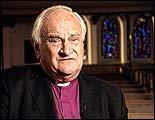
Elaine Spencer, writing in the Christian Post, reported today on an interesting lecture series delivered this week by a senior Anglican archbishop. Although much that Archbishop Robin Eames said touches upon issues relevant to Anglicans specifically, some of his remarks relate to the conflict over homosexuality in several mainline denominations.
http://www.christianpost.com/

A senior Anglican archbishop suggested Wednesday that the division within the worldwide communion has more to do with politics and issues of authority than gay rights and homosexuality.

During his two-part lecture series titled “Anglican Communion: A Growing Reality," at the Virginia Theological Seminary this week, Archbishop Robin Eames of Ireland suggested that the 77-million-member Anglican Communion had to create a stronger central authority to mediate disputes between the liberal North and conservative South.


He also questioned the “real” issues that lie behind the sexuality debate. “Has the Anglican obsession with sexuality been merely the tip of an iceberg hiding other deeper issues which will ultimately dictate the future of the Anglican Communion?” he asked.

“This is not a struggle between two North American provinces and other provinces. It is not a struggle between 36 provinces and 2 on how to 'discipline' the 'wayward,’” he answered. “Rather it is a struggle to discern how to meet conservative concerns for proper biblical interpretation and liberal consensus for justice and inclusion for minorities who claim they face prejudice and discrimination.”

Note the bolded quote at the end. It corresponds to remarks already familiar to readers of “His Barking Dog” from numerous previous postings. In the Anglican communion, as in the ABCUSA, for those on the right the issue is not homosexuality, but “proper biblical interpretation.” Those on the left see the matter in terms of justice and inclusion of minorities. This difference is one of the major reasons why Dr. Roy Medley faces such a daunting task in attempting to build a bridge between the left and right banks in the ABC. No one has yet been able to articulate a way of understanding the AWAB position without seeming to assault biblical authority; no one has yet made a case for the ABE position that does not leave those on the left feeling that it is merely window-dressing for bigotry.

Arguing over the polity of "soul liberty" does not advance the argument much, primarily because of the stark contrast between the left's use of it as a slogan justifying their latitudinarianism vs. the right's similar Shibboleth of "biblical authority" to explain their rejection of homosexual practice. At the heart of the matter, each side holds some very cherished values. And, like the crowds lined up the day after Thanksgiving at the Best Buy, everyone seems prepared to trample the competition in order to have it their own way. In the ABC, both left and right polarities feel that their opponents are trammeling sacred core beliefs in a hurry to proclaim their own views.

In this connection, it might have been helpful had wiser heads in the ABC raised the issue Archbishop Eames addressed relating to the twin issues of proper biblical interpretation and justice concerns several years ago when it still might have made a difference in the keeping the ABCUSA united.

A Pastor Speaks on the ABCUSA Crisis

Dr. Glenn Layne has written an open letter to his congregation, the First Baptist Church of Temple City (CA). Because he describes the issues in pastoral terms, I have taken the liberty of posting his letter in full for the benefit of the readers of His Barking Dog.

My dear church family:


As I write this, the denomination our church has been a part of since its founding in 1941 is in the midst of the severest trial in generations. Our region, the American Baptist Churches of the Pacific Southwest, is in the process of separation from the American Baptist Churches USA.

This action was not taken rashly or rapidly. Over the course of many years, we have treasured the ethnic, racial and geographic diversity of the ABC. Yet many of us have been troubled by the theological diversity within the denomination. This is not merely diversity on unimportant matters, but on core issues such as the nature of God, the how a person is made right with God, and the meaning of Jesus’ sacrificial death on the cross.

The evangelical majority of the denomination, for many years, tolerated this diversity because of our polity. That may be a new term for you so let me explain. Polity refers to how we are organized as a denomination. For example, the Episcopal Church has a highly structured “command” style of polity in which a bishop has great authority over clergy and churches. We have a very “loose” polity, where there is virtually no “top down” authority. We believe that Jesus rules his church by His Word and through the Holy Spirit.

This is an effective and Biblical way of doing things—so long as the word of God is centrally honored as having full authority. But when churches, pastors, theological seminaries and denominational official depart from a robust allegiance to the word of God and resort instead to personal experience, new theological trends and a theology that values acceptance and unity over God’s own revelation, crisis results.

We have reached that point of crisis. This is a personally difficult time for me. I was ordained as an American Baptist pastor in 1983. I have always been a reformer, not a separatist. I have always said, if anybody leaves, let it be the liberals! I’m staying and I’m reforming.

This reforming impulse has guided my own stance to the denomination throughout my years in pastoral ministry. Yet now my region—our region—is taking steps to separate from the denomination I have sought to reform for all these years.

What has become apparent to me is that the American Baptist Churches USA has failed as an effective organization for mission and evangelism due to a fatal flaw in its polity. Lacking a clear, binding, Biblical confession of faith has opened the door to churches, regions and denominational officials who will not affirm basic standards of Biblical doctrine and morality based on our polity.

Let me say again, that I believe that our basic polity is good, solid and Biblical. But it must be coupled with a clear allegiance to the authority of the Scriptures. We need a confession of faith that is binding on the institutions that seek to be a part. That would include churches, pastors, and institutions such as seminaries.

Being “non-creedal”, however, is the one creed that those in authority in ABC/USA can agree on. There appears be no possibility of changing that. Therefore, I support the decision of the Region Board to begin a process of separation from ABC/USA.

If you read press accounts of this, they will say that the “split” is all about homosexuality. This is about 10% correct. It is like the 10% of an iceberg that is above water. Below water is the bigger issue of the authority of Scripture. Will we take a stand for the Word of God in an area in which it speaks with uncomfortable clarity and in which it speaks with a voice that is radically different from the voice of modern culture? We must say with Peter—we must obey God, not man.

The next few months will reshape our region in ways that I cannot predict. And the next few years will reshape Baptists in the United States in ways I cannot foresee.

But I want to offer some hope, and an opinion.

First of all, many, many American Baptists across the country are with us in the Pacific Southwest. The theological heart of the America Baptist churches is where ours is. I saw this dramatically at the conference I attended at Northern Seminary in Chicago in September, as pastors and leaders literally from Maine to California gathered to seek God about the future.

We are far from alone, here in the Pacific Southwest. I believe that will lead to many other regions following our lead and separating from ABC/USA to create a new movement of theologically sound and mission focused Baptist followers of Jesus. Further, I believe that this “new movement” (it really doesn’t have a name yet) will within a few years include up to 70% of the current ABC/USA.

This new movement will then be in a position to evangelize, plant churches and send missionaries without the baggage of a crippling theology dragging us down.

I am convinced that the net effect with be to the benefit of the kingdom of God.

Please be very much in prayer for the times we are in.God, grant us wisdom! Keep us humble so we can hear you, and so that we don’t let human anger or ambition interfere with the new chapter You are opening.

Yours in Jesus,

Pastor Glenn

Thursday, October 06, 2005

Unity or Unending Warfarre


An Opinion Piece
by Dennis E. McFadden

One of the more articulate voices for the ABCUSA center-left has been Timothy Bonney, a pastor in the Mid-America region with experience on the ABCUSA General Board. He blogs against the PSW proposed withdrawal from ABCUSA by saying, "Sadly, the ABC of the Pacific Southwest's region board has chosen to seek to take PSW out of the ABC/USA. They have chosen uniformity over the unity of the church of Jesus Christ." (http://tbonney.squarespace.com/home/)

From my perspective, one of the most interesting arguments being advanced by the left has to do with our unity in Christ. In defense of unity, voices such as Dr. Roy Medley and Dr. Tony Campolo have invoked the High Priestly prayer of Jesus in John 17. Jesus petitions the Father, “The glory that you have given me I have given to them, that they may be one even as we are one, I in them and you in me, that they may become perfectly one, so that the world may know that you sent me and loved them even as you loved me” (John 17:22-23). Jesus links his call for unity with the ecbatic evangelistic end that the “world may know.”

What sensitive Christian can fail to be moved by a direct petition by our Lord Jesus Christ? How can we allow ourselves to engage in petty wrangling over issues of biblical interpretation while a world is watching, judging, and rejecting our message due to our own descent into unseemly church fights?

Spiritual unity in the church of Jesus Christ must be maintained as a pre-eminent value. Paul exhorted the Ephesians to be “eager to maintain the unity of the Spirit in the bond of peace” (Eph. 4:3). But such spiritual unity is not the same as the organizational oneness of administrative units.

The plea for spiritual unity calls all of us up short in our pursuit of our own agendas when dialoging with sisters and brothers who differ from us regardless of whether the differences are over eschatology, baptism, balancing justice and evangelism, or the specific sequence of events in the ordo salutis, the order of salvation.

However, the use of John 17 proves too much. Ironically, some of the same people using our Lord’s High Priestly prayer in John 17 to argue against institutional separation in the ABCUSA are the very ones shouting the loudest that we must lift high our “Baptist” principles. Somehow, they do not fear that the proud chauvinism of “Baptist distinctives” is a threat to unity with our Presbyterian, Episcopalian, Lutheran, or Pentecostal sisters and brothers, merely with those claiming to be Baptist. If the holding of views certain to keep us separated from organizational unity with our sisters and brothers in other denominations are not a violation of the spirit of our Lord’s prayer, then how can a strategic decision to go our separate ways organizationally be any more a breach of that same spiritual unity?


What of the claim that organizational unity within the ABCUSA should exert a uniquely firm hold over evangelical Baptists, inducing them to swallow their theological qualms about mainline heterodoxy and just "go along" with those on the left? If unity among Baptists were to be the criterion, then why not work to unite with the numerically more prevalent and more orthodox fellowships of Baptists here in America? Some Baptist groups boast ten times the numbers of members as the ABCUSA, even counting our dually aligned folks. And, with the exception of that portion of the ABC subscribing to Roger Williams Fellowship ideals (including many in the middle of the spectrum), the vast majority of Baptists in America hold firmly to an historically orthodox view of biblical authority. Claims that we alone represent the "true" Baptist principles sound particularly hollow in light of the empirical and demographic reality."

Indeed, the call for withdrawal is being made for the very same reason that denominations have utility in the first place, because it furthers the cause of Christ to have his people refrain from mission compromising, organizationally distracting, and “embarrassing to the watching world” fights. The arguments for separation are predicated on an honest evaluation of the clash of worldviews dividing us in the ABCUSA. The time invested in wrangling over these issues has proven distracting at least and sinful at most. Have we not reached a point where, as Pastor Glenn Gunderson puts it, “We need to bless each other and move on with our own ministries for Jesus Christ.” Well said, Pastor Glenn!

After all, as Pastor Bonney has stated so well: “I'm just amazed that a long time American Baptist wouldn't know that the local ABC churches are autonmous bodies of believers in Christ who choose what denominations, regions, associations and other organizations they will partner with.”


[This op-ed represents my own ruminations and is not to be confused with any official, official position, or entity within the PSW]


Wednesday, October 05, 2005

ABC "Exodus" - "Christianity Today" Weighs in on PSW Separation


The following article, "American Baptist Exodus - Scripture, homosexuality divide another venerable denomination," by Rob Moll posted 10/05/2005 09:00 a.m., appeared on the Christianity Today site (http://www.christianitytoday.com).

The Pacific Southwest region of the American Baptist Churches USA (ABCUSA) has begun defecting in the largest church exodus from any denomination over the presenting issue of homosexuality. Underlying issues, according to leaders, include the authority of Scripture and church discipline. Representing more than 300 churches, the region's board of directors voted September 8 to begin withdrawal. At least four other regions are considering leaving the ABCUSA, a member denomination in the National Council of Churches.

The ABCUSA officially states that "the practice of homosexuality is incompatible with Christian teaching." However, gay-affirming congregations remain affiliated with the denomination. When conservative regions have disfellowshiped such congregations, those congregations have simply affiliated with a more liberal ABCUSA region.

This summer, conservatives failed to convince the denomination to apply church teaching on homosexuality. The defeat made conservatives despair of making any headway on this issue in the future, says Bill Nicoson, executive director of American Baptist Evangelicals (ABE), a 13-year-old renewal group.

Others are troubled by the breakaway. "This is totally unnecessary," says Tony Campolo, professor of sociology at Eastern University, an ABCUSA-affiliated school. Campolo, also an ordained American Baptist pastor, says the denomination should have let local congregations decide how to handle homosexuality. The denomination of 1.5 million members and 5,800 congregations, founded in 1907 as the Northern Baptist Convention, allows for wide diversity. Homosexuality "shouldn't be a defining issue," Campolo says.

Those leaving argue that something more crucial is at stake. "Biblical authority has brought [separation] to the head today," says Nicoson. "I just can't do ministry and missions together with somebody who may deny the Trinity. … I didn't want to spend any more energy or donors' money in fighting a losing battle."

ABE organized a September meeting at American Baptist-affiliated Northern Baptist Seminary to plan the conservatives' next steps. Before the meeting, Nicoson said he did not want to form a new denomination. However, ABE president Scott Gibson, professor of preaching at Gordon-Conwell Theological Seminary, adjourned the meeting with plans to create an organization that would provide denominational services. Leaders estimate that this new association might include between 1,500 and 2,000 churches.

"I have never heard [in recent history] of several hundred [churches] leaving in one swoop," says Mark Tooley, United Methodist committee director at the Institute on Religion and Democracy. "It serves as a threatening reminder to other mainline denominations of what can happen to them. Perhaps it will caution Methodists and Lutherans and Presbyterians."

Copyright © 2005 Christianity Today. Click for reprint information.November 2005, Vol. 49, No. 11, Page 23

Tuesday, October 04, 2005

News from the "Keeper of the Covenants"

NEWS FROM Dr. MEDLEY

I know the deep division and am aware of the many opinions expressed by a number of voices. Because of this I need to speak clearly about our positions around the issue of homosexuality. Here are five affirmations from our General Board for which I am spokesperson and to which I am accountable:

1. Our Family Life Policy Statement (1984) says, "We affirm that God intends marriage to be a monogamous, life-long, one-flesh union of a man and a woman."

2. A General Board resolution (1992) says, "We affirm that the practice of homosexuality is incompatible with Christian teaching."

3. A General Board resolution (1993) calls for continuing dialogue on human sexuality.

4. As Baptists we affirm the long-held insistence on local church autonomy and priesthood of believers. The denomination submits to churches and individuals in matters of doctrinal determination. This foundation has been in place for 98 years. (Bylaws of Northern Baptist Convention, 1907)

5. The principle of voluntary association in mission calls us together to accomplish Kingdom tasks that are better done together than apart. It declares that we need each other if we are to accomplish God’s purposes for us. (Autonomy and Interdependence Within the American Baptist Denomination: A Declaration, 1982)
As General Secretary, I abide by the policies and resolutions of the General Board, and encourage the National Boards and the Regions to honor those decisions. I will continue to be faithful in identifying the positions the General Board has taken on issues of our day.

In these changing times, we can expect to go through changes in the denomination. For that reason I have sought and received the input of American Baptists in gatherings such as Seek It!, the Biennial, prayer meetings in the regions and the Mission and Ministry Consultations. With God’s direction, here is how I intend to lead us forward.

1. We are fully committed to the freedom, autonomy and primacy of the local church. It is the fundamental and essential unit of God’s mission in the world.

2. American Baptists are not going to stop being Baptists. We will move forward with our current vision, mission, policies and resolutions. We recognize that we will always have dissenters among us. We will engage in ongoing dialogue on the issues on which we disagree, but we will be clear about our policies. We will encourage local churches and regions to go on record with their dissent and passionately forge ahead with our mission and ministry.

3. There is nothing sacred about our organizational structure. We will not engage in a "feeding frenzy" over power or resources. We will continue to adapt as required by missional priorities.

4. I believe that as General Secretary I am the "keeper" of the covenants. My role is to serve as the "head of communion" for our American Baptist family in the ecumenical community. I am not a presiding bishop; I am the denominational pastor. My task is to lift up the mission and vision of the family and to oversee each partner’s participation in moving the mission toward the vision.

NEWS ANALYSIS AND COMMENTARY

One of the key issues relates to what the word "encourage" means. Dr. Medley affirms that he personally abides by the policies and resolutions of the ABCUSA and "encourages" National Boards and Regions to "honor" them as well. But he also says he "encourages" local churches and regions to go on record with their dissent from ABCUSA policy statements and resolutions. This, Medley believes, expresses our identity as "being Baptists."

When the General Secretary "encourages" regions and churches to dissent and that dissent involves sending advocates of positions the ABCUSA has corporately and democratically declared "incompatible with Christian teaching" to fill important board and committee slots, we have a polity anomaly. On the one hand, we have spoken (as well as our free church tradition will allow) that something is not only embarrassing or ill-advised, but actually incompatible with Christianity. On the other hand, we cherish the tradition of ruggled individuality and congregational autonomy.

Dr. Medley's solution to the dilemma is to proclaim that he is not a "presiding bishop," merely a "denominational pastor." Interesting choice of words. In the New Testament, one of the chief roles of the "pastor" or "shepherd" is to protect the flock from all manner of dangers. Jesus, himself, accepts the designation of "shepherd" when he says,

"Truly, truly, I say to you, I am the door of the sheep. All who came before me are thieves and robbers, but the sheep did not listen to them. I am the door. If anyone enters by me, he will be saved and will go in and out and find pasture. The thief comes only to steal and kill and destroy. I came that they may have life and have it abundantly. I am the good shepherd. The good shepherd lays down his life for the sheep. He who is a hired hand and not a shepherd, who does not own the sheep, sees the wolf coming and leaves the sheep and flees, and the wolf snatches them and scatters them. He flees because he is a hired hand and cares nothing for the sheep. I am the good shepherd. I know my own and my own know me" (John 10:8-14).

If Dr. Medley truly wants to be a pastor to this denomination, perhaps he would be advised to see to it that the wolves of heterodoxy and secularism do not prey upon the flock entrusted to his charge.

Dennis E. McFadden

[Excerted from a pastoral letter from Dr. A. Roy Medley to American Baptists dated 10/3/05; taken from the ABCUSA web site. The personal comments and observations are mine alone and do not represent any official or entity within the PSW.]