Saturday, January 07, 2006

When Holding On to One Another Costs Too Much

Presbyterian James D. Berkley, Interim Director of Presbyterian Action, has written recently on the controversy in the Presbyterian church over their Theological Task Force report on human sexuality. ABC observers will find surprisingly close parallels to the issues, if not the exact lanugage, of our own conflict. The echoes of Dr. Medley's Biennial address are striking, particularly the desire to hold on to "one another" despite "differing convictions."

Here’s what I see: Two paragraphs in a row in the editorial find Haberer speaking approvingly of ways for Presbyterians “to hold on to one another while holding on to their differing convictions” (emphasis added).

Haberer is holding up two things he considers worth holding on to: (1) “one another” and (2) “differing convictions.” People are worth holding on to, but I would contend that differing convictions are actually the problem--make that an evil--rather than a good.

Obviously, if a terrorist believes that blowing up babies in a nursery is good and a humanitarian believes saving babies from danger is good, both firmly held convictions are not equally noble. Nor will such mutually contradictory viewpoints be conducive to good fellowship and singleness of purpose among the holders.

Holding on to convictions can be terrible, if the convictions are evil, untrue, damaging, or God-defying. In addition, some mutually exclusive convictions will never meld successfully in the same group. Holding on to convictions per se is not necessarily a good thing.

So what are the different convictions that Haberer believes people can hold on to while they hold on to each other in the Presbyterian Church? One side thinks it evil that sexually active homosexual persons cannot be ordained under our constitution. It’s prejudiced, unjust. The other side thinks it evil that God’s clear moral law and will could ever be lightly tossed aside to ordain the serially sexually unrepentant. It’s immoral, conforming to Satan’s lie. Both are firmly held convictions.

But there’s a problem. Both sides can’t be right, since one conviction contradicts the other. Both sides could be wrong, and some third conviction could be right--whatever it might be. But far more likely, one side is right and one side is wrong.

If that’s the case, what is so great about celebrating a church in which a great number of members are advocating by conviction something actually morally evil? And perpetuating that condition. And calling it a good to be valued?

Hold on! Shouldn’t a church interested in God’s true truth (as Francis Schaeffer put it) be more concerned with resolving colliding convictions rather than tenaciously holding on to them? Shouldn’t a church interested in God’s will want to determine and live out that will, rather than simply say about tough moral quandaries, “Whatever…”?

I can’t agree with Jack Haberer on this one. There are convictions within the PCUSA that badly need to change, not be held on to. That’s classically what conviction of sin, confession, repentance, and sanctification are all about--turning from wicked ways and thoughts. “Turn back, O man, forswear thy foolish ways!” If there are right convictions and wrong convictions in the church, then we must have the gumption to try to turn the wrong-headed convictions into righteous ones.

No. Holding on to one another cannot come at the cost of cheap denigration of truth and God’s will. As our Book of Order so wisely states, “No opinion can be either more pernicious or more absurd than that which brings truth and falsehood upon a level, and represents it as of no consequence what a [person’s] opinions are” (G-1.0304).

Remember the old ad line about chicken: “Parts is parts!”? Well, “Convictions is convictions” is just as silly.

Source: http://jimberkley.blogspot.com/2006/01/let-convictions-collide-as-they-must.html

[As usual, the choice to cite our Presbyterian brother is unilateral on my part and not to be confused with anyone having official roles in the PSW]

Friday, January 06, 2006

Loose Tongue + Hubris + Reporters Ignorant of the Meaning of Religious Language = Robertson Flap

From the January 5 edition of CBN's The 700 Club:

ROBERTSON: I have said last year that Israel was entering into the most dangerous period of its entire existence as a nation. That is intensifying this year with the loss of Sharon. Sharon was personally a very likeable person. I am sad to see him in this condition.

But I think we need to look at the Bible and the Book of Joel. The prophet Joel makes it very clear that God has enmity against those who, quote, "divide my land." God considers this land to be his. You read the Bible, he says, "This is my land." And for any prime minister of Israel who decides he going carve it up and give it away, God says, "No. This is mine."

And the same thing -- I had a wonderful meeting with Yitzhak Rabin in 1974. He was tragically assassinated, and it was terrible thing that happened, but nevertheless, he was dead. And now Ariel Sharon, who was again a very likeable person, a delightful person to be with. I prayed with him personally. But here he is at the point of death. He was dividing God's land, and I would say woe unto any prime minister of Israel who takes a similar course to appease the EU, the United Nations or United States of America. God said, "This land belongs to me, you better leave it alone."

Reporting on Robertson's remarks dumbed them down to a crass attack on an apparently dying man. This prompted a swift White House response, distancing itself from Robertson's remarks. A White House spokesman called the comments about Ariel Sharon’s stroke “wholly inappropriate and offensive.”

Spokesman Trent Duffy responded Friday to the Christian leader’s suggestion that the Israeli prime minister, who suffered a massive stroke Wednesday, was being punished by God for dividing the Land of Israel by evacuating Jewish settlements in the Gaza Strip last summer. “I think those comments were wholly inappropriate and offensive, and really don’t have a place in this or any other debate,” Duffy said onboard Air Force One on Friday.

The Robertson statement raises so many interesting points: how does a sovereign God exercise his prerogatives in history? Should Christian leaders presume to speak for the Lord in affixing blame and assinging explanations for disasters? Why do good things happen to bad persons and vice versa? Why does the press find Robertson so interesting anyway?

However, the point I want to raise is the difficulty conservative Christians have communicating in understandable ways via the secular media. If a pastor said "I felt the Lord leading me to speak up," a secular press would be jumping to conclusions of psychosis. If one of us says that you "must be born again to enter the Kingdom of Heaven," we would be lambasted for our hate speech or, at the very least, a shocking absence of largeness of spirit and comity with people of other religions.

People like Robertson are given to extravagant comments and controversial pronouncements. He certainly seems capable of getting himself into enough trouble on his own even without misquotations or misundersanding. But, the media appear singularly tone deaf to the peculiar language of conservative Christianity. When simple statements affirming a belief in the uniqueness of Christianity come across as hate speech and the common parlance of the church gets heard as evidence of psychotic breaks with reality, then we must ofject to the collective ignorance of those reporting the news.

All of you who find yourself in a position to offer up sound bites to the press already know how overly careful we must be to avoid sounding like lunatics when the story gets written. Robertson, who evidently has an endless store of outrageous lines for media consumption, becomes an easy enough person to misquote and take out of context. That does not explain, however, the tendency for the secular press to be so ignorant of the language of faith and the meaning of faith utterances.

One could only hope that educated and professionally experienced reporters would make a greater effort to understand the people they cite. No wonder we get the Middle East story so wrong so often. We do not fairly report what we do not begin to understand.

Thursday, January 05, 2006

"It's Not Me, No, No, No, It's Not Me, Lord! It's Not Me You're Looking For Lord"

Tulsa pastor arrested on lewdness accusation

By RICHARD GREEN - Associated Press Writer

OKLAHOMA CITY (AP) — An executive committee member of the Southern Baptist Convention was arrested on a lewdness charge for propositioning a plainclothes policeman outside a hotel, police said.

[The 59 year old] senior pastor at South Tulsa Baptist Church, was booked into Oklahoma County Jail Tuesday night on a misdemeanor charge of offering to engage in an act of lewdness, police Capt. Jeffrey Becker said. [He] was released on $500 bail Wednesday afternoon.

[The pastor], who has spoken out against homosexuality, asked the officer to join him in his hotel room for oral sex. [He] was arrested and his 2005 Mercedes automobile was impounded, Becker said.

“I was set up. I was in the area pastoring to police.”

The lewdness charge carries a penalty of up to one year in jail and a $2,500 fine.


Wow! Doesn't that just bless your hearts? Imagine the Davidic like sound to the line: "I was set up." Just think, if this fellow had written Ps 51, it might have gone something like this . . .

Psalm 51 (2006 User Friendly Version of "Repentance")

Have mercy upon me, O God, according to my excuses: unto the multitude of my explanations blot out my mistakes of judgment.

Wash me moderately from mine issues, and cleanse me with a surplus of self esteem.

For I explain my alleged transgressions: and my supposed sin is never before me.

Against me, me only, have I let myself down, and done this minor indescretion in the sight of whoever finds out: that thou mightest be accommodating when thou speakest, and be gentle when thou understand my circumstances.

Behold, I was shapen in an environment of other people’s bad influences; and in inopportune circumstances did my mother conceive me.

Behold, thou desirest an average response in the inward parts: and in the hidden part thou shalt give me free will to go whichever way I find attractive.

Purge me with extra understanding, and I shall be enabled: bless me, and I shall be happy for the moment.

Make me to hear joy and gladness; that the bones which thou hast kept from breaking may rejoice.

Hide thy face from my all fully explainable slights, and overlook all mine inperfections.

Give me an easy time, O God; and renew a self-determining spirit within me.

Cast me not away from thy presence because I was set up; and take not thy holy spirit from me, remembering that none of it was really my fault.

Restore unto me the joy of thy salvation; and uphold me with thy free spirit.

Then will I enjoy my hypocrisy; and sinners can fend for themselves.

Deliver me from guilt trips by others, O God, thou God of my salvation: and my tongue shall sing aloud of thy permissiveness.

O Lord, open thou my lips; and my mouth shall shew forth my enjoyment with myself.

For thou desirest not sacrifice; which is a good thing so that it will not cost me anything valuable: thou delightest not in burnt offering or sacrifices of any kind.

The "sacrifices" of God are a happy spirit: a full and a self-satisfied heart, O God, will make me feel so fulfilled and cozy.

Wednesday, January 04, 2006

PSW Unweils Rules for the April 29 Duel

PSW has posted the following details on the April 29 meetings on their web page. Readers of "His Barking Dog" may be interested in the "rules" relating to the upcoming advisory vote by congregational representatives (http://www.abcpsw.com/specialmtg.html).

Special Meeting of the Region - April 29, 2006
Information Your Church Needs to Know Beforehand

Information Meetings - Prior to the April 29, 2006 Meeting

The Executive Minister will hold a series of Informational Meetings for pastors, church leaders and interested members in various locations around the Region in February. Information will be shared regarding the recommendation of the ABCPSW Board of Directors including reasons for the action, the process by which the decision will be made, and the future of the ABCPSW as a Region not in Covenant with the ABCUSA.

What Should Churches Consider Doing Before April 29, 2006?

Churches should review the documents that may define their relationship with the ABCUSA and/or the ABCPSW. These include:

Articles of Incorporation.
Church Bylaws or Constitutions.
Other documents that deal with the operation and governance of the church.
There are numerous situations in which a church's relationship with the ABCUSA and/or the ABCPSW is pivotal to a property or financial transaction. Often legal documents state that a loan or actual ownership of a property is conditioned on the church continuing in affiliation with the ABCUSA. For this reason, we recommend that churches review documents for reference to the ABCUSA including:
Loan Agreements and Promissory notes, including loans from ABCPSW, the ABCUSA, another ABC congregation or the American Baptist Extension Corporation.
Trust Deeds
Deeds and related title documents
Property Trust Agreements
Leases
Property use agreements
Church or pastor support agreements
Employment agreements
Property purchase agreements or option to purchase agreements
Personal property trust agreements (for example, gifts of cash or property in a special fund or trust for the support of a church program)
Guarantees

In addition, churches may have entered into gift annuities, charitable remainder or charitable lead trusts, or similar arrangements with church members providing for payments. These should be reviewed to ascertain whether there are terms or conditions requiring affiliation with the ABCUSA.

This is not an exhaustive list, but one intended to encourage you to review potentially important documents before taking actions. All documents that refer to the relationship between a church and the ABCUSA and/or the ABCPSW should be reviewed for their effect on both parties, and to determine steps that should be taken to avoid problems.

If your review brings to light a situation that may be impacted by your church's decision, we urge you to consult with legal counsel for guidance on steps you should take to resolve the situation.

In addition to a church's own records and archives, copies or originals of many church legal documents are on file at the ABCPSW Church Resource Center.

The Special Meeting of the Region - April 29, 2006

The bylaws of the ABCPSW do not provide for meetings of the Region other than at the Annual Conference. However, under the California law that deals with non-profit corporations, such a meeting is permitted. The meeting will be run according to the following rules:

1. Churches will hold meetings in accordance with their own bylaws to determine how their delegates to the Regional meeting will vote on the issue.

2. Nature and Purpose of the Meeting of the Region. Both the Covenant of Relationships of the ABCUSA and the Bylaws of the ABCPSW authorize the Region Board of Directors to make decisions regarding the adoption, amendment or termination of any covenant to which the Region is party (Article 6, Section 2, E). In final analysis, the Region Board of Directors must make the final decision regarding whether to withdraw from the Covenant of Relationships with the ABCUSA. The purpose of the Meeting of Delegates from the Churches is for the Board to receive an expression of the will of the Delegates to provide the Board with the input it needs to make a responsible and informed decision. Following vote, the Board of Directors must meet to take appropriate action based on the vote by church delegates.The recommendation approved by the Region Board must clearly state this purpose of the meeting.

3. The meeting will be held simultaneously at five sites: First Baptist Church of Pomona and sites to be selected in Phoenix, Las Vegas, Hawaii, and on the Hopi Reservation. In order for this to happen: a) Everyone at every site must be able to hear both what is being said at the podium at the main site (Pomona) and questions or comments made by delegates at all sites; b) There must be opportunity for questions for clarification of the issue before the body. Because informational meetings will be held in various locations throughout the Region prior to the Meeting of the Region, the Board may rule that there will be no discussion or debate at this meeting, c) A member of the Board of Directors should preside at each location, d) The President of the Region will lead the meeting from Pomona. The role of Board members presiding at distant locations will be to expedite arrangements so each location follows directions from the President, e) Ballots will be counted at all sites. The President will call for results from all sites, which will be announced and tallied. The President will then announce the total vote.

4. Each church will be assigned a number of delegates in accordance with the bylaws of the ABCPSW, Article 4.

Each Cooperating and Affiliated Church may elect from its membership:
(1) five (5) Delegates;

(2) one (1) additional Delegate for every one-hundred (100) members of such Church in excess of the first fifty-one (51) members;

(3) one (1) additional Delegate if such Church's per capita giving to the American Baptist United Mission Basics (or any successor thereto) in the calendar year preceding the Regional Annual Conference equaled $30, plus one (1) additional Delegate for each whole number multiple of $10 of such per capita giving in excess of $30 in such year;

(4) one (1) additional Delegate for each whole number multiple of $3,000 of such Church's total giving to the American Baptist United Mission Basics ** (or any successor thereto) in the calendar yearpreceding the Conference; and

(5) In addition to the foregoing, the Senior Pastor of any Cooperating or Affiliated Church may serve as a Delegate. (Note: When the ABCPSW is meeting in regard to issues related ABCUSA, Affiliated Churches will not be able to participate in any discussion or decision relative to these issues.)** The equivalent to United Missions Basics in the Flexible Stewardship Plan is the sum of Lines A1 (ABCPSW Ministries); A2 (International Ministries); A3 (National Ministries); and B (United Mission Option).

The ABCPSW Bylaws indicate that persons named by churches as delegates to a meeting of the Region must be registered in advance with the Executive Minister. For the purpose of this meeting, Delegate Registration must take place not later than one week before the scheduled meeting and should indicate the site that will be attended by church delegates. Lists of Delegates will be available at each site on the day of the meeting. As delegates arrive, they will register and receive printed ballots for use in the meeting.

6) Because the purpose of this vote is to provide the Board of Directors with a clear expression of the will of the Delegates from churches, there will be no delegates representing Associations. Furthermore, members of the Regional Board of Directors will not be delegates, unless they are so registered as delegates from churches.

What is a Cooperating Church?

All Cooperating Churches in the ABCPSW are eligible to vote. A cooperating church holds membership in both ABCPSW and the ABCUSA.

Who is not eligible to vote?

Churches that have already withdrawn from the ABCUSA are Affiliated Members with the ABCPSW and therefore cannot vote on issues relating to the Region's participation in the ABCUSA.

New church plants that have not applied and been accepted into full membership in the Region (new church plants are not eligible to apply for full membership in the region until at least three years from date of launch, reach sustainability, are incorporated, and are recommended by their association).

When Our Prayers for a Miracle Seem to Fall Flat

ABNS ran this account of the tragedy in West Virginia (http://www.abc-usa.org/news/20060103a.htm). The only survivor was 26-year-old Randal McCloy Jr. Deacon Toler of the ABC church was one of the 12 men who died in the tragic events of the past few days. Optimistic, but ultimately erroneous, news reports dubbed initial reports of survival by all but one of the miners the "West Wirginia Miracle." Growing up I remember hearing stories of the difficulties faced by my paternal grandfather and uncles who spent years in the coal mines. Our hearts go out to the families of all of the miners.

AMERICAN BAPTIST AMONG MINERS TRAPPED IN WEST VIRGINIA

VALLEY FORGE, PA (ABNS)—A deacon at Stump Chapel—an American Baptist church in Sutton, W.Va.—is one of the 13 miners trapped early Monday by an explosion in the Sago Mine in Tallmansville, W.Va.

American Baptists across the country are encouraged to pray for Deacon Junior Toler and his family, along with the other 12 miners and their families.

Also, Sago Baptist Church—the church in the media photos where families and friends are gathering for news as the crisis unfolds—is an American Baptist congregation in the West Virginia Baptist Convention. Pray for the church, as well, as it ministers to so many at such a difficult time.

Both the West Virginia Baptist Convention and National Ministries, through the Office of Disaster Relief and One Great Hour of Sharing offering funds, have offered assistance to the church.

Monday, January 02, 2006

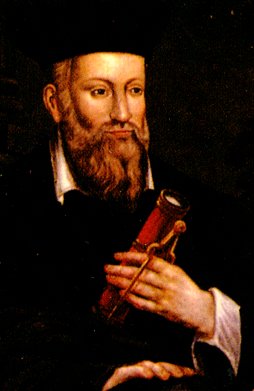
No Nostradamus Predictions Here, Just Educated Guesses on the ABC Crisis

"This year, as the PSW departs the ABC, other regions may well be emboldened to act. Messages I have receieved from all across the nation bear witness that several other regions may well follow PSWs lead." - Dr. Glenn Layne

I have also received information from other regions supportive of the PSW actions. One well placed observer made the following prediction:

"I do believe the ABC-USA is well on its way to imploding. Regions may not leave in mass like the PSW, but watch the continuing distancing from VF that will come about by inidividual churches, and even Regions flying under the radar over the next two years. It will be a defacto disentegration, and Roy will be the responsible master architect."

Support for this trajectory is seen in the implications of the name change in the region formerly known as American Baptist Churches of the West, the diversion of money from the Unified Buget by increasing numbers of churches throughout the country, and by denominational statistics released by Valley Forge.

Money remains the tip of the sword in much of the debate. During the past few months efforts were made to play "good cop/bad cop" by VF personnel. John Sundquist, with the blessing of Dr. Medley, toured key mission giving churches, making appointments with their pastors. Several of the pastors have explained the message as one of clever persuasion theory. One summed it up this way: "Sundquist came in, lamented the way the idiots were mucking things up in Valley Forge, but shruggled his shoulders and said 'what can you do, we're family.'"

His appointments supported Medley by the novel tactic of agreeing with pastors in most/all of their criticisms of all things Valley Forge, offering his own "insider tips" on how bad things really are, but making a plea for sticking with the "family," offering faint hopes of change in the future. Smart strategy, but too clever by half. One of the pastors laughed at the thought that John actually thought that pastors of significant giving churches would fall for the transparent ploy.

Look for little official action in other regions until AFTER PSW takes a vote of the churches on April 29. The direction of the decision and the magnitude of the plurality/majority may prove influential in other regions. But, don't be surprised if the prediction of gradual disintegration mentioned earlier in this blog turns out to be the actual mechanism of dissolution.

Dennis E. McFadden

[Claiming no Nostradamus-like predictive ability nor connection to any PSW entity; just blogging what I see through my "99 Cents" store telescope]

Sunday, January 01, 2006

Glenn Layne: "Looking back, we see a denomination in slow free-fall. But looking ahead we see a new opportunity . . . Join us!"

Dr. Glenn Layne's "Durable Data" (http://www.durabledata.
blogspot.com/) has often brought important issues to the attention of the wider public. Today he published an open letter to the larger community of American Baptists. His encouragements, admonitions, and concerns deserve as wide a hearing as possible. "His Barking Dog" reprints the piece in full for the edification of the our readers.

My dear brothers and sisters:

As 2006 dawns, it is clear that this will be a year bringing massive changes to the existing American Baptist Churches USA. In late April, the ABC of the Pacific Southwest will almost certainly vote to sever ties from the ABCUSA. At the same time, the renewal group American Baptist Evangelicals is in the process of reformulating itself into an viable umbrella organization for American Baptists who are dissaffected by conviction from the Valley Forge leadership--or, to say it more pointedly, from the lack of Biblically grounded leadership from Valley Forge.

The American Baptist Churches, USA, as a organization is in slow collaspe. They do not recognize it. They believe that they can muddle on without major reformation. That is an illusion.

Regions are becoming more independant of and less subservient to the national organization. The ABC of Michigan, very much a centralist region (in terms of theological temper) actually proposed that the Office of the General Secretary be abolished, which would basically put the ABC back into the organizational shape it had over 100 years ago. This proposal has been rebuffed. In terms of organization, the Valley Forge establishment is very, very conservative.

The ABC of the West is so dissaffected from ABCUSA that as of today it is known by the parachurch-sounding name Growing Healthy Churches. Other signs of distance and regional assertion can be seen across the country.

We are on the edge. Looking back, we see a denomination in slow free-fall. But looking ahead we see a new opportunity.

This year, as the PSW departs the ABC, other regions may well be emboldened to act. Messages I have receieved from all across the nation bear witness that several other regions may well follow PSWs lead.

In other areas, in regions who walk in loyalty to Valley Forge, there are many churches who will no longer be able to remain apart of the region or of ABCUSA with a good conscience. They are leaving now, not with unfurled flags, but in sorrow and with a detemination to continue on in mission.

A new movement is being formed. It will be stoutly evangelical. It will be Christ-centered, not denomination-centered. It will be missional, not a bureaucratic.

2006 is your year. Join us mission, in faith, in fellowship and in making a new day. Join us in reaching millions of lost Americans who need to hear the good news of Jesus. Join us in reaching millions more across the globe. Join us in a clear conscience, the end of compromise, the end of having to apologize for the shameful equivocations that are the common parlance of Valley Forge.

Be much in prayer. A new day dawns. Be done with the night.

This is the day which the Lord has made; we will rejoice and be glad in it.

Glenn Layne

I speak in no official capacity; I speak for no one except myself.

Fighting Fair in 2006: Even if we can't "just get along," can we at least not get along more Christianly?

"Happy New Year. Welcome 2006. A Big Year with Big Changes for Baptists."

So opines Dr. Glenn Layne in his "Durable Data" blog (durabledata.blogspot.com). In the midst of our own navel gazing and self-doubt, much of it appearing in the threads of the Message Board of the American Baptist Evangelicals, it is probably useful to see the focus and determination of those on the left. In the current issue of "Associational," published by the Association of Welcoming & Affirming Baptists (http://www.wabaptists.org/associational.htm), executive director Ken Pennings says:

AWAB’s vision is to create and support genuine community among our members. I’m now working with 12 teams of people throughout the country, each planning a community-building event to bring together welcoming Baptists for food, fun, fellowship, worship, education and witness.

I love working with the program leaders of other welcoming programs. We’re working on a strategy to make the Institute of Welcoming Resources (IWR) more easily accessible and more complete in the resources it offers.

Each member of the AWAB Council has taken on a key position of leadership, in membership, finances, pastoral relations, denominational relations, communications, and programming. I love working together as a team!

We know about all that has transpired in the ABC/USA, and are resolved not to be distracted from our mission by what might happen in the denomination. We will invest our energy doing the great work God has called us to do.

Indeed, The Lord has exalted AWAB by a gift so great, so unheard of, that language is useless to describe it, and the depths of love in our hearts can scarcely grasp it. We offer then all the powers of our souls in praise and thanksgiving. The Almighty has done great things for AWAB, and holy is God’s name!

Rev. Pennings possesses an optimistic spirit, a clear sense of mission, a vision for transformation within the ABCUSA, and a self-consciously biblical/theological grounding for his position. Regardless of where you come out on AWAB, reading their material impresses me with the factual and evenhanded (and usually restrained) nature of their news reporting, the absence of overreaching in their polemics, and the surprisingly gentle way in which they deal with their opponents. With the exception of a tendency to label as "far right" the positions of people actually inhabiting the "center right" niche in our denomination, they model a "Christian" demeanor in the midst of conflict.

If you have read ANY of my posts in this blog or the ABE Message Board, you realize my deep opposition to AWAB and the positions of the Valley Forge leadership. I am the guy, afterall, who took ordination with another evangelical group during 2005 as a protest against VF equivocations. However, I sometimes long for the evidence of more of the Fruit of the Spirit and Christian graces in our discussions. At times our intra-evangelical differences with each other are aired with an acrimonious edge, our reporting includes unsubstantiated (or at least unverified) rumors, and our tone toward those on the left has taken on a vitriolic acidity.

Looking back on some of my 495 postings on the ABE Message Board (mostly since being totally offended at the Denver biennial), these admonitory comments are made looking in the mirror. My prayer for 2006, as we face those "big changes" Glenn Layne predicts, includes a hope that we will exercise discipline in our use of our tongues so as not to sin against those with whom we disagree.

I am happy to polemicize with the best of 'em, just not unfairly or even unintentionally bearing false witness. While we should continue to oppose AWAB and the Medley administration at SO many points and on SO many levels, we can stand to learn some lessons from them.

Even if we can't "just get along," can we at least not get along more Christianly in 2006?

Dennis E. McFadden

Saturday, December 31, 2005

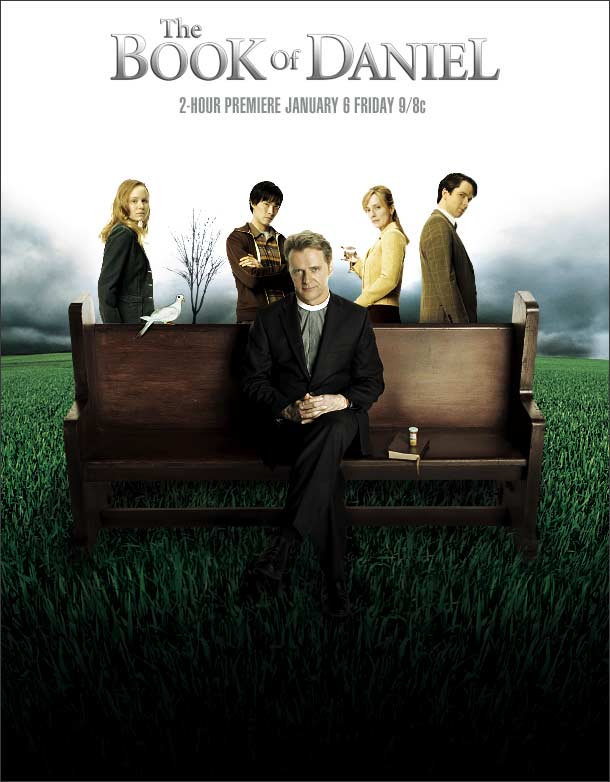
"The Book of Daniel" Prompts Lion's Den of Opposition. Can NBC Read Writing on the Wall?

NBC has stirred up a lion's den of opposition to its new series, "The Book of Daniel." Set to air Jan 6 with a two hour premier, NBC ads promote the program with the teaser: "Sex. Drugs. Stolen money and martinis. Family can really test your faith." Imagine a series about a drug-addicted Episcopal priest; his alcoholic wife; his son, a 23-year-old homosexual Republican; his daughter, a 16-year-old drug dealing daughter; a 16-year-old adopted son who is having sex with the bishop's daughter; his lesbian secretary who is sleeping with his sister-in-law; and a very unconventional white-robed, bearded Jesus who talks to the priest. And to think that NBC wonders why it is considered controversial. "The Christian Post" offers this report on the conflict.

Saturday, Dec. 31, 2005 Posted: 1:45:14PM EST

A television show that has yet to air and features an Episcopal priest as the main character is being opposed by one group, which says it objects to Hollywood’s focus on negative aspects of Christians and has called on supporters to contact the show’s sponsors to pull their advertising.

The program, “The Book of Daniel,” portrays the lives of one Episcopal priest and his family. The network airing the program, NBC, describes the relationship between the priest and his family as “loving, but challenging.” The American Family Association (AFA), which opposes the show, says the family is “deeply dysfunctional,” according to the L.A. Times.

The AFA objects to the portrayal of Christians on the program and is on a quest to identify its sponsors, and encourage conservative supporters to write letters to keep them from advertising.

“While we certainly recognize that Christians do have problems, and they have problems in their families, it seems that Hollywood consistently wants to focus on those types of Christians and those types of ministers – when the reality is that many, many more are hard-working," said AFA Spokesman Ed Vitagliano, according to Agape Press.

He said that the organization will be monitoring the program since it “appears to be yet one more show that's going to dog the Christian faith.

"The actor portraying the priest, Aidan Quinn, addressed potential objections, saying that they were misplaced.

If "Daniel" offends some Catholics, "I don't really care that much," he said, according to the Associated Press. "That's certainly not the intent. That's certainly not the truth. There are filters it (the show) goes through, including Jack's (the show’s creator) and mine."

Quinn said the show’s main character has good intentions but has a long way to go.

"It's a good thing Daniel started off so neurotic," he said. "He wants to be an evolved, spiritual man who takes care of his family. He's got miles to go before he sleeps."

The AFA claims it had sent nearly 400,000 thousand letters and e-mail message to NBC. However an NBC spokesman could only confirm that several hundred messages had been received, according to the L.A. Times.

“We’re confident that once audiences view this quality drama themselves, they’ll appreciate this thought-provoking examination of one American family,” said NBC in a press statement.

The network and the AFA have placed their emphasis on different aspects of the show.

The AFA’s description of the show’s characters included mentions of “a drug-addicted Episcopal priest; his alcoholic wife; his son, a 23-year-old homosexual Republican; his daughter, a 16-year-old drug dealing daughter; a 16-year-old adopted son who is having sex with the bishop's daughter; his lesbian secretary who is sleeping with his sister-in-law; and a very unconventional white-robed, bearded Jesus who talks to the priest.”

In a press statement addressing concerns about the show, NBC describes the family as the “Reverend Daniel Webster, an unconventional Episcopalian minister;” Peter, “his 23-year-old son, who struggles with the loss of his twin brother;” Grace, "his 16-year-old daughter who doesn’t try to push her father’s buttons but succeeds at it nonetheless;” Adam, "his 16-year-old adopted Chinese son, a handsome and cocky high school jock with a wicked sense of humor; a “loving wife” with a “fondness for mid-day martinis;” and an actor portraying Jesus, “whose frequent chats with Daniel serve to remind him of his strengths and weaknesses.”

The Mississippi-based AFA has previously called boycotts on Ford for advertising in gay publications, and similar measures on Target retail stores for not using “Christmas” in advertising and indoor displays.

Jason Davis
jason@christianpost.com
http://www.christianpost.com/

Thursday, December 29, 2005

Help from a Dead Puritan on New Years' Resolutions

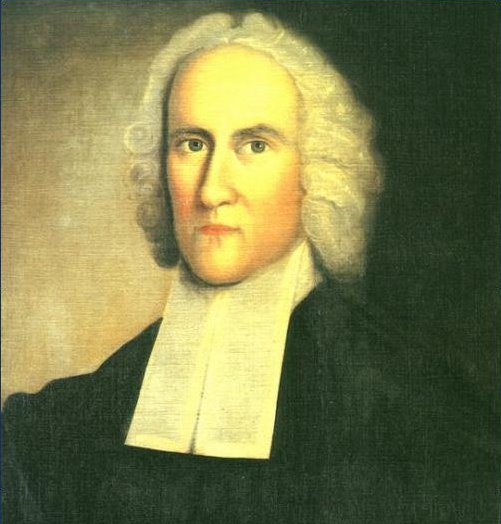
Many of us find the making of resolutions irresistible at this time of year. Jonathan Edwards (1703-1758) has generally been credited with being the greatest theologian or philosopher ever born on American soil. When you consider that he penned the following resolutions at one sitting in 1722 in New Haven, his prodigious talents are even more evident. You do the math. I have socks older than he was when writing his resolutions. Ponder these first 21 points as you approach another New Years.

The Resolutions of Jonathan Edwards (1722-1723)

Being sensible that I am unable to do anything without God's help, I do humbly entreat him by his grace to enable me to keep these Resolutions, so far as they are agreeable to his will, for Christ's sake.

Remember to read over these Resolutions once a week.

1. Resolved, that I will do whatsoever I think to be most to God's glory, and my own good, profit and pleasure, in the whole of my duration, without any consideration of the time, whether now, or never so many myriad's of ages hence. Resolved to do whatever I think to be my duty and most for the good and advantage of mankind in general. Resolved to do this, whatever difficulties I meet with, how many and how great soever.

2. Resolved, to be continually endeavoring to find out some new invention and contrivance to promote the aforementioned things.

3. Resolved, if ever I shall fall and grow dull, so as to neglect to keep any part of these Resolutions, to repent of all I can remember, when I come to myself again.

4. Resolved, never to do any manner of thing, whether in soul or body, less or more, but what tends to the glory of God; nor be, nor suffer it, if I can avoid it.

5. Resolved, never to lose one moment of time; but improve it the most profitable way I possibly can.

6. Resolved, to live with all my might, while I do live.

7. Resolved, never to do anything, which I should be afraid to do, if it were the last hour of my life.

8. Resolved, to act, in all respects, both speaking and doing, as if nobody had been so vile as I, and as if I had committed the same sins, or had the same infirmities or failings as others; and that I will let the knowledge of their failings promote nothing but shame in myself, and prove only an occasion of my confessing my own sins and misery to God.

9. Resolved, to think much on all occasions of my own dying, and of the common circumstances which attend death.

10. Resolved, when I feel pain, to think of the pains of martyrdom, and of hell.

11. Resolved, when I think of any theorem in divinity to be solved, immediately to do what I can towards solving it, if circumstances don't hinder.

12. Resolved, if I take delight in it as a gratification of pride, or vanity, or on any
such account, immediately to throw it by.

13. Resolved, to be endeavoring to find out fit objects of charity and liberality.

14. Resolved, never to do anything out of revenge.

15. Resolved, never to suffer the least motions of anger to irrational beings.

16. Resolved, never to speak evil of anyone, so that it shall tend to his dishonor, more or less, upon no account except for some real good.

17. Resolved, that I will live so as I shall wish I had done when I come to die.

18. Resolved, to live so at all times, as I think is best in my devout frames, and when I have clearest notions of things of the gospel, and another world.

19. Resolved, never to do anything, which I should be afraid to do, if I expected it would not be above an hour, before I should hear the last trump.

20. Resolved, to maintain the strictest temperance in eating and drinking.

21. Resolved, never to do anything, which if I should see in another, I should count a just occasion to despise him for, or to think any way the more meanly of him.


Have Yourself a Slappy Slappy Christmas? Santa Claus as Theological Enforcer

Have Yourself a Slappy Slappy Christmas?

This will be my last Christmas-themed post of the season. Honest!

Many of our fellow citizens enjoyed a wonderful Christmas celebration, full of lights, decorated trees, tasty confections, nostalgic carols, gift giving, and Christmas Eve and (this year)Christmas Day church services (except in a few mega churches closed for the “holiday”). For a large percentage of Americans, anyway, that also included Santa Claus. Whether as an addition to manager scenes and Christian carols or a secular substitute for them, Santa is a more or less permanent part of Americana.

We all know that Santa had his origins in St. Nicholas, the fourth-century bishop of Myra in present-day Turkey. Renowned for his unusual love for children, he has become the model for Christmas generosity and a spirit of giving. One of the legends surrounding him tells of his saving a poor family's daughters from slavery by tossing into their window enough gold for a rich dowry, a present that landed in some shoes or, in some accounts, stockings that were hung up to dry. Thus arose the custom of hanging up stockings for St. Nicholas to fill. Add to that a few 19th century Thomas Nast drawings and the folklore associated with Christmas celebrations for the past 150 years or so and you have Santa Claus.

Thanks to Gene Edward Veith of World Magazine we now know the “rest of the story” as Paul Harvey would say (http://www.worldmag.com/geneedwardveith/).

[St. Nicholas] was also a delegate to the Council of Nicea in a.d. 325, which battled the heretics who denied the deity of Christ. He was thus one of the authors of the Nicene Creed, which affirms that Jesus Christ is both true God and true man. And unlike his later manifestation, Nicholas was particularly zealous in standing up for Christ.

During the Council of Nicea, jolly old St. Nicholas got so fed up with Arius, who taught that Jesus was just a man, that he walked up and slapped him! That unbishoplike behavior got him in trouble. The council almost stripped him of his office, but Nicholas said he was sorry, so he was forgiven.

The point is, the original Santa Claus was someone who flew off the handle when he heard someone minimizing Christ. Perhaps we can battle our culture's increasingly Christ-less Christmas by enlisting Santa in his original cause. The poor girls' stockings have become part of our Christmas imagery. So should the St. Nicholas slap.

So, Veith muses on a variety of slaps that might become part of our Santa tradition. He does not suggest a violent hit of the kind that got the good bishop in trouble, just a “gentle, admonitory tap on the cheek. This should be reserved not for out-and-out nonbelievers, but for heretics (that is, people in the church who deny its teachings), Christians who forget about Jesus, and people who try to take Christ out of Christmas.”

This addition to his job description will keep Santa busy. Teachers who forbid the singing of religious Christmas carols—SLAP! Office managers who erect Holiday Trees—SLAP! Judges who outlaw manger displays—SLAP! People who give The Da Vinci Code as a Christmas present—SLAP! Ministers who cancel Sunday church services that fall on Christmas day—SLAP! SLAP!


Perhaps Santa Claus in his original role as a theological enforcer may not go over very well in our contemporary culture. People may then try to take both Christ and Santa Claus out of Christmas. And with that economic heresy, the retailers would start to do the slapping.

So, as we prepare for another round of Christmas preparations, "Xmas 2006," perhaps we should lift a page from the original St. Nicholas and get ready to have ourselves a slappy little Christmas?

Wednesday, December 28, 2005

A Big Tent With No Sides and No Pole Is Only an Oversized Drop Cloth

In Susan Gillies’ Blog, ABC Views from the Middle, the ABC Executive Minister challenges the loss of mission focus which she sees as relating to the drawing of lines and boundaries.

Perhaps it was inevitable that we would eventually take our eyes off the mission and look around at the people with whom we are joined and say “Oh, no! I didn’t realize I was working with snobs and weirdos and space cadets and country bumpkins! Where are the other normal people, like me?”


Then, add to this, the fact that we do have differences in our beliefs. Where do we draw the line at working with people who believe differently than we do? The drawing of lines is one of the things Christians have done prolifically. I do understand that there are always lines somewhere. The question is, do the lines we draw help our mission or hurt it. The damage caused by much of our line drawing has been profound. It may be that the disinterest in organized religion on the part of many in our society is because of our habitual line drawing. It has made observers distrustful of us, critical of us, cynical about us, utterly disappointed in us, dismissive of us – but more importantly it has interfered with their ability to hear the good news.

Why do we draw so many lines? Because we are insecure.

And that’s pitiful in Christians.

Gillies’ observations speak eloquently out of the angst and existential pain of a denominational official. They miss, however, the nuances associated with the question as it is being debated among theologians.

In an influential and controversial article in Christianity Today in 1998 (http://www.ctlibrary.com/1518), Roger Olson helpfully discusses what he dubs the “two party system” in evangelicalism. His observations apply not only to intra-evangelical disputes but also to the ways in which we approach boundary lines within the larger Christian community. Olson distinguishes between a traditionalist mindset and a reformist one.

By traditionalist, he does not mean to imply a negative connotation. Jarislov Pelikan has defined traditionalism as "the dead faith of the living" and contrasted it with tradition as the "living faith of the dead." When Olson writes, he speaks of traditionalists as those who value traditional interpretations and formulations as normative. Similarly, for him “reformist” describes “a mindset that values the continuing process of constructive theology seeking new light breaking forth from God's Word.”


Speaking more specifically, this categorization differentiates the church as a “bounded set” from that as a “centered set.” Traditionalists see the only way “to avoid the slide into debilitating relativism and pluralism—a disease that has virtually destroyed "mainline" Christian denominations—is to recognize firm boundaries.” This “bounded set” thinking exalts the normative force of landmarks of belief, virtually treating them according to the analogy of legal court precedents. The “centered set” proponents, on the other hand, “wish to remain open to prophetic voices from the ‘fringes’ that may not have been heard” before. For them, boundaries should be flexible, fuzzy, and most of all, adjustable.

Drawing lines, which Gillies associates with psychological (and theological?) insecurity, may have more to do with these two contrasting mindsets as to how to live out one’s discipleship in the most faithful manner. The traditionalist wants to protect the truth of the Gospel from the encroachments of destructive unbelief. The reformist labors under an inclusive agenda, endeavoring never to miss previously undiscovered or underemphasized truth.

The centered set approach depends upon a forceful notion of what is in the center for it to remain recognizably Christian. Permitting and even encouraging ambiguity about the boundaries only works when clear agreement exists regarding the center. Otherwise, fuzzy boundaries leads to all kinds of heterodoxy. A "big tent" without a center pole is merely a drop cloth.

Those of us in the traditionalist camp genuinely fear that our reformist sisters and brothers in the ABC deny the validity of clear boundaries AND the central core necessary to make centered set thinking anything more than an excuse of an amorphous “believe any fool thing you want to” type of faith. Without a center and in the absence of clear boundaries, ABC life will cease to be distinguishably Christian.

Susan Gillies misses the point by locating the problem in our insecurity. Centered set thinking without a controlling center is not a mark of security, but unbelief.

[Reflecting only the opinions of the blogger and nobody official in the PSW]

Sunday, December 25, 2005

A Christmas Day Blessing by An Ancient Christian Poet


A Christmas Day poem by Prudentius (c. 348-c. 410), Latin poet and hymn-writer who devoted his later life to Christian writing. He wrote didactic poems on the theology of the incarnation, against the heretic Marcion and against the resurgence of paganism.

"Mother Yet Virgin"
Prudentius
A heavenly fire engenders him, not flesh
Nor blood of father, nor impure desire.

By power of God a spotless maid conceives,
As in her virgin womb the Spirit breathes.
The mystery of this birth confirms our faith
That Christ is God: a maiden by the Spirit
Is wed, unstained by love; her purity
Remains intact; with child within, untouched
Without, bright in her chaste fertility,
Mother yet virgin, mother that knew not man.
Why, doubter, do you shake your silly head?
An angel makes this known with holy lips.
Will you not hearken to angelic words?
The Virgin blest, the shining messenger
Believed, and by her faith she Christ conceived.
Christ comes to men of faith and spurns the heart
Irresolute in trust and reverence.
The Virgin’s instant faith attracted
Christ into her womb and hid him there till birth.

The Divinity of Christ 566–84.
(Vol. 3: Luke. Ancient Christian Commentary on Scripture NT 3. (Page 15). Downers Grove, Ill.: InterVarsity Press.)

Saturday, December 24, 2005

Kicking Sand at Mary and the Babe in the Manger During Christmas Week

One might be used to the image of an ACLU Grinch throwing a fit over "Merry Christmas" or Newsweek choosing this time of year to educate the American public about why the Bible doesn't really mean what your church taught you it did. What continues to amaze, however, are the words directed from the cultured despisers of the Word of God who hail from within (more or less) the "family."

This Christmas week, Chole Breyer, Episcopal priest at St. Mary's Manhattanville Church in West Harlem, New York, took aim at the Virgin Birth. She is the daughter of U.S. Supreme Court Justice Stephen G. Breyer and author of The Close, a smuggly liberal reflection on her first year at General Theological Seminary in New York City.

One reviewer denominates her as "the Platonic ideal of the contemporary liberal bourgeoisie." Witty, well-spoken, and possessing some of the most impressive political connections as a SCOTUS offspring, she nevertheless richly deserves the designation given her by one reviewer as a "nitwit" and a "snob" ( http://touchstonemag.com/archives/print.php?id=14-01-015-v).

But, it is not her cozy comfort with self-conscious liberal foolishness that diminishes her work. Ms. Breyer has little regard for the Word of God or the faith of the Apostles. Paul's writings (a full 48% of the books in the New Testament!) are consigned "into the category of things despite which I call myself a Christian.”

What does this unconventional Episcopal Priest want to communicate to the American public via the Internet during Christmas Week?

At Christmas, Christians celebrate the birth of God's only son. Some believers, however, wonder if Jesus Christ is God's son only. The ancient "illegitimacy tradition" and its modern proponents propose that Jesus may have had a human father. That idea upsets one of the central mysteries of the Christian faith—the virgin conception. But it's entirely in keeping with more essential tenets: Jesus' role as the Messiah, and God's love for the poor and downtrodden. What's more, the illegitimacy tradition responds to many strange utterances about Jesus' birth in the Scriptures themselves . . .

Can a loyal Christian believe that Christ was not born of a biological virgin? Perhaps it's worth posing a different question: Why is church authority so intent upon Mary's virginity as a historical fact? Would Jesus be any less God's son if he had an earthly father? The central message of the Gospel is that God raised up and redeemed his servant from death by crucifixion—the Roman style of execution reserved for the lowest of the low. Why couldn't God have sent the same message of divine solidarity with the world's outcasts by making a Messiah out of a man whose conception was also taboo?

Some church leaders feel the pull of the illegitimacy tradition but fear its impact. "Undoubtedly, some sophisticated Christians could live with the alternative … [but] for many less sophisticated believers, illegitimacy would be an offense that would challenge the plausibility of the Christian Mystery," Brown writes. However well-intended, that fear may be misdirected. When she published her book, Schaberg got seven grateful or supportive letters for every angry one she received. More than a century ago, Elizabeth Cady Stanton wrote, "If a heavenly father, why not a heavenly mother? And if an earthly mother, why not an earthly father?" She continued, "I think the doctrine of the Virgin Birth as something sweeter, higher, nobler than ordinary motherhood, is a slur on all the natural motherhood of the world." An unveiled illegitimacy tradition offers this Christmas gift: the restoration of natural motherhood to its rightful place in the miraculous. http://www.slate.com/id/2132639/nav/tap1/

How much better the faithful restraint of the early church father who wrote: "The One whom the world was neither able to contain or worthy to receive, Mary alone was able to hold as it were in the little chamber of her womb."

Chrysostom's words apply not only to Breyer but to all who would diminish the truth of the incarnation as revealed by God. "Shame on those who attempt to pry into the miracle of generation from on high! For this birth can by no means be explained, yet it has witnesses beyond number and has been proclaimed from ancient times as a real birth handled with human hands. What kind of extreme madness afflicts those who busy themselves by curiously prying into the unutterable generation?" (The Gospel of Matthew, Homily 4.3)

Friday, December 23, 2005

Bethlehem Bioethics? The Incarnation at Bethlehem Minus Nine Months

Christianity Today includes a fine piece in its Week of December 19 posting. Bioethicist Nigel M. de S. Cameron, develops his devotional around the biological realities of the incarnation (http://www.christianitytoday.com/ct/2005/151/42.0.html).

While Christmas reveals the Incarnation to the rest of us, it had already happened back then. Mary was the first to know; and her cousin Elizabeth's unborn baby John (the Baptist) was the first to bear witness. His leaping in the womb was the first act of Christian testimony, a fetal response to a gospel first preached by an embryonic Jesus (perhaps two or three weeks old). As we read this narrative of theology from the womb, our minds turn to a near contemporary who would in due time electrify the ancient pagan world and lay the foundations of its collapse: Saul of Tarsus, also set apart from his mother's womb (Galatians 1:15). Three unborn children in whose hands lay the destiny of humankind. And one of them was not merely the tiniest of humans, he was the cosmic creator, the Word by whom the Godhead has spoken into existence the vastness of time and space. And the One who will one day be our Judge.

Cameron looks back at the meaning of the conception of Jesus in Mary by the Holy Spirit, and to the concrete reality of what happened during Mary's pregnancy:

God took human form; and he took it not simply as a baby, but as the tiniest of all human beings, a mere biological speck, so small and so undeveloped that it could be mistaken for a laboratory artifact, a research specimen, an object for human experimentation. But this speck was God; this complete genetic human organism, in its primitive and undeveloped form, was so much "one of us" as to bear the existence of the Creator. He dignified humanity by taking the form of this creature he had made in his image; and he did it at the most inauspicious and feeble point in the human life story. At the heart of the Christmas celebration lies the fact of all facts, that God became a zygote.

Controversial in our day, yet inescapable as an implication of the incarnation, is the impact the conception of Christ has for current embryonic research:

Therefore: It is important to realize that there are several powerful arguments against using human embryos for research, some of which do not depend on the idea that the embryo is "one of us." And we can argue that the embryo is "one of us"--that human dignity is as indivisible as biological human nature--without ever arguing from theology and Christian belief. But if we are Christians, we have theological underpinnings for such arguments. We believe that all human beings are made in the image of God. We believe that Jesus Christ was God taking human form for himself. And we believe that we started right at the beginning--that incarnation took place in embryo.

The birth of the Bethlehem baby gives cause for celebration around the world. However, the miracle of incarnation took place in time nine months before that holy Advent we recognize by Christmas. Immanuel came to this world, not as a nearly helpless baby but as a totally vulnerable embryo.