Monday, November 14, 2005

First Reports on IN/KY Board Meeting

First reports from the Nov 12, 2005 meeting of the IN/KY Board have been published. The following, while official, came with the following disclaimer: "A report on actions and information from Board meeting—not official minutes."

Of immediate note was the recommendation to continue in covenant with the ABCUSA. Yet, a careful read of the document also shows that there are words directed at the Ministers Council of the ABCUSA as well as advice for congregations to re-direct their giving in order to express their own missional priorities. In the words of the official release: "Each congregation is encouraged to review and appropriate its American Baptist mission dollars in a way that reflects the church’s theological perspective and mission goals, utilizing the inherent flexibility of the American Baptist Mission Support system."

It will be interesting to see how the constituency responds when the General Board takes action this week on their petition.


Presidential Task Force Recommendation
The Task force, comprised of Roxie Hobbs, Kyle Whitmer, Bernie Jackson, Connie Tingle (pres.), Becky Pohle, Jon Carlstrom, and Mike Barnes made the following recommendation to the Board concerning our relationship with the ABC/USA and it was adopted by the Region Board:

Presidential Task Force Report
Relationship with American Baptist USA & American Baptist Churches of Indiana and Kentucky

The American Baptist Churches of Indiana and Kentucky
* Is a covenant of local congregations
* Who adopted the resolution “The Homosexual Lifestyle” in 1980
* Serves as a coordinating mission unit of covenanting congregations, and that the ABCUSA is a collection of covenanting regions.

Recognizing the importance of our heritage as American Baptists, and with due diligence, having prayerfully considered the task before us, we recommend the following to the ABCIN-KY Region Board.

Continue to be a covenanting Region within the ABCUSA.
As a covenanting Region, defend or challenge issues to hold accountable the integrity of our witness to the scriptures and our denominational witness in mission and ministry.
Cooperate and network with other regions with similar concerns regarding the issues of human sexuality.

Work within the national/regional structure to continue to effect change within the denomination:
* Call for the conclusion to the 1998 resolution calling for dialogue on Issues on Human Sexuality. (1998 Resolution Calling for Dialogue on Issues of Human Sexuality.)
* Affirm the resolutions affirming the role of family and the practice of homosexuality as inconsistent with Christian teaching. (Specifically 1984 General Board Policy Statement on Family Life; 1991 Statement of Concern at the West Virginia Biennial, Resolution on Homosexuality; the 1992 General Board Policy Statement, Homosexuality and the Church)

Each congregation is encouraged to review and appropriate its American Baptist mission dollars in a way that reflects the church’s theological perspective and mission goals, utilizing the inherent flexibility of the American Baptist Mission Support system

Seek change in the representative process to the General Board.
* Seek to restore the historical responsibility of the General Board to represent the churches.
* Maintaining a goal of 90% Regionally Elected Representatives.

Educate and resource congregations in ministries regarding issues of human sexuality.
* Help pastors and local congregations face the issues of human sexuality in a positive, helpful, biblical and Christ-like way.
* Assist local churches in finding appropriate and helpful resources.
* Encourage congregations to be a “means of grace” and provide ministries of reconciliation

We further recommend that the ABC/IN-KY-GI Ministers Council review/evaluate their relationship with the Ministers Council of ABCUSA

Definitions:

Covenanting Region – Regions who, through action of their governing boards, have agreed to cooperate with other American Baptist regions, national mission boards and auxiliary organizations in areas of common mission and ministry.

General Board Representatives – Persons elected to serve as the governing board of the American Baptist Churches USA.

Regionally Elected – General Board Representatives elected to serve as representatives to the national governing board by a specific region. Indiana and Kentucky have five (5) regionally elected general board members, one from each of the five areas of our region.

Nationally Elected -- Nationally elected representatives are nominated by the ABCUSA’s nominating committee and elected by the delegates at a national biennial meeting. As national representatives, these representatives do not directly represent the region in which they live and serve.

Issues of Human Sexuality – These go beyond the one issue of homosexuality. Issues of human sexuality speak to marriage, some family life issues, celibacy, and much more.

Concluding statement:
These recommendations are action steps to be acted upon immediately. Therefore, we recommend that progress be reported at each Region Board meeting and our relationship with ABCUSA be reviewed again at the November 2007 meeting of the ABC/IN-KY Region Board.

Sunday, November 13, 2005

Proof It's NOT About the Polity!


A Commonsense Argument That It’s NOT About the Polity
By Dennis E. McFadden


As recently as Dr. Medley’s visit to the PSW last week (and for nearly three hours in his infamous Sept 7 meeting with PSW leaders), we heard about the “unique unenforceables” (to use the inelegant language of the Regional Executive Minister Council) of ABC life. It is all about our polity, or so we are instructed. Patiently, with sighs and longsuffering shrugs of the shoulders, Dr. Medley declares that we are not a connectional denomination. The issue of human sexuality is one that slips between the cracks of our governance and our resolute adherence to congregational autonomy.

Conservatives maintain that THE issue is not about human sexuality or about polity. We continue insisting that the crisis is one of worldviews and what is at stake is nothing less than “sola scriptura,” biblical authority. Ultimately, the battle being waged concerns a conflict for the very Gospel itself, a battle which transcends polity and denominational differences.

The ABCUSA is not the first or only denomination facing a crisis over biblical authority. In yesterday’s blog, I quoted Archbishop Peter Akinola of Nigeria. He contrasts former missionary zeal in American Christianity with what he characterizes as a suicidal embrace of the spirit of the age. The Nigerian Primate makes it crystal clear that the issue today IS about biblical authority.

If the problem were really one of polity, you would think that it would be limited to one or two forms of church government. Yet, all three major polity persuasions are contending over the very same issues. The highly hierarchical episcopal ECUSA and United Methodist Church, the Presbyterian Church in the USA with its connectional governance, AND the congregational American Baptist Churches, USA, are all struggling with the same conflict. Dismissing it with a shrugged shoulder trivializes the seriousness and depth of the concerns animating the debate across denominational lines. In the past two weeks, pastors from both the PCUSA and ELCA have written me affirming that the arguments in our various denominations are all the same: the issue is biblical authority and worldview differences.

Rather than seeking shelter under the structurally unsound shack of radical autonomy, Dr. Medley would be advised to build on the firm foundation of the Word of God. Sisters and brothers eccumenically distributed in many other church bodies are fussing with each other using identical arguments.


When VF leaders say that it is "about the polity," what they mean is that in our particular form of organization, we have no centralized means for dealing with doctrinal conflicts of any kind. This begs the question. The fact of Baptist polity may make joint action more difficult. It does not, however, absolve Valley Forge leaders from facing the issue.

[Not representing anyone's opinion but that of the blogger, this is a totally unofficial blog]

What's Worse Than Merely "Being There"? Being There and Saying Nothing


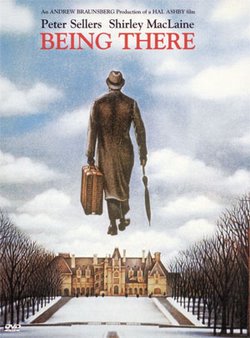
More than twenty-five years ago Peter Sellers finished his career with what critics called his finest performance. "Being There" recounted the tale of mistaken identity wherein "Chance," a simple gardener, never left the Washington D.C. estate of his elderly employer until the old man died. Throughout the film his simple TV-informed utterances are mistaken for profundity. For a quarter of a century "Being There" has been iconic of vapid presence, of empty officiousness.

Last week Dr. A. Roy Medley and his management team came to California to shore up support among the congregations intending to remain American Baptist following the impending PSW withdrawal from the Covenant of Relationships. Previous blogs in His Barking Dog reported on the event ("Redlands Meeting with PSW Leaders - Encourages Loyalists; Disappoints Dissenters") and offered analysis of the three gatherings ("Medley Mission to PSW to Proclaim Vision and Show Churches How to Remain ABC - Dubbed 'Fiddling While Rome Burns' by Dissidents'").

What went unreported were additional visits to meet with pastors in the ABC of LA and lay people at the historic First Baptist Church of Los Angeles. Accounts received by this blogger suggest that the pastoral gathering added nothing to the information already provided in previous blogs. However, the evening meeting at FBC was most interesting for what it did not contain. Studiously avoiding "the" subject, eye witnesses recount a meeting virtually bereft of mention of the conflict in the region surrounding it! Dr. Medley soldiered on presenting his "mission and vision" for the ABCUSA. Under other circumstances this might have been an appropriate message. However, in the midst of the crisis facing VF planners, leaving the topic untouched only reinforces the image of a disconnected leadership able to practice "Being There" without saying anything.

At least one leader in the room came away feeling disappointed and insulted by the presentation. It was as if the pastors received one level of disclosure and the lay people a more superficial treatment. Based upon reports from the three PSW meetings, my guess is that there was no reason for such a conclusion. In all of the appearances--pastors and lay persons--the otherworldly quality of "Being There" predominated.

The question might be asked: Does anybody in Valley Forge care that the PSW is planning to withdraw from the ABCUSA? Coming to the region to communicate "presence" (i.e., "being there") represents only the barest of first steps. If Dr. Medley hopes to win back the PSW congregations, let alone forestall the spread of the defections to other regions, another strategy should be adopted immediately!

[Comments in this blog represent the opinions of the blogger alone. They do not come from, represent, or speak for the official position or persons in the PSW]

Saturday, November 12, 2005

Disputes Over Human Sexuality Only a Symptom Claim Conservatives; "Missionary Zeal" Replaced by Suicidal "Embrace" with Spirit of the Age Says Akinola


Conservative Episcopalians Urged to Split from ECUSA
Saturday, Nov. 12, 2005 http://www.christianpost.com/
Posted: 8:32:43AM EST

An international panel of Anglican archbishops challenged a gathering of conservative Anglicans in the United States to split from the rest of the U.S. Episcopal Church.

"Yes, we will stand with you as long as you remain faithful, biblical, evangelical and orthodox," said Bishop Datuk Yong Ping Chung, who represents South East Asia, according to the Associated Press.

The panel addressed the first official conference of conservative groups within the ECUSA that disagree with the direction of the larger church. Organized by the Anglican Communion Network and supported by all the major reformed Anglican groups in North America, the "Hope and a Future" visibly unites those who wish to remain Anglican but not a member of the more liberal ECUSA.

The network is headed by Pittsburgh's Episcopal Bishop Robert W. Duncan, who helped formed the group after his colleagues in the ECUSA consecrated an openly gay priest as bishop of New Hampshire in 2003. Other points of conflict include the Canadian Anglican Church's nod and the ECUSA's tacit approval to blessing same sex "marriages."

Duncan, like most conservatives, views the division over sexuality as merely the tip of a more deeply submerged problem.

"These departures are a symptom of a deeper problem, which is the diminution of the authority of Holy Scripture," Duncan said as he opened the conference on Thursday.

Conservative Anglicans around the world agree with the view and the same day urged their counterparts to choose their allegiance.

"Many of you have one leg in ECUSA and one leg in the network. You must let us know exactly where you stand are you ECUSA or are you network?" Nigeria's Archbishop Peter Akinola said, prompting a loud standing ovation.

In the past, Akinola led conservatives in the 77-million communion (the majority of whom disagree with the gay bishop's ordination) in severing ties to the ECUSA and the Anglican Church of Canada. Most Anglican churches in Africa currently refuse missionaries from their North American counterparts, and the two churches are banned from partaking in an international consultative body of the worldwide communion.

According to liberals in the ECUSA, Akinola's comments to conservatives in the U.S. could be read as yet another "invitation to leave" behind the American church.

"My preference is that we all stand together and work out our differences and in some cases accept our differences," said Lionel Deimel, president of Progressive Episcopalians of Pittsburgh.
However, most conservatives fear the rift is too deep to cross. They say the ECUSA is teaching a 'new gospel' that counters historic Christianity. "

"Anglicanism is really now in a state of flux," said Archbishop Drexel W. Gomez of the West Indies. "We are being forced into this by people who are teaching something new and something totally different."

"I put the blame squarely on their shoulders."

The Hope and a Future Conference being held in Pittsburgh closes today.

Anglican Primate, Archbishop Peter Akinola of Nigeria, captures the problem those on the right have with denominational revisionism: "We have been filled with grief as we have witnessed the decline of the North American Church that was once filled with missionary zeal and yet now seems determined to bury itself in a deadly embrace with the spirit of the age."

The parallels between what is happening in the ECUSA, UMC, PCUSA, and ELCA and the ABCUSA are striking. As in the ABC crisis, conservatives deny that the issue chiefly relates to the practice of homosexuality. Rather, the deeper problem alluded to by almost all spokespersons in these varied denominational conflicts concerns biblical authority. Pitsburgh's Episcopal Bishop Robert W. Duncan put it well when he told the assembly today that below the surface debates over human sexuality lies a crisis over the "diminution of the authority of Holy Scripture."


ABCUSA conservatives have continually voiced their concern that Valley Forge personnel hear and understand the true nature of the objection by those on the right. To date, the only answer is one of polity paralysis as Dr. Medley continues to reaffirm the absolute autonomy of the local congregation in our system of governance.

Blogger Dr. Glenn Layne Floats Trial Balloon for Ending ABCUSA Crisis


Dr. Glenn Layne has proposed a trial balloon for ending the ABCUSA crisis. Although it is not without problems of its own, His Barking Dog wanted to be sure it received the widest possible audience and consideration.


By Dr. Glenn Layne (durabledata.blogspot.com)

Increasing numbers of American Baptists, both conservatives and progressives, have come to the conclusion that we are already two denominations and that the separation of the PSW region is the first in an inevitable meltdown. Both sides are entrenched in their position and unwilling to compromise on what they see as matters of principle. Conservatives will not compromise on what they see as an authority of Scripture issue and progressives will not compromise on what they see as a soul liberty and justice issue.

Therefore, the idea of the so-called Amicable Divorce option keeps coming up from both the theological right and left. How would that work? Could it really happen?

Here's my suggestion--one of the few possible paths to avoid a messy divorce. Let's designate the ABC as it now is as American Baptists Alpha, and the new movement as American Baptists Beta. ABA and ABB would put forth their pitch to regions and churches over the next two years. All regions and churches would be requested to vote on whether they wish to be part of Alpha or Beta or be dually aligned with both. No vote would be interpreted as remaining with Alpha.

The program boards (NM, BIM and MMBB) would fully service both Alpha and Beta during the two year window. At the end of that period, the program boards would revert to an independent status, that is, they would generate their own boards (as MMBB does now) as opposed to the GB system--a system that was always deeply flawed, in my opinion--and I did serve on the General Board in the 80s, so I had a taste of it.

MMBB would serve both Alpha and Beta for the indefinite future--both contractual and non-contractual benefits. BIM and NM would function as free-standing domestic and international missions agencies. Alpha and Beta could do mission through them as their see fit.

This approach would recognize, for legal purposes, both Alpha and Beta as successor corporations of ABCUSA.

The Office of the General Secretary would of course remain a part of Alpha. Beta would shape their leadership structure as they see fit.

Frankly, I doubt Valley Forge would ever assent to anything so cordial and rational. But this is one way to take the Amicable Divorce option.

Glenn's proposal is not unlike that discussed in some circles for at least a decade. During Dr. John Jackson's tenure as PSW executive minister (more than a decade ago), he and Dr. Craig Collemer (then head of the Ministerial Leadership Commission) toyed with ideas similar to Glenn's proposal. Representing opposite ends of the ideological spectrum, they both sensed that no via media existed for resolving the issue within the context of ABC polity.

Glenn's proposal would represent a "cordial and rational" way to bring some form of resolution. Unfortunately, he accurately predicts the chances of his idea finding support among Valley Forge personnel.

There is, afterall, a reason why few marital unions end in truly "amicable" divorces. That same explanation helps account for why few on either side are able to extricate themselves from the emotion and battle postures of this kind of fight.

Wednesday, November 09, 2005

Medley Mission to PSW to Proclaim Vision and Show Churches How to Remain ABC - Dubbed "Fiddling While Rome Burns" by Dissidents


News Analysis and Commentary (REVISED WED PM)
By Dennis E. McFadden

Comments by pastors and pastoral staff members who attended the meetings with Dr. A. Roy Medley and his VF team were telling. “All in all, the meeting at Redlands turned no heads, changed no minds and impressed no one except those who are Valley Forge loyalists,” wrote blogger, Dr. Glenn Layne.

“Is this the best we have? Are these four guys the best the ABC has for leaders? My question may ring hollow because I am not much of a leader myself, but these men were as inspiring as mud. You may love the guys, but if these are the leaders of our denomination, where is the fire? I have been more inspired by watching godless communists jump on tanks in the face of hostile fire,” said a PSW pastor of a significant mission giving church.

A pastoral staff member from the San Gabriel Valley called the appearance “pathetic,” saying that the comments by Dr. Aidsand Wright-Riggins III were “positively offensive and insulting.” The same pastor characterized the entire meeting quite negatively. “The Q and A was a real mish mash with the mishing and mashing done by the gang of five . . . When [someone] said ‘I don’t understand our polity,’ Roy said (and I quote): ‘Welcome aboard!’ He hemmed and hawed some more about how Baptist beliefs are very complex, not settled. Pretty much all else he said was incomprehensible.”

One senior pastor who had brought several of his staff pastors with him expressed bitter disappointment at the entire meeting. He reportedly apologized to his staffers sincerely and profusely for "wasting" their time by requesting their attendance.

At the Pasadena meeting, a pastor with deep AWAB credentials lauded Roy's "masterful" reversals of accusations hurled at him in the guise of "questions," turning them around and refusing to allow "dichotomies to stand." Yet, even this pastoral leader said: "Roy didn't seem so much 'whipped' to me as he seemed sad. Ace was asked about native American ministries and seemed a bit testy. Charles Jones and [Sumner] Grant didn't really say much. The question time was essentially a waste of time."

In the Redlands session, even the words of Rev. Charles Jones, Interim Executive Director of the Board of International Ministries, failed to excite confidence. Placing Jones in this context as a “me too” to the direction of Dr. Medley will likely work to further erode support for BIM among evangelical Baptists who have been the strongest supporters of this aspect of ABC work.

Quoting again from a pastor present at one of the meetings: "The question was asked, ‘If our church should choose to withdraw from ABCUSA, could we choose to support some of the ministries of the ABCUSA?’ YESSSSSS! MY Precioussssss. . . . . Yeah, the Missions guy ran up and wholeheartedly encouraged support for missions.”

This type of cynical reaction to Jones may presage additional diminution of the strength of BIM. His Barking Dog has learned that John Sundquist, former Executive Director of BIM, has been scheduling meetings with pastors of the "Top 100" mission giving churches that are in areas currently experiencing conflict with the ABCUSA. A couple of pastors in PSW have already met with him.

Sundquist reportedly volunteered for the special assignment because he was concerned that the VF mishandling of the crisis might have a significant negative impact upon mission support. Although Dr. Medley was reportedly reluctant to allow him to do this work, he ultimately gave his "blessing" to the Sundquist inspired mission.

Clearly Sundquist recognizes the potential catastrophic loss of mission support if VF does not adjust its strategy vis a vis PSW and other regions that have similar concerns regarding the human sexuality issue. He reportedly speaks with alarm at the numbers of churches dropping support for ABC missions because of the controversy.

No one ever accused John Sundquist of being stupid. Indeed, his political savvy has served him well in a welter of denominational assignments. In this instance, his instincts for survival seem more keenly honed than the rest of the VF management team.

The depth of the challenge facing Dr. Medley should not be underestimated. As one pastoral staff member in a PSW church summed it up, VF did little to accomplish its agenda with the meetings other than to demonstrate caring by coming to the region. As a pastor told me, evidently speaking forth the feeling of many conservatives toward the meetings: "It was another case of Nero fiddling while Rome burned."

[These comments belong to the blogger alone and do not represent the opinions or positions of the PSW or any entity within it]

Tuesday, November 08, 2005

Redlands Meeting with PSW Leaders - Encourages Loyalists; Disappoints Dissenters


News and Analysis
By Dennis E. McFadden

Dr. A. Roy Medley, General Secretary of the ABCUSA, and four members of his management team devoted several hours to a positive statement of denominational vision, luncheon fellowship, and a time of questions-and-answers Tuesday at the First Baptist Church of Redlands (CA). Dealing with a group of approximately 65-70 PSW leaders and lay people (including about eight senior pastors), Medley explained how congregations may remain affiliated with the ABCUSA when, and if, the ABCPSW follows through with its expressed intentions to withdraw from the Covenant of Relationships with the ABCUSA.

Establishing at the outset the purpose of the meeting, Medley said that two principles were in play:
1. “We’re not here to get into a big debate about ‘the’ issue.”
2. “We’re not here to denigrate or to bad mouth the region.”

“Relax, we’re here to be brothers and sisters,” Medley assured his audience. From what this blogger could observe, there was little reason for Medley to fear. Most of the audience seemed to be made up of ABC loyalists, including a number of older lay people from the Redlands congregation, long a bastion of progressive ideology among PSW Baptists.

Among the few senior pastors in attendance, most had seemed to have made up their own minds prior to the meeting for or against Dr. Medley’s position, including Dr. Glenn Layne, creator of the blog, “Durable Data” (durabledata.blogspot.com) of FBC Temple City, Dr. Lee Hamby of FBC Alhambra, Rev. Joe Lutz or the FBC of Riverside, and Dr. Joe DeRoulhac of FBC Redlands.

Dr. Medley was joined by Dr. Aidsand Wright-Riggins III, Rev. Charles Jones, Dr. Sumner Grant, and Dr. Jeff Woods.

Characterizing the current situation between the PSW and the ABCUSA as “grievous,” Dr. Medley said, “We continue to deeply care about this region and the congregations of this region. It is our heartfelt desire that the region would remain in the ABC and if the region chooses not to remain, that congregations will decide to remain part of the family.” He indicated that his presence was due to a burden of care and concern for “our total ABC life.”

Describing the May letter from the PSW board, his own formal response, the meeting with ABC President Peggy Johnson and himself with 300 PSW leaders in September, and the subsequent PSW board decision to withdraw from the Covenant of Relationships, Dr. Medley reaffirmed his hope for continued dialogue.

Medley articulated the same five principles that had been at the heart of his pastoral letter to the churches last month. These included the following points:
* Family life policy statement – monogamous life long union
* 1992 resolution declaring homosexuality to be incompatible with biblical teaching.
* The resolution recognizing a variety of opinions among American Baptists on human sexuality and calls for continuing dialogue.
* Statement in the By-Laws of ABCUSA (out of the 1907 founding of the Northern Baptists) to the effect that congregations are autonomous and that national policies are advisory only.
* Finally, the fact that we have been bound together in mission and that the associational principle is important to us all as we work together to accomplish what we cannot achieve separately (e.g. referencing the Autonomy and Interdependence piece published more than a decade ago).

Bottom line: the ABCUSA is set up to be a “missional organization, not a legislative one,” Dr. Medley said. The role of Scriptural interpretation is ascribed to the province of the local congregations. Admitting that some internal debate has surrounded how much time to devote to this issue, Medley felt that, as a denomination, we need to move on with our missional goals rather than focus on points of disagreement.

When people ask him, “Where is your passion?,” Dr. Medley likes to answer: We are committed to fostering missional congregations that develop radical disciples rooted in radical love expressed in radical servant hood; to pursue that mission with energy and vigor; to live for the sake of the world and in the power of the Gospel. That is what I am passionate about as General Secretary.”

Dr. Jeff Woods, Deputy General Secretary for Regional Relationships, answered one perplexing question regarding the future of congregations remaining with the ABCUSA if the PSW withdraws. Woods allowed that they would probably be formed into an association together, under the watchful care of a “parent” region. He indicated that one or two regions have already been approached and are willing to fill in that role. Dr. Woods suggested that such an association may wish to become a region on their own. If so, they would be encouraged to begin the application process which may take between one and two years to bring to completion.

Demonstrating why he is one of VF’s most effective communicators, Dr. Aidsand Wright-Riggins III, used his time at the podium to engage in a heartfelt appeal, full of emotional potency. He told the story of his nurturing within the PSW. Born in Riverside, he was educated at Cal State Fullerton, went to seminary at ABSW in Covina, and served on the pastoral staff at the FBC of Ontario. He movingly recounted his experience as a black man in a white society and the struggle to feel a sense of belonging.

Then, Dr. Wright-Riggins recounted how he, his wife, and youngest child moved to VF for him to assume responsibilities as Executive Director of NM. They had a church photograph taken and made into a family painting to hang in their new home. When one of his sons, who had remained behind in California, visited them, he asked: “Am I part of the family portrait?” Dr. Wright-Riggins said that he immediately moved the painting to the basement and it has never seen the light of day since.

Drawing out the implications of his illustration, he said: “It grieves me that this family that gave birth to me . . . that we might not have each other in the picture. I pray for a breakthrough so that we can have as many as we can to remain in that family portrait.”

By way of observation and analysis, several points surface as worthy of comment.

First, Dr. Medley looked and sounded incredibly tired and subdued. Always the gentle and gentlemanly Christian, he radiated kindness and affability. Few people are more genuinely nice, more immediately sympathetic, and more evidently spiritual than Dr. Medley. His kindness and demeanor could melt ice. Nevertheless, even granting that he was recovering from a cold which left his voice husky, he reminded me of a shy child selling candy door-to door. I almost expected him to say, “Good morning, I’m selling candy for my school. You don’t want to buy any, do you?”

Part of the problem may relate to the extremely difficult situation between PSW and the national body. Even with a sympathetic crowd composed largely of loyalists, leading voices advocating withdrawal such as Dale Salico, Glenn Layne, and Lee Hamby were also in the room. When I suggested to him privately that this can hardly be an easy time of life for him, he responded with a sigh and observed: “Your blog doesn’t make it any easier.” As always, Dr. Medley exemplifies so many Christian graces. One must work very hard to disagree with a man so agreeable.

Second, as to the impact of the gathering, it would seem to be too little too late. Coupled with the presence of so few senior pastors in the first gathering yesterday, this must have been a major disappointment for the team from VF. The top executives of a national denomination travel three thousand miles to face a crisis threatening to sever the fellowship and two out of three meetings only produce fifteen or so senior pastors?

The demographics of the group meeting in Redlands reflected a high percentage of the progressives from the FBC of Redlands and loyalists to the ABCUSA. Preaching to the choir, Dr. Medley certainly said nothing to convince the few pastors present to change their minds about withdrawing from the ABC.

And, while Dr. Wright-Riggins made an extremely effective emotional appeal, avoiding "the" issue in favor of a call to family ties, some of those present were offended by his presentation. One pastoral staff member told me that the use of such an emotionally laden story was "offensive" and a "cheap ploy." Another pastor shared that he could not believe that Wright-Riggins would believe the audience so unsophisticated as to "bite at that kind of bait."

About the only fireworks came when Dr. Glenn Layne raised the point that in spite of all of the talk about respecting the region and the regions, ABC actions betray that claim. He cited the effort VF made to secure berths for the disfellowshiped congregations removed from the ABCW several years ago. Rather than “respecting” the decision of the region, the denomination acted highhandedly in assisting them to find non-geographical lodgment in other regions, Layne suggested. Dr. Medley’s only response was that “Not everyone sees it the way you do.”

We will need to wait for the final session tonight in Pasadena before evaluating the visit by the VF executives in a conclusive way. However, with two of the three meetings completed, the exchanges offered little to warm the hearts of ABC loyalists and nothing to change the minds of those favoring withdrawal.

Report of First Meeting with PSW Leaders - San Diego Area - Dr. Medley Presents Vision; Sparsely Attended


The following unedited report represents the first "take" on the meeting of ABCUSA executives with church leaders of the ABCPSW. This gathering took place in the San Diego area with sessions to follow in Redlands and Pasadena today. Tomorrow leaders will meet with people from the region of Los Angeles. The reporting comes from the ABE Message Board.

Well, talk about underwhelming.I just got home from the San Diego (National City)meeting. Boring would be an understatement.

To begin with, attendance was sparce. I counted less than 10 senior pastors there, with 30 something lay people. Most of these lay people came from only three churches, and the majority of those were elderly. I think there were at most four people under the age of forty in the entire assembly.

Medley opened up the meeting by saying that they were not here to debate the issues, but to present the ABC vision and how churches can remain a part of that. He stated they were not there to denegrate the PSW Region and appealed to those attending not to debate or defend the Region. He was quite pointed in saying that he and Dale Salico, who was present along with some other ABCPSW board members, were trying to treat each other with dignity and respect during this process.

For the next hour Medley and the gang took turns presenting their vision for the ABC. The issue of homosexuality was not mentioned once. Nor was a Bible opened either. At that point there was a question and answer time. Most of the questions revolved around what would happen to the churches who did not want to leave with the Region and remain in the ABC. The main option that was discussed was the churches wishing to remain with the ABC would be formed into a new Association and that Association would join with an existing Region, such as Los Angeles. Another possibility would be a new Region to replace the ABCPSW could be formed, but that would take time under existing bylaws.

As mentioned, most of the lay people in attendence were there from the several churches who are sympathetic to the denomination, and their questions and comments reflected that.

For me, the most interesting question came from a pastor who said something to Medley along the line of the "Help me to help you." He was putting together a packet of information to give to his congregation. He had plenty of information from the Region on the issues at hand, but nothing concrete or specific from the ABC. He then stated he had a member who was so loyal to the ABC that it would not suprise him if the man had the ABC logo tatooed on some part of his body. But that member had told the pastor that while he was loyal to the ABC, the issue that would cause him to leave would be the ordination of homosexuals. Was there something specific in writing that the ABC could provide? Medley responded that the ABC did not ordain. The pastor responded that that answer was not playing well and that a different tact would be needed to avert disaster. Medley shrugged. And that was it.

At that point it was about 9:00 and Medley called for people to break into groups of three to pray. After that the meeting was adjourned.

Sunday, November 06, 2005

Fund Raising Letter from Dr. Medley Posted on Web; Received with Mixed Reactions


October 28, 2005

Dear ____________:

Grace, mercy and peace through out Lord Jesus Christ. I want to take this opportunity to extend a very special invitation to play a very significant role in renewing and revitalizing the ministries of the Office of the General Secretary (OGS) of the American Baptist Churches USA.

This ministry stands at the center of all we do. What the hub is to the wheel, what the heart is to the body, what the sun is to the solar system, the Office of the General Secretary is to American Baptist ministry and mission. I’d like you to prayerfully consider standing with me as we move into some of the most exciting times in the history of American Baptist ministry.

To speak about the ministry of the Office of the General Secretary is a misnomer because it is a people ministry, not management of machinery. It is about equipping, empowering and encouraging pastors, local congregations, and regional and national staff to be more effective and efficient in their ministry for Jesus Christ.

You are rightly focused on the ministry of your church-the fundamental unit of mission. However, often unnoticed are the coordinating, envisioning, caring and general ministries at work. When people pause in wondrous admiration at an exquisite orchid garden, they rarely spend time admiring the complex sprinkler system that helps make it all possible!

Listed below are examples of the people ministry of OGS:
• Cutting-edge ministry strategies taught by Dr. C. Jeff Woods, Associate General Secretary for Regional Ministries and a recognized authority in ministry trends.
• Sound financial counsel for church treasurers offered by Rev. Cheryl H. Wade, Associate General Secretary and Treasurer.
• Basic stewardship and tithing teaching and resources for local churches by the World Mission Support staff who help us challenge the dominant consumer culture in which we minister.
• Newly designed, user friendly Web site and first class journalistic news reporting from the staff in our Office of Communication.
• Care for our employees through our Human Resource staff and good stewardship of the ABC Mission Center in Valley Forge by our Building Maintenance personnel.

As your General Secretary, I feel called to add to the list:
• I have rejoiced and been blessed in many prayer gatherings across the denomination.
• I am thrilled that our General Board adopted our new mission statement. With all my heart, soul and strength, I pledge to carry out the vision that we may be Centered in Christ- A People of Prayer, Purpose and Passion.
• I am excited about the Wait on the Lord conference for ministers in January 2006.
• I eagerly anticipate the appointment of an Associate General Secretary to lead the Office of Mission Resource Development, which will combine the ministries of World Mission Support with the Office of Communication
• I am honored and humbled that the General Secretary’s Prayernet has been wonderfully received by American Baptists. Nearly 6,000 people have joined! What a mighty source of power for Christ and the Kingdom!
• I am delighted that my Pastor to Pastor, Heart to Heart newsletter has been positively received by our pastors. The response has been so overwhelming that plans are developing for two more web-based newsletters entitled Leader to Leader and Disciple to Disciple.

This is an incredibly exciting moment in the ministry of the Office of the General Secretary.
Because this ministry can’t be done alone, I am writing to invite you to become a Charter Member of one of the “Circles” that will play a vital role in our expanding ministries to the church. The enclosed brochure shares some of the benefits you’ll receive as a Charter Member.

To keep you abreast of all that your membership means to our ministry together, you’ll receive your choice of any or all of the three communications I’ve mentioned: Pastor to Pastor, Leader to Leader, and Disciple to Disciple. Although many who join these Circles are not pastors, they welcome the opportunity to see how their partnership is blessing American Baptist pastors from coast-to coast with this newsletter.

What’s more, because Leader to Leader isn’t just for those with formal positions of leadership. But for those seeking to influence others for Christ and be positive agents of change, many members of these Circles will opt for this complimentary subscription as well.

To be a blessing to you daily, you’ll also receive a complimentary subscription to the Secret Place, an acclaimed devotional used by thousands of American Baptists to enrich their walk with the Lord.

Also to remind you of the ministry your membership will make possible week-in and week-out, you’ll receive a beautiful Centered in Christ, United in Mission… and Growing poster, a stunning image of Christ composed of hundreds of faces of American Baptists.

Enclosed are a special reply care and return envelope. To accept your Charter Membership invitation, simply check the appropriate box on the Member Enrollment Form, and return it at your earliest convenience in the enclosed envelope.

Please accept my heartfelt thanks for your friendship, and for all that your support will mean to so many as we move forward with prayer, purpose and passion.

Centered in Christ,

A. Roy Medley


There are five circles/levels of giving:
Adoniram Judson Circle: $10,000+ annually
Albert Paul Brinson Circle: $5,000-$9,999 annually
Leonard Ballesteros Circle: $1,000-$4,999 annually
Jitsuo Morikawa Circle: $100-$999 annually
Helen Barrett Montgomery Circle: $25-$99 annually


Membership in the GSC entitles you to: your choice of newsletters ("Pastor-to-Pastor; Leader-to-Leader and/or "Disciple-to-Disciple); a complimentary subscription to "The Secret Place" devotional guide; your very own copy of the "Centered in Christ" poster with "a stunning image of Christ;" AND "the satisfaction of knowing that you are advancing the mission of Christ through ABC/USA."

The professional quality of the letter and the accompanying inserts strongly suggests a professional capital campaign counsel or at least a corporate communications advisor. The use of letterhead for the campaign ("General Secretary's Circles), well designed brochure, and the tell-tale signs of a coordinated and sustained campaign are unmistakable.

This blogger predicted almost two years ago that the "real" purpose of the Seek It! process was to set up the conditions for a capital campaign. Repeated feasibility studies over the past dozen years had revealed an inhospitable environment for a denomination-wide capital campaign, in large part due to the level of internal conflict and to a lack of a unifying mission/vision/values component to ABC life.

That such a professional appeal would follow on the heels of Seek It! either represents an innocent coincidence or evidence of a well-crafted plan. Readers can decide for themselves whether the Seek It! outcomes provide evidence of sufficient unity to justify a campaign. The recent actions within the Pacific Southwest and certain other regions belies the notion that the completion of the Seek It! process brought unity of purpose and vision to the denomination.

Durable Data Blogger, Dr. Glenn Layne (durabledata.blogspot.com), commented that the fundraising appeal "has been widely received with derision and even a bit of gallows humor." He opines that "in the midst of the PSW crisis and on the verge of denominational meltdown, the Office of the General Secretary thought this was a dandy time to raise money to patch the hole in the Titanic."

It will be interesting to see whether Roy and his OGS colleagues can build a persuasive case for a campaign designated for on-going expenses. Certainly, they would not have embarked upon this course without considerable feedback from fundraising counsel. Nevertheless, raising money for the OGS at a time when it is at the center of divisive controversy within the ABCUSA will make the effort more difficult than it needs to be.

Dennis E. McFadden

[Blogging only my own opinions and not to be confused with any official positions, persons, or entities within the PSW]

Friday, November 04, 2005

American Baptist Evangelical "Vision Architects" to Meet November 11 - First Post Lombard Session

Friday, November 04, 2005
Santa Ana, Calif.

FOR IMMEDIATE RELEASE

As charged by those who attended the "Summons to Lead" conference in Lombard, Ill., last Sept. 23-24, a group of pastors and professional lay leaders will meet on Friday, November 11, 2005, to continue casting vision and strategy for the new movement that will replace American Baptist Evangelicals. These "Vision Architects" represent churches, regions and professional organizations throughout the U.S.

Please pray, particularly on the 11th, that God will work through this team to meet these objectives. Participating in the architect team are:

• Jim Amend, Sr. Pastor, United Baptist Church, Richland, Wash.
• Terry Deaver, Sr. Pastor, FBC, Augusta, Kan.
• Patty Duckworth, Assoc. Exec. Minister, ABCNW, Great Falls, Mont.
• Scott Gibson, Professor, Gordon-Conwell Theological Seminary, S. Hamilton, Mass.
• Vic Gordon, Sr. Pastor FBC, Huntington Beach, Calif.
• Bill Hoyt, NexStep Coaching and Consulting, Diamond Bar, Calif.
• Conley Hughes, Sr. Pastor, Concord Baptist Church, Boston, Mass
• Scott Jones, Sr. Pastor, FBC, Webster City, Iowa
• John Kaiser, Resource Minister, ABCW, Roseville, Calif.
• Brenda Madsen, Huntington Beach, Calif.
• Dennis Metzger, Sr. Pastor, FBC, Hamilton, Ohio
• Roberto Miranda, Sr. Pastor, Leon de Juda Congregation, Boston, Mass.
• Bill Nicoson, Fountain Valley, Calif.
• Chuck Peckham, Exec. Pastor, Montgomery Community Baptist Church, Montgomery, Ohio
• Jossimar Salum, Sr. Pastor, Church Planter, Exec. Dir., Great Revival Ministries, Worcester, Mass.
• Kevin Siscoe, Pastor, FBC, Kewanee, Ill.
• Dick Sipe, Sr. Pastor, FBC, Marshaltown, Iowa
• Kevin Slyh, Sr. Pastor, FBC, Canton, Ohio
• Cindy White, Assoc. Pastor, Ashland Baptist Church, Ashland, Ohio

Bill Nicoson
Executive Director

Thursday, November 03, 2005

It’s Not Your Father’s Fundamentalism Anymore! - The Challenge of Today's Evangelicalism


It’s Not Your Father’s Fundamentalism Anymore!

An Opinion Piece
By Dennis E. McFadden

Some time ago a television commercial boasted that younger consumers should reconsider the Oldsmobile since it had changed considerably from the stodgy older reputation it enjoyed. “It’s not your father’s Oldsmobile” seemed to sum up the quantum transformations in the brand as it had changed with the times.

For many in the mainline denominational orbit, the challenge from the right might be: “It’s not your father’s fundamentalism anymore.” Cultural, theological, even ideological trappings of old timey fundamentalism are conspicuously absent in modern expressions of evangelicalism.

Whether dealing with the highly corporate corporate culture of “Purpose Driven” Rick Warren or Bill Hybels or the compulsively affable Ted Haggard, NAE’s optimistic champion and cover boy of this issue of Christianity Today, evangelicals continue to confound and confuse their cultured despisers. With some of the conflicts taking place in mainline denominations such as the ABCUSA, denominational staff may continue to ignore the evangelical challenge only at their own peril.

When Haggard was interviewed recently as to the breadth of evangelical convictions, he answered simply that Jimmy Carter "is," Bill Clinton "is" and Hillary "is not."

“Evangelicalism is a continuum of theologies all the way from Benny Hinn to R.C. Sproul. The R.C. Sproul crowd has a hard time with Benny Hinn, and the Benny Hinn crowd has a hard time with R.C. Sproul. But they’re all evangelicals," says Haggard.

For Haggard, evangelicalism incorporates the culture warriors like Pat Robertson and Phyllis Schlafly as well as the African American community with its passion and “honorable concern for social justice.”

It is precisely at this point that evangelicals join their more progressive friends in echoing the word “diversity.” However, for evangelicalism, the diversity is one of class (rich and poor), race (red and yellow, black and white), politics (liberal Democrats and conservative Republicans), and theology (Calvinist and Arminian, Dispensational and Pentecostal, studious and experiential). Diversity for evangelicals never permits one to trifle with the authority of the Bible as the Word of God or advocate for positions believed to be contrary to Scripture.

David Bebbington’s widely cited categories are still instructive. Evangelicalism may be distinguished by its conversionism, Biblicism, activism, and crucientrism. In other words, evangelicals expect people to enter into the church by a transforming experience of new birth, continue to rely upon the Bible as the source of religious authority, advocate a concern for propagating the Christian faith through evangelistic encounters, and see Christ’s work on the cross as an atonement (generally a substitutionary one).

Contemporary evangelicals are often exceedingly well educated and aware. Christian college enrollments, for example, have soared more than 70% in the last several years. Probably the majority of working clergy who continue to use Greek and Hebrew in their sermon preparation hail from the evangelical wing of the church. And, it is not uncommon for pastors of conservative churches to have background, often advanced degrees, in secular disciplines such as management and business. One of my fellow bloggers, Dr. Glenn Layne of durabledata.blogspot.com, boasts an advanced degree in political science in addition to his theological training.

As mainline denominations are being wrenched asunder over issues of left vs. right, those in positions of denominational leadership would do well to consider the actual evangelicalism that truly exists today rather than their stereotypes of the fundamentalism of yesterday. They will discover that the vital and vibrant faith known as evangelicalism poses significant intellectual, cultural, and ecclesiastical challenges to mainline religious assumptions.

[Special thanks to American Baptist historian/scholar/pastor extraordinaire, Dr. Howard Stewart. When he is not thinking deep thoughts, writing, or enjoying retirement at Atherton Baptist Homes, Howard feeds ideas to your blogger. He suggested the notion for today's piece. Naturally, all of the criticism belongs to me alone. But, thanks, Howard for a great idea!]

Watch Your Tongue - You Just Might Trip Over It!


An Opinion Piece
By Dennis E. McFadden

A very helpful attempt at identifying ethical guidelines for bloggers, particularly those choosing to comment on the current ABCUSA situation has been developed and published by Jerrod H Hugenot on the Roger Williams Fellowship site (http://rogerwilliamsfellowship.squarespace.com/ethics-of-blogging/). Although not without its own set of problematic elements, Rev. Hugenot has done all of us a service by his thoughtful piece.

Stating what I have long believed about the perils of e-mail, he notes that “Blogs are just as potentially troublesome as e-mail. Something written in haste and then sent out can be an occasion for great regret or sheepish recantation. Indeed, blogging can be an opportunity 'to get it off your chest' or fall into the same traps of gossip or near-slander of one’s ideological opponents.”

Dealing with the issue at hand, Rev. Hugenot offers three generalized guidelines for bloggers (and their readers):

1. If something pressing happens, be pastoral and prophetic but also let your thoughts simmer for awhile! Bloggers can fly to their computers when news hits and yet fly off the handle needlessly. I have read a few blog entries that have been prone to this. It is better known as “pastoral blather.” It is similar to that dislike of many congregants when a pastor commits “pulpit rage” (the homiletical equivalent to “road rage”) on a Sunday morning. Also, it can be similar to that queasy feeling one has when trapped at a pastor’s meeting with that one colleague who never knows decorum. This can easily happen in blogging! Fact checking also seems to be a lost virtue among some bloggers. Suppositions and hearsay are inexcusable and unethical in the pulpit--why not also at the computer keyboard? Bully pulpits feel great when one is behind one. On the other side, though, no one really listens after a spell.

2. The wiser bloggers that I read are ones who pride themselves in having thoughts on the day without placing so much pride in their opinions. Blogs can be seductive for the ego. Like theology, blogging should be provisional and humble. Perhaps the Rule of Benedict should be a governing tool for bloggers. Benedict wisely advises that we speak only when refining the silence.

3. Remember your ethical necessity to be collegial. Some bloggers just want to take cheap shots. I would challenge these bloggers to try their best to avoid caricaturing those who differ. Indeed, after some recent denominational developments, I have been appalled at how poorly national ABC staff have been represented in these blogs. One ought to consider one’s clergy collegiality with these national staff. Despite being in a local, regional, or national staff position, we are ultimately all colleagues in ministry. Making your regional or national staff (or in turn, local church clergy) the “other” or the faceless “them” ultimately does no one, even the blogger, any favors.


I have seen some stuff in blogs lately that causes me to wonder whether the pastor-blogger in question bothered to read his/her ABC/USA Ministerial Code of Ethics. One part of the Code of Ethics states: I will seek to support all colleagues in ministry by building constructive relationships wherever I serve, both with the staff where I work and with colleagues in neighboring churches.

Oftentimes, we are challenged in the practice of ministry with being collegial with those who hold convictions contrary to our own. We have this unintentional blind spot by virtue of how American Baptist polity works that allows us to think of “our” colleagues primarily as those in other area churches and rarely to think of our regional/national folks as other colleagues in ministry.

What would happen if we were more broad-based in our understanding of collegiality? Me thinks that some bloggers might have to be a little more provisional and respectful of “them” out in Valley Forge or the local regional office. One key area of respect that I have for national staff has been the sense that we are colleagues in ministry. Thus, when I read the caricatures of folks that I know to be decent people, I wonder less about the negative image being portrayed of national staff and worry more about the implicit collegiality issue that my blogger-colleague has in his/her writing.

In the midst of his constructive comments, Rev. Hugenot takes a few gentle swipes at those of us blogging from the right side of the ABC controversy when he writes, “Me thinks that some bloggers might have to be a little more provisional and respectful of “them” out in Valley Forge or the local regional office.” After reading some of his comments I wanted to ask, “Is it I, Lord?”

Those of us who know the principals in the ABCUSA conflict personally can vouch for their character along with our friends on the left. Dr. Medley, in particular, has always comported himself with the utmost decency and Christian gentleness. Even when subjected to withering questioning, as in the recent appearance in the PSW, Roy exhibited considerable grace and Christian restraint. However, try as we might to treat those with whom we disagree fairly and courteously, the issues at stake are stark and the emotions raw. It would be unreasonable to expect people to disagree without some measure of passion in their words and arguments.

One observation might be inserted to strengthen the observations Hugenot makes. All of us tend to see those statements of our position, those messages supporting our point of view, and those public articulations we find acceptable to our own in a very positive light. We call them “prophetic” and see them as positive encouragement to think and do the right thing. We all need a rallying cry to action, do we not? Conversely, we react (not respond) to those messages in disagreement with our own negatively, immediately jumping to pejorative labels.

For example, the Roger Williams Fellowship constituency tended to view Dr. Herzog’s Biennial dinner address as “witty,” “intelligent,” “provocative,” and “on target.” Yet, the ABE crowd uniformly denounced it as “condescending,” “insulting,” “patronizing,” and generally offensive. The same clever repartee that delighted the original audience was interpreted as name calling and worse. Indeed, the more verbally impressive, even artistic, the message, the more attractive it becomes to the proponents and the more offensive it is to the opponents. Dr. Z. Allen Abbott’s Biennial report, “The Baptists Finally Showed Up,” was replete with the kinds of rhetoric that delights supporters and infuriates the opposition (cf. my blog from yesterday).

In a similar vein, the pre-Biennial publications by Mr. Bill Nicoson in his ABE Connections served to both rally his own flock and to prove beyond a shadow of a doubt the malignant intentions of the “evangelicals” to those on the left. Interestingly, both Dr. Herzog and Mr. Nicoson have proposed a separation in the ABCUSA. Herzog’s and Nicoson’s calls were roundly applauded or subjected to vituperative rejection, depending on which side one found himself or herself on in the debate. Those agreeing with Herzog's conclusion found Nicoson's statement of it incendiary; those affirming Nicoson's conclusion are still pointing to the divisive nature of Herzog's statement.

Both bloggers and their readers need to recognize the very human tendency to interpret the objectified “other” through the lenses of worst possible construal. Not only do we need to be humble about our own views, or “pride [ourselves] in having thoughts on the day without placing so much pride in [our] opinions” (Hugenot), but to recognize our tendency to be too easily offended by what we disagree with in others. The same verbal and argumentative techniques we find so endearing when used by our friends, becomes an offense of extreme proportions when employed by the other side.

Even the most careful among us (certainly not THIS blogger) tend to use our rhetoric as a sword and then wonder why the target of our written stab screams at the wound. Thanks, again, Rev. Hugenot, for calling us all to a higher level of discourse.

Wednesday, November 02, 2005

Thorne Called as Associate General Secretary for Mission Resource Development

[From the ABCUSA News Service (http://www.abc-usa.org/news/20051101.htm)

Rev. Dr. Leo Thorne, Senior Pastor of First Baptist Church, Kansas City, MO, has been called to serve as the Associate General Secretary for Mission Resource Development of the American Baptist Churches/USA.

In this position, Dr. Thorne will oversee the efforts for communicating the overall vision and mission story of American Baptist Churches, developing stewardship and tithing resources for local congregations, and assisting the denomination’s program boards and regions in raising mission support. In his role, he will provide training and support for the regional network of ministers of mission support in stewardship development and fundraising.

Dr. Thorne brings to his position the wealth of pastoral experience in one of the denomination’s strongest mission giving congregations. “One of the qualities we were looking for in this call,” stated Roy Medley, general secretary of American Baptist Churches/USA, “was someone who was effective at the congregational level in mission support. Dr. Thorne brings with him the perspective of a pastor who has seen both the strengths and weaknesses of our approaches and materials and has a keen interest in sharpening our efforts in communication and fundraising so that they are congregationally-friendly and effective.”

"I am energized and hopeful by the new day I see dawning at ABC-USA,” was Thorne’s response to the call. “I look forward to being part of a wonderful history and future of a Christ-centered denomination that is having a meaningful, Spirit-driven impact on our world. It will be my delight to join a terrific team of gifted persons working with a dedicated servant-leader, General Secretary Rev. Dr. A. Roy Medley. I embrace fully the enormous potential embedded in combining communications and stewardship in this new position. It feels good and spiritually refreshing to be exactly here in my life and ministry at the moment."

Prior to his service at First Baptist Church, Kansas City, MO, Thorne served the Ramapo Valley Baptist Church in Oakland, NJ. This multi-cultural congregation grew substantially under his leadership and soon after his coming as pastor helped initiate the first Martin Luther King Day celebration in the township. In addition, while pastoring the congregation, he continued to serve as an administrator and professor at Farleigh-Dickinson University in Teaneck, NJ where he completed more than 30 years of service. In these and other settings, Dr. Thorne honed his skills in working with people from a wide variety of backgrounds, cultures, and ethnicities .

His experience and interests are wide-ranging, including serving for more than a decade as the radio host of a poetry broadcast, “The Poet’s Corner,” and participation on the editorial board of the Faith and Values section of a leading New Jersey newspaper. In addition, Thorne has been active in regional and national life in the ABC, as well as participating in the Baptist World Alliance.

A native of the Caribbean, and a pastor’s son, Dr. Thorne is married to Yvonne Martinez Thorne, a counseling psychologist.

“I am so delighted in Leo’s call.” stated Rev. Medley. “I have had the pleasure of working with him and Yvonne for many years. They are wonderful, loving followers of Christ. I know Leo to be an excellent communicator and effective administrator. I look forward to serving with him.”

The Rev. Dr. Robert Roberts who has been serving as interim in this position will continue through June as a special consultant to the General Secretary with a primary focus on stewardship resources.

Dr. Thorne will begin his new position in January, 2006.

The ministry of stewardship is one of the most neglected, yet honorable, callings within the Christian family. With strong multi-cultural experience and deep roots within both the church and the academy, he comes to his post with impressive credentials. Congratulations to Dr. Thorne upon the occasion of his call to this important role. Several of his predecessors were able to tell the ABC story effectively and to communicate it creatively to people in the congregations. May the Lord bless Dr. Thorne in manifold ways as he embarks upon this important ministry, particularly in such troubled times among American Baptists.

New England Executive Minister Feels Pentecostal Fire in ABC Meeting When "The Baptists Finally Showed Up"


Yesterday and today, Dr. Glenn Layne blogged about the state of evangelical life in the American Baptist Churches in New England (durabledata.blogspot.com). Some of his report dealt with the position of the regional executive minister from Vermont and New Hampshire, Dr. Z. Allen Abbott. As to the questions about Dr. Abbott’s view of the Denver experience, he virtually gushed over it in his report on the event, "The Baptists Finally Showed Up." Dr. Abbott said:

It is a great time to be an American Baptist. I am more excited about our Baptist movement today than I have been in years. Let me tell you why. Amidst a flurry of worry and misinformation, American Baptists gathered in Denver for our regularly scheduled meetings in hopes of avoiding a schism. After years of posturing, threats,money games and growing polarization, it seemed that the fomenting reached an eruption point.

Formal action was being taken to force an end game. Yet those who came expecting fireworks went home disappointed; there were some sparklers and firecrackers, but no big explosions. Instead, God showed up.

Dr. Abbott compares the current situation in the ABCUSA to a local church conflict. He observes:

Have you ever been in a nasty local church fight? It starts with whispered accusations, phone calls, coalition building, and distrust. Then things go public—name calling, pounding each other with the Bible, communication breakdowns, and even attempts to force others out of the church. If that fails, the warring parties threaten to leave if they are not pacified. All the while the church moves farther and farther away from the Holy Spirit, sweet koinonia, evangelism, agape, openminded Bible study, generosity and mission support. Funds are withheld to force leverage against the church—which of course hurts most of all the missionaries and the people to whom they minister. Escalating demands are made: “Everyone has to agree to my views, or else I’m gone!” Being good Christians, we are concerned about bringing (and keeping) everyone to Christ’s communion table, not ejecting folks. But after so long, we grow tired of contorting the entire organization in a useless attempt to satisfy someone who keeps coming up with new demands. Things finally reach a point when the congregation says, “Enough is enough!” And either they capitulate and become dysfunctional, or they return to their foundational mission and ministry. The antagonists, if they won, inherit a sadly injured church largely devoid of the presence of God. If the antagonists leave, the congregation regroups. They may be smaller, but they are more focused and know God will help them recover.

Dr. Abbott also compares the behavior of groups such as American Baptist Evangelicals to that of schismatics in the local congregation. Pastors who have been victimized by the worst of lay abuses suddenly turn around and embrace such tactics of "naming, blaming, and shaming" opponents. Coming to Denver, ready to play our roles in a Shakespearean like tragedy, "we were poised to either implode or explode. But God showed up."

In his characterization of the Denver Biennial, Dr. Abbott was quick to see the conflict in terms of an overreaching by so-called "reformers."

In frustration and drastic final attempts, the “reformers” overreached repeatedly. A ridiculous attempt to disconnect International Ministries was exposed; our missionaries and staff were not even aware of what was going on. The Baptists responded with disgust and outrage. A seemingly endless line of folks stormed the Baptist fortress demanding fundamental redefining of our Baptist distinctives. “Make the General Board a legislative body with authority to set policy for the whole family including the local church!” “Create an enforcement arm to coerce compliance or else!” “Throw out dissenters!” “More regulation!” “Our group is the only group with the absolute truth! God is on our side!” “You folks just don’t believe the Bible!” In the saber-rattling cacophony, the Baptists finally showed up.

Opining that God was present in Denver in an almost pentecostal way, Dr. Abbott interpreted the Biennial as an avoidance of disaster by being centered in Christ and united in mission. As he said so clearly:

No longer will we allow our American Baptist mission and ministry to be held hostage by those whose allegiance is primarily to themselves. It doesn’t take King Solomon to recognize the baby’s real mother. I fully expect a splintering of our ABC fellowship over the next year, but not a catastrophic split. I regret that many who choose to leave will have been misinformed. But by and large, those of us gathered in Denver seemed to recognize if God can use us with all our differences, then let’s go forward together. God will help us figure it out as we go. That’s the American Baptist way.

Despite his deep background working with men’s ministries throughout the ABCUSA, any thought that Dr. Abbott has much respect for the evangelical wing of the ABCUSA should be quickly dismissed. His triumphalist rhetoric, so strange among EMs who are typically obsessively careful and "balanced," betrays a level of partisanship that I had heard only pertained to those of us on the right. Dr. Layne blogged that Dr. Abbott claimed he was “willing to die for” his core beliefs. Having read his article, we can easily see what principle he is "willing to die for." Radical individualized autonomy, not biblical authority, excites his pious passions, inflames his sense of mission, and reminds him of God's pentecostal presence.

Dennis E. McFadden

[Just my opinion as a private citizen in the PSW; not connected to any board, office, or officialdom]

Irvine Church Hits a Theological Trifecta (Los Angeles Times)


By David Haldane, Times Staff Writer
(October 24, 2005)


There's an Irvine house of worship that changes religions at least once a week.

Irvine United Congregational Church sports golden crosses for Sunday morning services. Jewish High Holidays see it transformed into a sanctuary for Congregation Kol HaNeshamah, filled with Torahs, ram's horns and yarmulkes. And Friday afternoons, worshipers carefully unroll prayer rugs onto the floor of what becomes the United Mosques of Irvine.

"Our theology is inclusive," says the Rev. Steven Swope, acting minister of the Christian congregation that owns the church. He believes it is one of the few of its kind in the nation with a tripartite arrangement.


"Jesus is our way," he said, "but other people have other ways. This is our way of living that out."

Almost immediately, the two congregations developed a relationship much closer than landlord and tenant. To make the Jews feel welcome, church members removed an image of the Madonna and Child from the sanctuary wall and replaced it with a depiction of the Garden of Eden hung by both congregations. Then, in a gesture that melted Jewish hearts, the Christians invited the newcomers to observe the ancient Jewish custom of posting a mezuza — a miniature ark containing Hebrew prayers — on the doorpost of the church.

University Synagogue, which held weekly services at the church, was joined for Rosh Hashana and Yom Kippur by Kol HaNeshamah (Voice of the Soul), another congregation.

"It's brotherhood and sisterhood, the unity rather than the differences," said Howard Goldman, co-president of Congregation Kol HaNeshamah. "You have to feel the bond. God is located in the relationship between people."

In 2000, the Christians and the Jews opened the doors of the church to the United Mosques of Irvine."

We all have one God," said Mir-Javid Jalali, 64, a retired physicist and entrepreneur who came from Iran 36 years ago and is referred to affectionately by his congregants as "Dr. J." Although he does not call himself an imam, Jalali leads the small congregation of about 20 in prayer, delivers the Friday sermons and oversees the mosque's operation inside the church. "Being in the same mosque with different religions allows us to narrow the gap."

The generosity of spirit evidenced in such broadminded actions may be rooted in more than a mere Christian charity. According to the church's web site, http://www.iucc.org/, they view themselves as . . . "Guided by God's unconditional love, we are an open and affirming congregation. We are committed to being progressive and intentionally inclusive, welcoming all people as fellow children of God. Our doors and our hearts are open to all wishing to join us in worship and in our faith journey. We strive to create a vital community of God as we care for one another."

In what stands as the understatement of the day, they aver: "This congregation's spiritual values are not wrapped in religious dogma. We believe that no one religious tradition has a monopoly on the truth, and we assume that all faiths have gained some insight into the human condition and our connection with the Creator. We are on a journey toward a faith relationship with God, and each of us is following his/her own pathway. We believe that the wisdom of Jesus' teachings calls us to look inside ourselves, to struggle with the questions of who we are and why we are here, and to create an environment that fosters personal insight. In so doing, we learn to celebrate the divine spark that resides within each of us." Certainly no surplus of dogma was evident in that vision statement.

Irvine United Congregational Church also boasts an interesting, albeit consistent, educational philosophy. They cite Sydney Harris as saying: "The primary purpose of a liberal education is to make one's mind a pleasant place to spend one's leisure."

Do you think that this account carries any implications for American Baptists who begin to adopt mediating and waffling stances regarding biblical authority?